



局地气候分区与人口密度的复合作用对城市热岛效应的影响
|
杨俊(1978-), 男, 湖北孝昌人, 教授, 博士生导师, 主要从事城市气候与人居环境研究。E-mail: yangjun8@mail.neu.edu.cn |
收稿日期: 2024-12-26
修回日期: 2025-04-12
网络出版日期: 2025-05-23
基金资助
兴辽英才计划科技领军人才项目(XLYC2202024)
辽宁省教育厅基础科学研究项目(LJ212410165084)
Dual drivers of the urban heat island effect: The compound effect of local climate zones and population density
Received date: 2024-12-26
Revised date: 2025-04-12
Online published: 2025-05-23
Supported by
Liaoning Revitalization Talents Program(XLYC2202024)
Basic Scientific Research Project of the Education Department of Liaoning Province(Key Project)(LJ212410165084)

杨俊 , 辛佳兴 , 任嘉义 , 于文博 . 局地气候分区与人口密度的复合作用对城市热岛效应的影响[J]. 地理学报, 2025 , 80(5) : 1370 -1385 . DOI: 10.11821/dlxb202505014
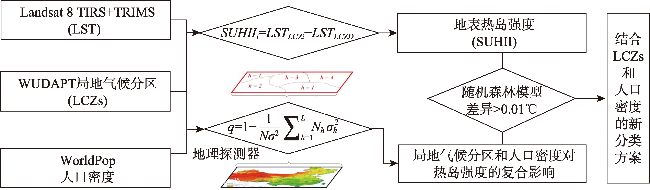
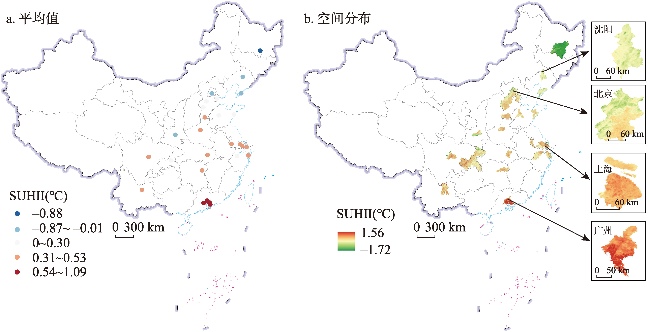
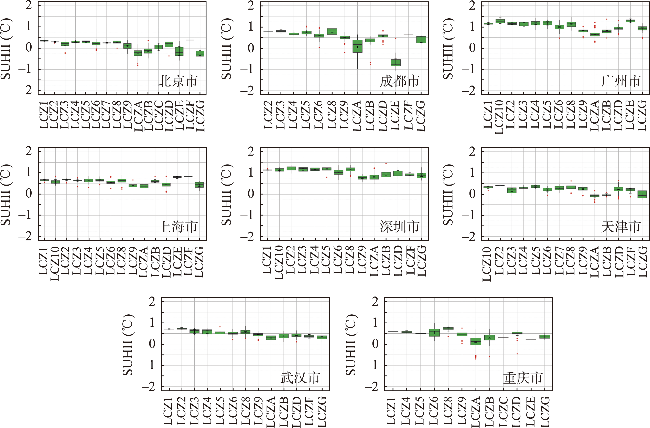
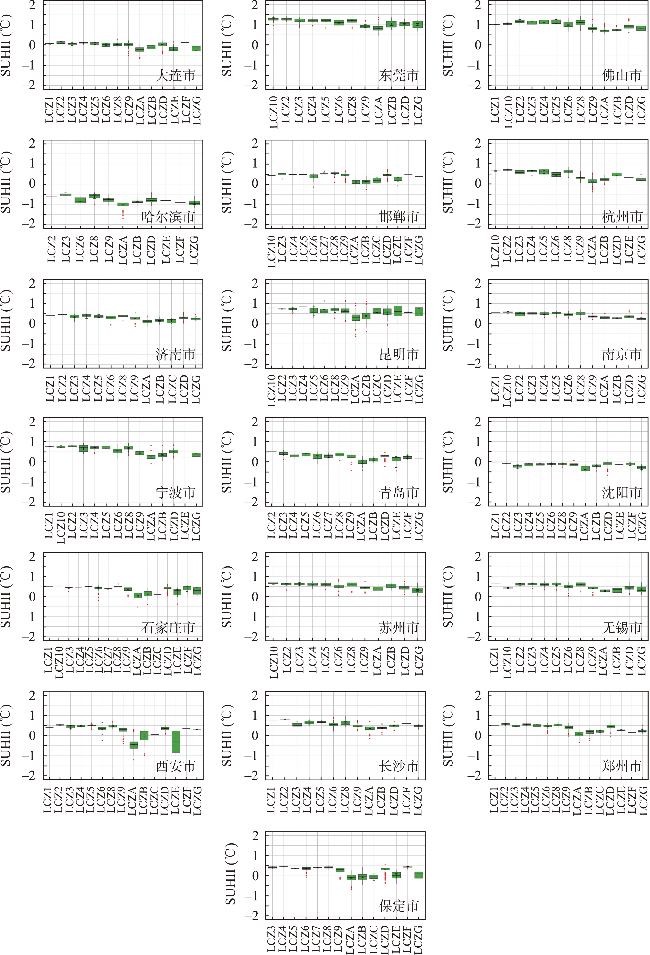
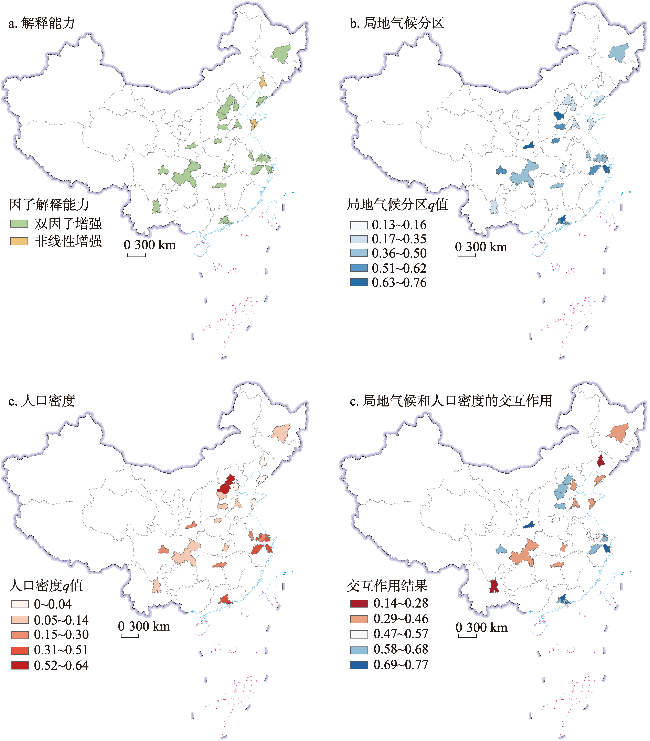
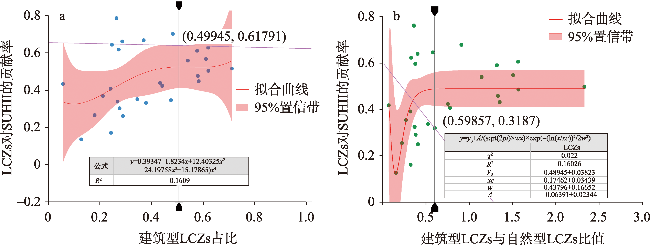
An in-depth investigation of urban heat island effect and its influencing factors differences is crucial for effectively mitigating this phenomenon in cities. In this study, we calculated the surface urban heat island intensity (SUHII) for China's super- and mega-cities, based on Landsat 8 land surface temperature and Local Climate Zones (LCZs) data. We then analyzed the compound effects of LCZs and population density (PD) on SUHII using geodetector. The results showed that: (1) Urban size, development level, and building density all exacerbate SUHII, with internal variation significantly higher in mountainous and hilly regions than in plains. The standard deviation of SUHII in mountainous and hilly areas exceeds 0.25, while in plain areas, such as Shenyang, it is around 0.1. (2) In most cities, the lowest SUHII is found in dense trees (LCZA), which is approximately 0.5-1 ℃ lower than in built-up LCZs. (3) The compound effect of PD and LCZs is more significant than either factor alone. Once the ratio of built-up LCZs to nature LCZs exceeds 0.60, the contribution of LCZs to SUHII shows a decelerating growth rate, and becomes saturated when LCZs account for approximately 50% of the built-up area. Looking ahead, the intensity of urban heat islands is expected to continue increasing. This study discussed deeply the influencing factors of the differences in urban heat island intensity, offering an important reference for the development of targeted urban planning strategies aimed at mitigating urban heat island effects.
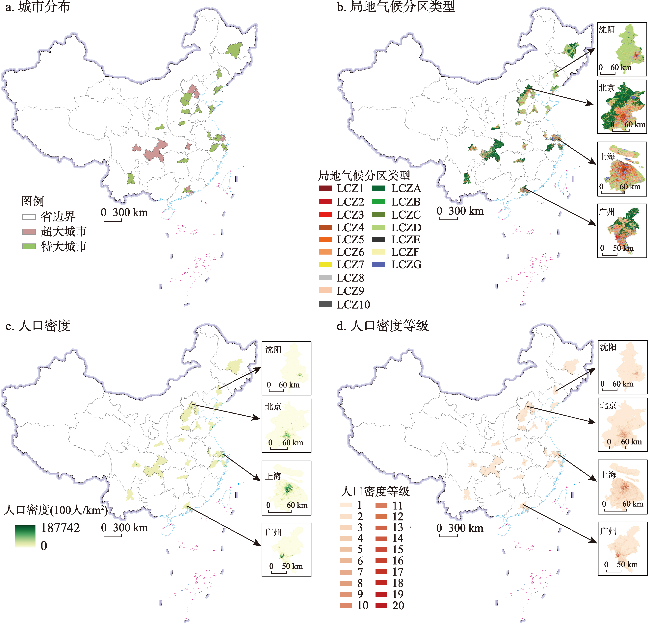
表1 数据描述及处理Tab. 1 Data descriptions and processing |
| 数据类型 | 年份 | 分辨率 | 来源 | 处理 |
|---|---|---|---|---|
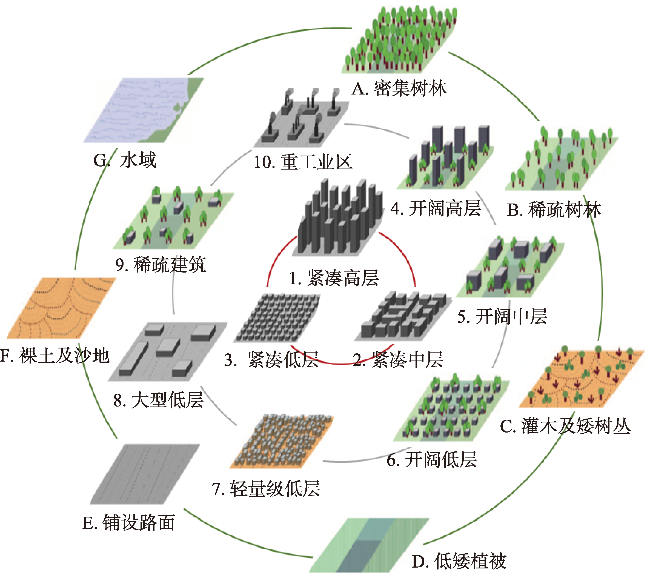
| 局地气候分区 | 2018 | 100 m | Bochum Urban Climate Lab[39] | 通过GEE平台下载、裁剪及掩膜 |
| 地表温度 Landsat 8 TIRS | 2018 | 30 m | - | 通过GEE平台重采样、下载及裁剪 |
| 地表温度 TRIMS数据集 | 2018 | 1 km | 国家青藏高原数据中心[40] https://dx.doi.org/10.11888/Meteoro.tpdc.271252 | 数据下载、重采样及裁剪 |
| 人口密度 | 2018 | 100 m | WorldPop | 数据下载、重采样及裁剪 |
| 统计年鉴 第七次人口普查结果 | 2020 | - | 中国经济社会大数据研究平台 | 下载及整理,筛选出超大及特大城市名单 |
表2 人口密度等级分类标准Tab. 2 Criteria for classification of population density |
| 人口密度(100人/km2) | 人口密度等级 | 人口密度(100人/km2) | 人口密度等级 |
|---|---|---|---|
| 0~733 | 1 | 55002~62336 | 11 |
| 733~ 667 | 2 | 62336~68936 | 12 |
| 3667~8800 | 3 | 68936~74803 | 13 |
| 8800~14667 | 4 | 74803~81404 | 14 |
| 14667~21268 | 5 | 81404~90937 | 15 |
| 21268~27868 | 6 | 90937~99004 | 16 |
| 27868~34468 | 7 | 99004~109272 | 17 |
| 34468~41068 | 8 | 109272~124672 | 18 |
| 41068~47669 | 9 | 124672~154007 | 19 |
| 47669~55002 | 10 | 154007~187742 | 20 |
表3 2018年全国超大、特大城市SUHII的统计特征Tab. 3 Mean, maximum, minimum, range and standard deviation of SUHII for China's super- and mega-cities in 2018 |
| 城市等级 | 城市名称 | 平均值 | 最小值 | 最大值 | 极差 | 标准差 |
|---|---|---|---|---|---|---|
| 超大城市 | 北京市 | -0.01 | -0.97 | 0.54 | 1.51 | 0.27 |
| 成都市 | 0.38 | -1.65 | 1.19 | 2.84 | 0.38 | |
| 广州市 | 0.85 | 0.28 | 1.56 | 1.28 | 0.22 | |
| 上海市 | 0.53 | -0.04 | 0.97 | 1.02 | 0.14 | |
| 深圳市 | 1.01 | 0.50 | 1.45 | 0.96 | 0.21 | |
| 天津市 | 0.21 | -0.44 | 0.64 | 1.07 | 0.16 | |
| 武汉市 | 0.42 | 0.02 | 1.05 | 1.02 | 0.13 | |
| 重庆市 | 0.22 | -0.86 | 1.34 | 2.20 | 0.27 | |
| 特大城市 | 保定市 | 0.20 | -0.84 | 0.61 | 1.45 | 0.23 |
| 大连市 | -0.03 | -0.69 | 0.33 | 1.01 | 0.15 | |
| 东莞市 | 1.09 | 0.44 | 1.43 | 0.99 | 0.19 | |
| 佛山市 | 0.95 | 0.46 | 1.47 | 1.01 | 0.20 | |
| 哈尔滨市 | -0.88 | -1.72 | -0.29 | 1.43 | 0.17 | |
| 邯郸市 | 0.41 | -0.34 | 0.73 | 1.07 | 0.16 | |
| 杭州市 | 0.24 | -0.39 | 1.00 | 1.39 | 0.19 | |
| 济南市 | 0.28 | -0.26 | 0.60 | 0.85 | 0.12 | |
| 昆明市 | 0.41 | -0.70 | 1.38 | 2.08 | 0.26 | |
| 南京市 | 0.37 | -0.06 | 0.74 | 0.80 | 0.11 | |
| 宁波市 | 0.40 | -0.08 | 1.06 | 1.15 | 0.21 | |
| 青岛市 | 0.28 | -0.46 | 0.60 | 1.06 | 0.12 | |
| 沈阳市 | -0.12 | -0.81 | 0.13 | 0.94 | 0.11 | |
| 石家庄市 | 0.30 | -0.84 | 0.66 | 1.50 | 0.20 | |
| 苏州市 | 0.37 | -0.08 | 0.90 | 0.98 | 0.24 | |
| 无锡市 | 0.41 | -0.09 | 0.82 | 0.91 | 0.21 | |
| 西安市 | -0.07 | -1.32 | 0.78 | 2.11 | 0.45 | |
| 长沙市 | 0.43 | -0.23 | 1.03 | 1.26 | 0.14 | |
| 郑州市 | 0.40 | -0.35 | 0.75 | 1.10 | 0.16 |
表4 全国及各超大、特大城市SUHII因子探测结果Tab. 4 Factor detection results of SUHII for China's super-and mega-cities |
| LCZs | PD | LCZs∩PD | 解释能力 | |
|---|---|---|---|---|
| 全国 | 0.25 | 0.26 | 0.34 | 双因子增强 |
| 保定 | 0.16 | 0.59 | 0.61 | 双因子增强 |
| 北京 | 0.34 | 0.64 | 0.68 | 双因子增强 |
| 成都 | 0.59 | 0.19 | 0.62 | 双因子增强 |
| 大连 | 0.35 | 0.04 | 0.38 | 双因子增强 |
| 东莞 | 0.50 | 0.45 | 0.62 | 双因子增强 |
| 佛山 | 0.55 | 0.50 | 0.63 | 双因子增强 |
| 广州 | 0.68 | 0.51 | 0.74 | 双因子增强 |
| 哈尔滨 | 0.42 | 0.07 | 0.44 | 双因子增强 |
| 邯郸 | 0.60 | 0.07 | 0.62 | 双因子增强 |
| 杭州 | 0.62 | 0.42 | 0.66 | 双因子增强 |
| 济南 | 0.32 | 0.11 | 0.38 | 双因子增强 |
| 昆明 | 0.25 | 0.08 | 0.28 | 双因子增强 |
| 南京 | 0.43 | 0.30 | 0.52 | 双因子增强 |
| 宁波 | 0.65 | 0.46 | 0.71 | 双因子增强 |
| 青岛 | 0.32 | 0.03 | 0.35 | 非线性增强 |
| 上海 | 0.49 | 0.45 | 0.59 | 双因子增强 |
| 深圳 | 0.61 | 0.60 | 0.73 | 双因子增强 |
| 沈阳 | 0.13 | 0.00 | 0.14 | 非线性增强 |
| 石家庄 | 0.64 | 0.12 | 0.66 | 双因子增强 |
| 苏州 | 0.42 | 0.20 | 0.50 | 双因子增强 |
| 天津 | 0.29 | 0.04 | 0.32 | 双因子增强 |
| 无锡 | 0.46 | 0.37 | 0.57 | 双因子增强 |
| 武汉 | 0.33 | 0.14 | 0.38 | 双因子增强 |
| 西安 | 0.76 | 0.28 | 0.77 | 双因子增强 |
| 长沙 | 0.41 | 0.23 | 0.46 | 双因子增强 |
| 郑州 | 0.54 | 0.13 | 0.56 | 双因子增强 |
| 重庆 | 0.39 | 0.09 | 0.40 | 双因子增强 |
表5 北京市、上海市局地气候分区与人口密度结合的热岛强度前后变化Tab. 5 Before-and-after changes of surface urban heat island intensity in combination of local climate zones and population density in Beijing and Shanghai |
| LCZs | 人口密度 (100人/km2) | 北京 | 上海 | |||
|---|---|---|---|---|---|---|
| 原始SUHII(℃) | 更新SUHII(℃) | 原始SUHII(℃) | 更新SUHII(℃) | |||
| LCZ1 | 41068~62336 | 0.306 | 0.338 | 0.644 | 0.651 | |
| LCZ2 | 41069~62336 | 0.328 | 0.341 | 0.674 | 0.676 | |
| LCZ3 | 41070~62336 | 0.250 | 0.369 | 0.633 | 0.698 | |
| LCZ4 | 3667~14667 | 0.302 | 0.299 | 0.649 | 0.674 | |
| LCZ5 | 0~3666 | 0.298 | 0.261 | 0.658 | 0.571 | |
| LCZ6 | 0~3666 | 0.204 | 0.189 | 0.554 | 0.514 | |
| LCZ7 | 0~8800 | 0.183 | 0.184 | 0.507 | 0.537 | |
| LCZ8 | 3667~21268 | 0.297 | 0.314 | 0.636 | 0.685 | |
| LCZ9 | 0~733 | 0.105 | 0.088 | 0.405 | 0.393 | |
| LCZ10 | 3667~21268 | 0.287 | 0.286 | 0.667 | 0.684 | |
| LCZA | 0~733 | -0.231 | -0.235 | 0.396 | 0.361 | |
| LCZB | 0~733 | -0.105 | -0.118 | 0.553 | 0.448 | |
| LCZC | 0~733 | 0.064 | 0.054 | - | - | |
| LCZD | 0~733 | 0.183 | 0.167 | 0.453 | 0.406 | |
| LCZE | 0~733 | -0.095 | -0.122 | 0.749 | 0.699 | |
| LCZF | 0~733 | 0.274 | 0.285 | 0.701 | 0.628 | |
| LCZG | 0~733 | -0.211 | -0.288 | 0.404 | 0.259 | |
注:上海市没有LCZC类型,因此其SUHII值为空。 |
| [1] |
|
| [2] |
[刘宸瑄, 王丽群, 许行, 等. 2001—2021年中国植被覆盖对夏季城市热岛效应的影响. 生态学报, 2024, 44(24): 1-15.]
|
| [3] |
|
| [4] |
[吴健生, 何海珊, 胡甜. 地表温度“源—汇”景观贡献度的影响因素分析. 地理学报, 2022, 77(1): 51-65.]
|
| [5] |
|
| [6] |
IPCC. Climate change 2023:Synthesis report. Geneva, 2023: 35-115.
|
| [7] |
|
| [8] |
|
| [9] |
|
| [10] |
|
| [11] |
|
| [12] |
|
| [13] |
[金燕, 晏红明, 何雨芩, 等. 昆明城市降雨特性变化及城市热岛效应的可能影响. 地理科学, 2024, 44(11): 2039-2050.]
|
| [14] |
|
| [15] |
|
| [16] |
|
| [17] |
|
| [18] |
|
| [19] |
|
| [20] |
[张君枝, 梁雅楠, 王冀, 等. 1981—2020年北京城市热岛效应时空特征及其影响因素分析. 大气科学学报, 2024, 47(4): 581-591.]
|
| [21] |
|
| [22] |
|
| [23] |
|
| [24] |
|
| [25] |
|
| [26] |
|
| [27] |
|
| [28] |
[单宝艳, 张巧, 任启新, 等. 基于局地气候分区的济南市热环境空间分异及其影响因素. 地球信息科学学报, 2022, 24(4): 711-722.]
|
| [29] |
|
| [30] |
|
| [31] |
|
| [32] |
[耿树丰, 任嘉义, 杨俊, 等. 局地气候区视角下的城市热环境研究. 生态学报, 2022, 42(6): 2221-2227.]
|
| [33] |
[熊鹰, 章芳. 基于多源数据的长沙市人居热环境效应及其影响因素分析. 地理学报, 2020, 75(11): 2443-2458.]
|
| [34] |
|
| [35] |
|
| [36] |
|
| [37] |
|
| [38] |
[戚伟, 刘盛和, 金浩然. 中国城市规模划分新标准的适用性研究. 地理科学进展, 2016, 35(1): 47-56.]
|
| [39] |
|
| [40] |
[张晓东, 丁利荣. 中国陆域及周边逐日1 km全天候地表温度数据集(TRIMS LST, 2000—2022). 北京: 国家青藏高原科学数据中心, 2023.]
|
| [41] |
[王劲峰, 徐成东. 地理探测器: 原理与展望. 地理学报, 2017, 72(1): 116-134.]
|
| [42] |
|
| [43] |
|
| [44] |
|
| [45] |
[陈亚萍, 郑伯红, 谢杨辉, 等. 局地气候区框架下的城市热岛特征及缓解策略: 以郴州市为例. 城市规划, 2023, 47(12): 106-116.]
|
| [46] |
[胡楠林, 任志彬, 董禹麟, 等. 中国城市群热岛效应时空演变及其影响因素分析. 地理科学, 2022, 42(9): 1534-1545.]
|
| [47] |
|
| [48] |
[张伟伟, 贾若愚, 田明, 等. 利用ECOSTRESS探究LCZ类间和类内城市热环境日动态变化. 地球信息科学学报, 2024, 26(3): 679-692.]
|
| [49] |
|
| [50] |
|
| [51] |
Beijing Municipal Government. Circular of Beijing Municipal Government on issuing the implementation opinions on deepening the special programs to improve the city's development by rectifying urban problems amid relocation of Non-capital functions during the 14th Five-Year Plan Period. Gazette of the People's Government of Beijing, 2021(6): 22-38.
[北京市人民政府. 北京市人民政府关于印发《关于“十四五”时期深化推进“疏解整治促提升”专项行动的实施意见》的通知. 北京市人民政府公报, 2021(6): 22-38.]
|
| [52] |
|
/
| 〈 |
|
〉 |