



流动人口居留意愿的梯次关系与决定机制
|
田明(1974-), 河北康保人, 教授, 博士生导师, 中国地理学会会员(S110012270M), 研究方向为人口流动与城镇化、区域可持续发展等。E-mail: tianm@bnu.edu.cn |
收稿日期: 2022-02-06
修回日期: 2022-12-30
网络出版日期: 2023-06-21
基金资助
第二次青藏高原综合科学考察研究(2019QZKK0406)
国家自然科学基金项目(41871129)
Process and determinisms of settlement intention among China's migrant workers
Received date: 2022-02-06
Revised date: 2022-12-30
Online published: 2023-06-21
Supported by
The Second Tibetan Plateau Scientific Expedition and Research(2019QZKK0406)
National Natural Science Foundation of China(41871129)
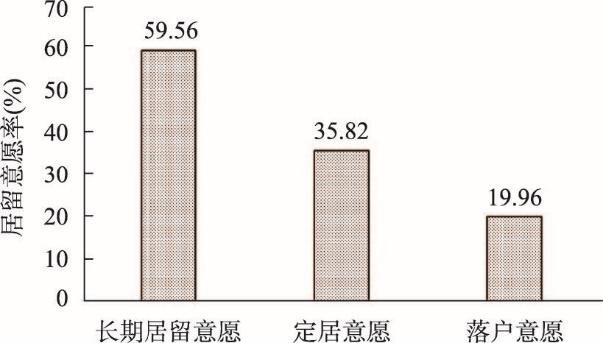
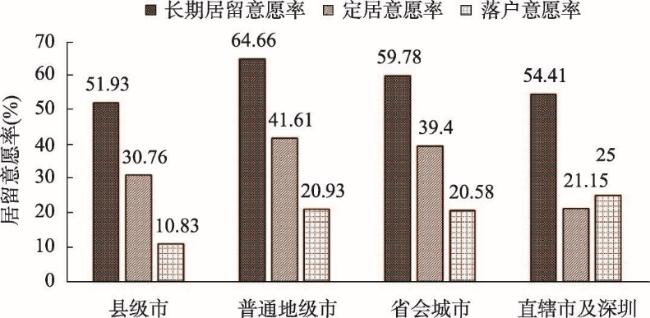
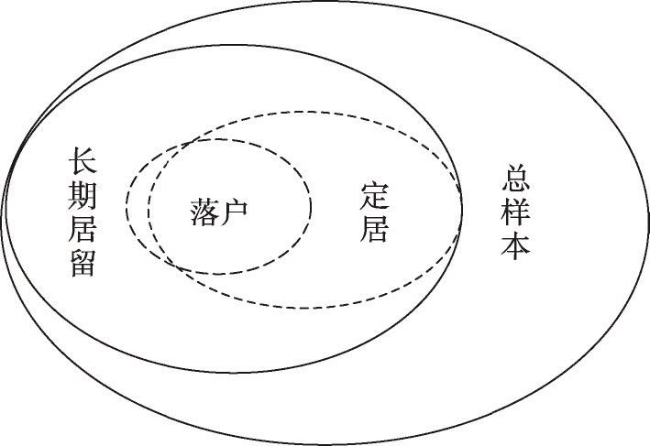
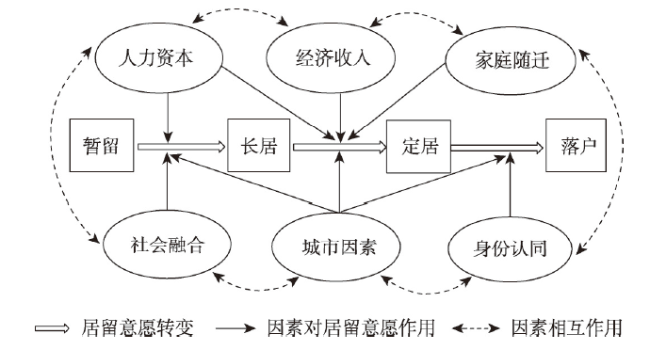
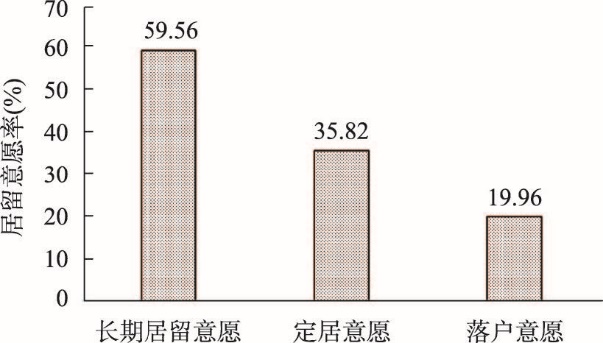
基于长居、定居以及落户意愿内涵差异及相关指标的甄别分类,以中国25个城市流动人口调查问卷为基础,分析了流动人口长居、定居和落户意愿在居留过程中的发生次序及城市差异,通过多水平Logit回归,比较了不同意愿决定机制的异同及形成条件。研究发现:① 流动人口的居留意愿具有次序性,总体上定居意愿在长居意愿的基础上产生,落户意愿在定居意愿的基础上产生,层层递进。但一线城市定居意愿和落户意愿的递进关系不确定。② 除受人力资本影响之外,流动人口的长居意愿的产生主要受社会关系和社会融合的影响,定居意愿受到经济收入和家属随迁的显著影响;落户意愿则主要是受身份认同和城市因素的影响,流入地身份认同度越高,落户意愿越高。③ 城市等级和区位有重要影响,控制其他变量的前提下,长居意愿和落户意愿随着城市等级的提升而提升,定居意愿呈倒“U”型趋势,省会城市最高,北京等一线城市最低。东北地区长居和落户意愿显著降低,定居意愿差异较小。在市民化过程中,定居意愿的形成是关键一环,要因城施策,助力提高流动人口经济实力、推进家庭化迁移,弱化落户的指标性意义。
田明 , 徐庆文 . 流动人口居留意愿的梯次关系与决定机制[J]. 地理学报, 2023 , 78(6) : 1376 -1391 . DOI: 10.11821/dlxb202306004
In view of the inherent differences in the willingness of long-term residence, permanent settlement, and hukou conversion, as well as the identification and classification of related indicators, this paper examines the occurrence sequence and urban differences of the migrant population's willingness of long-term residence, permanent settlement and hukou conversion in the residence process based on the questionnaire of the migrant population in 25 cities in China. Through multi-level logit regressions, this paper compares the differences and similarities of the influence mechanisms of different willingness, and the determinants of the willingness to stay. The study finds that: (1) From the perspective of the process, the willingness to stay of the migrant population is sequential and progressive. Generally speaking, the willingness of permanent settlement is generated based on the willingness of long-term residence, and the willingness of hukou conversion occurs based on the willingness of permanent settlement. However, the willingness of hukou conversion in first-tier cities is higher than that of permanent settlement, and the relationship is more complicated. (2) From the perspective of the influence mechanisms, in addition to human capital, the generation of the willingness of long-term residence is mainly affected by social relations and social integration; the willingness of permanent settlement is significantly affected by economic income and family migration, and certain level of economic income and family migration can greatly improve the willingness to settle down permanently; the willingness of hukou conversion is mainly affected by identity and urban factors, and the higher degree of identity in the inflow area, the higher willingness of hukou conversion. (3) From the perspective of urban hierarchy, the willingness of permanent settlement shows an inverted "U"-shaped trend, with the highest willingness to settle down in provincial capital cities and the lowest in first-tier cities such as Beijing; the willingness of hukou conversion increases with the increase in urban hierarchy, and the migrants have higher willingness of hukou conversion in upper-level cities. The former is driven by economic factors, and is the result of the trade-off between the city's attractiveness and the cost of living, while the latter is driven by the degree of recognition, which is higher in upper-level cities. In the process of citizenization, the formation of the willingness to settle down is a key part. It is necessary to implement policies based on characteristics of the city to help improve the economic strength of the migrant population, promote family migration, and weaken the indicative significance of hukou conversion.
Key words: migrant workers; hukou conversion; settlement; urban hierarchy; determinisms
表1 样本分布及核心变量表Tab. 1 Variables and their distribution |
| 核心变量 | 项目 | 分类项 | 样本量(个) | 比例(%) |
|---|---|---|---|---|
| 人力资本 | 受教育程度 | 小学及以下 | 610 | 11.75 |
| 初中 | 1504 | 28.98 | ||
| 高中 | 1334 | 25.70 | ||
| 大专 | 782 | 15.07 | ||
| 本科及以上 | 960 | 18.50 | ||
| 社会关系和 社会融合 | 已居留时长(a) | 5190 | 5.49* | |
| 当地朋友数量(个) | 5190 | 7.93* | ||
| 当地方言掌握程度 | 听得懂,会讲 | 599 | 11.54 | |
| 听得懂,会讲一些 | 1854 | 35.72 | ||
| 听得懂,不会讲 | 2468 | 47.55 | ||
| 听不懂,不会讲 | 269 | 5.19 | ||
| 家庭随迁 | 未婚且独自一人 | 2061 | 39.71 | |
| 已婚仅配偶或子女随迁 | 424 | 8.17 | ||
| 已婚配偶子女同时随迁 | 828 | 15.95 | ||
| 已婚且独自一人 | 1016 | 19.58 | ||
| 其他 | 861 | 16.59 | ||
| 经济收入 | 上年家庭收入(万元) | 5190 | 7.94* | |
| 与当地居民收入比较 | 低 | 3014 | 58.07 | |
| 不低 | 2176 | 41.93 | ||
| 身份认同 | 本地人 | 644 | 12.41 | |
| 老家人 | 2842 | 54.76 | ||
| 两者都是 | 1417 | 27.30 | ||
| 两者都不是 | 287 | 5.53 | ||
| 流入地城市 因素 | 流入城市与流出地的 相对距离 | 市内跨县 | 647 | 12.47 |
| 省内跨市 | 1841 | 35.47 | ||
| 外省 | 1915 | 36.90 | ||
| 其他 | 787 | 15.16 | ||
| 城市等级 | 县级市 | 803 | 15.47 | |
| 普通地级市 | 2026 | 39.04 | ||
| 省会城市 | 1477 | 28.46 | ||
| 直辖市及深圳 | 884 | 17.03 | ||
| 城市区位 | 东部地区 | 1935 | 37.28 | |
| 中部地区 | 1270 | 24.47 | ||
| 西部地区 | 1372 | 26.44 | ||
| 东北地区 | 613 | 11.81 | ||
注:*表示样本均值。 |
表2 长居意愿与定居意愿的关系Tab. 2 The relationship of willingness among long-term residence and permanent settlement |
| 类别 | 定居意愿率(%) | 类别 | 长居意愿率(%) |
|---|---|---|---|
| 无长居意愿 | 6.15 | 无定居意愿 | 40.86 |
| 有长居意愿 | 55.97 | 有定居意愿 | 93.06 |
表3 定居意愿与落户意愿的关系Tab. 3 The relationship of willingness among permanent settlement and hukou conversion |
| 类别 | 落户意愿率(%) | 类别 | 定居意愿率(%) |
|---|---|---|---|
| 无定居意愿 | 6.50 | 无落户意愿 | 25.04 |
| 有定居意愿 | 45.10 | 有落户意愿 | 79.05 |
表4 长居、定居与落户群体构成Tab. 4 Distribution of long-term residence, permanent settlement and hukou conversion groups |
| 样本个数(个) | 占比(%) | 累计百分比(%) | |
|---|---|---|---|
| 暂留群体a | 2099 | 40.44 | 40.44 |
| 长居群体b | 1361 | 26.22 | 66.67 |
| 定居群体c | 945 | 18.21 | 84.87 |
| 落户群体d | 785 | 15.13 | 100 |
表5 A组模型回归结果Tab. 5 Regression results of group A models |
| 自变量 | A1 | A2 | A3 |
|---|---|---|---|
| 初中 (小学及以下=0) | 0.289** (0.116) | 0.407*** (0.132) | 0.122 (0.160) |
| 高中 | 0.550*** (0.125) | 0.656*** (0.139) | 0.290* (0.165) |
| 大专 | 0.571*** (0.143) | 0.911*** (0.155) | 0.362** (0.181) |
| 本科及以上 | 0.868*** (0.144) | 1.214*** (0.155) | 0.574*** (0.180) |
| 已居留时长 | 0.0505*** (0.007) | 0.0385*** (0.006) | 0.0303*** (0.006) |
| 朋友数量 | 0.0245*** (0.005) | 0.0279*** (0.005) | -0.00323 (0.005) |
| 听得懂,讲一些 (听得懂,会讲=0) | -0.169 (0.128) | -0.0909 (0.108) | -0.244** (0.115) |
| 听得懂,不会讲 | -1.047*** (0.128) | -0.574*** (0.112) | -0.627*** (0.123) |
| 听不懂,不会讲 | -1.511*** (0.185) | -0.992*** (0.208) | -1.416*** (0.280) |
| 仅配偶或子女随迁 (未婚独自一人=0) | 0.365*** (0.141) | 0.427*** (0.138) | 0.371** (0.152) |
| 配偶子女同时随迁 | 0.533*** (0.125) | 0.744*** (0.120) | 0.383*** (0.133) |
| 已婚独自一人 | -0.220** (0.110) | -0.223* (0.118) | -0.259* (0.137) |
| 其他 | 0.285** (0.115) | 0.228** (0.116) | 0.123 (0.135) |
| 上一年家庭收入 | 0.000704 (0.003) | 0.00722** (0.003) | -0.000774 (0.004) |
| 收入不低于当地人 (低=0) | 0.0350 (0.070) | 0.155** (0.071) | 0.00395 (0.082) |
| 老家人 (本地人=0) | -1.033*** (0.120) | -1.209*** (0.106) | -1.212*** (0.117) |
| 两者都是 | -0.136 (0.128) | -0.213** (0.107) | -0.278** (0.111) |
| 两者都不是 | -0.840*** (0.174) | -0.705*** (0.168) | -0.970*** (0.195) |
| 省内跨市 (市内跨县=0) | -0.316*** (0.120) | 0.113 (0.110) | 0.466*** (0.132) |
| 跨省 | -0.818*** (0.125) | -0.272** (0.118) | 0.320** (0.141) |
| 其他 | -0.560*** (0.134) | -0.172 (0.127) | 0.253* (0.153) |
| 普通地级市 (县级市=0) | 0.532*** (0.162) | 0.444*** (0.159) | 0.663*** (0.191) |
| 省会城市 | 0.580*** (0.195) | 0.457** (0.190) | 0.853*** (0.225) |
| 直辖市及深圳 | 0.314 (0.235) | -0.517** (0.237) | 0.895*** (0.265) |
| 中部地区 (东部地区=0) | -0.344* (0.197) | -0.0606 (0.191) | -0.181 (0.219) |
| 西部地区 | -0.555*** (0.189) | -0.387** (0.185) | -0.528** (0.213) |
| 东北地区 | -0.786*** (0.239) | 0.000474 (0.228) | -0.759*** (0.265) |
| 常数项 | 1.080** (0.430) | -1.321*** (0.438) | -1.387*** (0.497) |
注:*** p < 0.01,** p < 0.05,* p < 0.1;数据项分别是回归系数和标准误,括号内是标准误。 |
表6 B组模型回归结果Tab. 6 Regression results of group B models |
| 自变量 | B1 | B2 | B3 |
|---|---|---|---|
| 初中 (小学及以下=0) | 0.159 (0.130) | 0.381** (0.181) | -0.234 (0.229) |
| 高中 | 0.381*** (0.142) | 0.546*** (0.190) | -0.301 (0.235) |
| 大专 | 0.200 (0.167) | 0.846*** (0.218) | -0.303 (0.253) |
| 本科及以上 | 0.324* (0.169) | 1.015*** (0.220) | -0.220 (0.254) |
| 已居留时长 | 0.0400*** (0.007) | 0.0133* (0.008) | 0.0118 (0.009) |
| 朋友数量 | 0.0140** (0.006) | 0.0322*** (0.006) | -0.0191*** (0.007) |
| 听得懂,讲一些 (听得懂,会讲=0) | -0.151 (0.149) | -0.0192 (0.144) | -0.142 (0.148) |
| 听得懂,不会讲 | -0.982*** (0.149) | 0.0116 (0.155) | -0.355** (0.164) |
| 听不懂,不会讲 | -1.431*** (0.221) | 0.321 (0.304) | -0.508 (0.376) |
| 仅配偶或子女随迁 (未婚独自一人=0) | 0.158 (0.169) | 0.345* (0.193) | 0.262 (0.200) |
| 配偶子女同时随迁 | 0.277* (0.150) | 0.618*** (0.168) | 0.0975 (0.172) |
| 已婚独自一人 | -0.195 (0.130) | -0.0168 (0.167) | -0.0777 (0.189) |
| 其他 | 0.231* (0.135) | 0.148 (0.162) | -0.00727 (0.179) |
| 上年家庭收入 | -0.00746* (0.004) | 0.0173*** (0.006) | -0.00787 (0.005) |
| 收入不低于当地人 (低=0) | -0.0367 (0.084) | 0.203** (0.101) | 0.0291 (0.110) |
| 老家人 (本地人=0) | -0.634*** (0.143) | -0.673*** (0.148) | -0.714*** (0.156) |
| 两者都是 | -0.0597 (0.153) | -0.0520 (0.145) | -0.418*** (0.142) |
| 两者都不是 | -0.638*** (0.211) | -0.238 (0.248) | -0.651** (0.260) |
| 省内跨市 (市内跨县=0) | -0.408*** (0.138) | 0.0972 (0.141) | 0.430*** (0.164) |
| 跨省 | -0.834*** (0.144) | -0.218 (0.157) | 0.620*** (0.178) |
| 其他 | -0.476*** (0.153) | -0.203 (0.166) | 0.498*** (0.192) |
| 普通地级市 (县级市=0) | 0.486*** (0.175) | 0.0393 (0.173) | 0.470** (0.214) |
| 省会城市 | 0.483** (0.210) | -0.0315 (0.206) | 0.724*** (0.249) |
| 直辖市及深圳 | 0.730*** (0.246) | -1.677*** (0.278) | 1.548*** (0.327) |
| 中部地区 (东部地区=0) | -0.368* (0.211) | 0.0475 (0.203) | 0.0469 (0.241) |
| 西部地区 | -0.445** (0.201) | -0.185 (0.197) | -0.185 (0.237) |
| 东北地区 | -0.971*** (0.260) | 0.492* (0.242) | -0.489** (0.283) |
| 常数项 | 0.834* (0.489) | -1.819*** (0.602) | 0.383 (0.679) |
注:*** p < 0.01,** p < 0.05,* p < 0.1;数据项分别是回归系数和标准误,括号内是标准误。 |
表7 长居、定居与落户意愿影响机制比较Tab. 7 Comparison of impact mechanisms of long-term residence, permanent settlement and hukou conversion |
| 因素 | 指标 | 长居意愿 | 定居意愿 | 落户意愿 |
|---|---|---|---|---|
| 人力资本 | 受教育程度 | ▲▲ | ▲▲▲ | — |
| 经济因素 | 经济收入 | ▽ | ▲▲▲ | — |
| 家庭因素 | 家庭随迁 | ▲ | ▲▲▲ | — |
| 社会关系和社会融合 | 流入时长 | ▲▲▲ | ▲ | — |
| 朋友数量 | ▲▲▲ | ▲▲▲ | — | |
| 方言熟练程度 | ▲▲▲ | ▲ | ▲ | |
| 身份认同 | 流入地身份认同 | ▲ | ▲ | ▲▲▲ |
| 城市因素 | 相对距离 | ▽▽▽ | — | ▲▲▲ |
| 城市等级 | ▲▲ | 倒“U”型 | ▲▲▲ | |
| 城市区位(与东部城市相比) | ▽▽▽ | — | ▽▽ |
注:“—”代表影响不显著;“▲”代表正向影响,个数代表影响的显著程度;“▽”表示负向影响,个数代表影响的显著程度。 |
:感谢匿名审稿专家提出的宝贵修改建议。
| [1] |
[ 习近平. 把握新发展阶段, 贯彻新发展理念, 构建新发展格局. 求是, 2021, 33(9): 3-9.]
|
| [2] |
[ 蔡昉. 劳动力迁移的两个过程及其制度障碍. 社会学研究, 2001, 16(4): 44-51.]
|
| [3] |
[ 田明, 李辰, 赖德胜. 户籍制度改革与农业转移人口落户: 悖论及解释. 人口与经济, 2019(6): 1-13.]
|
| [4] |
[ 李亭亭, 朱宇, 林李月, 等. 流动人口居留时长意愿的空间分异及影响因素. 地理学报, 2021, 76(12): 2978-2992.]
|
| [5] |
[ 蔡禾, 王进. “农民工”永久迁移意愿研究. 社会学研究, 2007, 22(6): 86-113, 243.]
|
| [6] |
[ 王子成, 赵忠. 农民工迁移模式的动态选择: 外出、回流还是再迁移. 管理世界, 2013(1): 78-88.]
|
| [7] |
[ 朱宇. 国外对非永久性迁移的研究及其对我国流动人口问题的启示. 人口研究, 2004, 28(3): 52-59.]
|
| [8] |
[ 王毅杰. 流动农民留城定居意愿影响因素分析. 江苏社会科学, 2005(5): 26-32.]
|
| [9] |
[ 朱宇, 林李月. 流动人口在城镇的居留意愿及其决定因素: 文献综述及其启示. 人口与经济, 2019(2): 17-27.]
|
| [10] |
|
| [11] |
|
| [12] |
|
| [13] |
|
| [14] |
|
| [15] |
|
| [16] |
[ 林李月, 朱宇, 林坤, 等. 两栖生计下中国流动人口城镇购房意愿的空间特征和影响因素. 地理学报, 2021, 76(6): 1350-1365.]
|
| [17] |
[ 夏怡然. 农民工定居地选择意愿及其影响因素分析: 基于温州的调查. 中国农村经济, 2010(3): 35-44.]
|
| [18] |
[ 田明, 刘悦美. 基于户籍类型比较的流动人口城市落户意愿影响机制研究. 地理科学, 2021, 41(2): 261-270.]
|
| [19] |
[ 王晓丽, 赵畅. 农村流动人口户籍迁入意愿研究. 学术探索, 2015(6): 112-117.]
|
| [20] |
[ 任远. “逐步沉淀”与“居留决定居留”: 上海市外来人口居留模式分析. 中国人口科学, 2006(3): 67-72, 96.]
|
| [21] |
|
| [22] |
|
| [23] |
[ 秦立建, 王震. 农民工城镇户籍转换意愿的影响因素分析. 中国人口科学, 2014(5): 99-106, 128.]
|
| [24] |
|
| [25] |
[ 杨传开, 刘晔, 徐伟, 等. 中国农民进城定居的意愿与影响因素: 基于CGSS2010的分析. 地理研究, 2017, 36(12): 2369-2382.]
|
| [26] |
[ 林赛南, 梁奇, 李志刚, 等. “家庭式迁移”对中小城市流动人口定居意愿的影响: 以温州为例. 地理研究, 2019, 38(7): 1640-1650.]
|
| [27] |
[ 林李月, 朱宇. 中国城市流动人口户籍迁移意愿的空间格局及影响因素: 基于2012年全国流动人口动态监测调查数据. 地理学报, 2016, 71(10): 1696-1709.]
|
| [28] |
[ 张翼. 农民工“进城落户”意愿与中国近期城镇化道路的选择. 中国人口科学, 2011(2): 14-26, 111.]
|
| [29] |
[ 林李月, 朱宇, 柯文前, 等. 基本公共服务对不同规模城市流动人口居留意愿的影响效应. 地理学报, 2019, 74(4): 737- 752.]
|
| [30] |
[ 田明. 农业转移人口空间流动与城市融入. 人口研究, 2013, 37(4): 43-55.]
|
| [31] |
|
| [32] |
|
| [33] |
[ 刘于琪, 刘晔, 李志刚. 中国城市新移民的定居意愿及其影响机制. 地理科学, 2014, 34(7): 780-787.]
|
| [34] |
|
/
| 〈 |
|
〉 |