



微观视角下旅游情境人地关系的理论与经验
|
黄剑锋(1982-), 男, 安徽宣城人, 博士, 副教授, 硕士生导师, 研究方向为旅游者行为与旅游地治理、城镇化与乡村发展。E-mail: hjfengy@126.com |
收稿日期: 2020-05-28
要求修回日期: 2021-07-05
网络出版日期: 2021-12-22
基金资助
国家自然科学基金项目(41930644)
国家自然科学基金项目(41401153)
教育部人文社会科学研究青年基金项目(19YJCZH060)
版权
Theoretical and empirical exploration of human-environment relationship in tourism context from a microcosmic perspective
Received date: 2020-05-28
Request revised date: 2021-07-05
Online published: 2021-12-22
Supported by
National Natural Science Foundation of China(41930644)
National Natural Science Foundation of China(41401153)
Humanities and Social Sciences Foundation of Ministry of Education of China(19YJCZH060)
Copyright
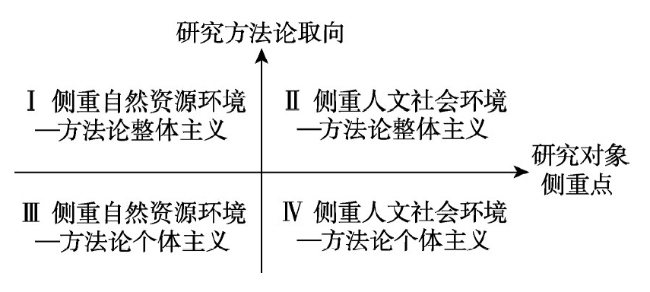
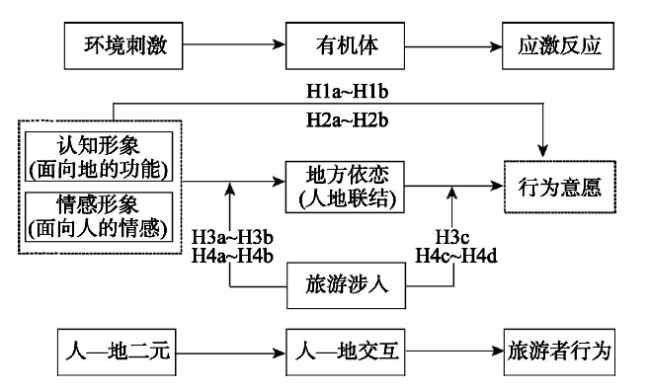
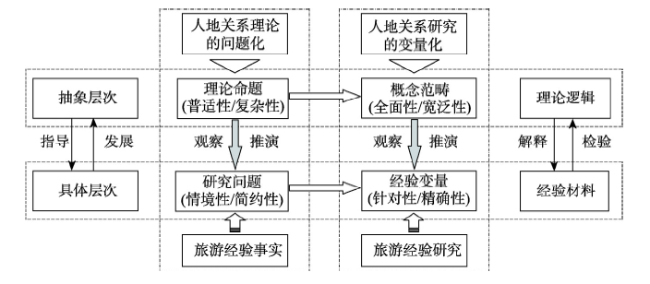
旅游现象与活动中的人地关系是旅游研究中的跨学科议题,但目前微观心理与行为视角下的旅游情境人地关系研究尚有不足。本文检视了旅游情境人地关系研究的特殊性和多元性,探究了微观视角下旅游情境人地关系研究的经验化路径,以旅游者行为意愿为例对人—地二元环境刺激促成人—地交互及行为反应的可能机制进行了理论推导和实证检验,并分析了上述理论与经验探讨对于旅游情境人地关系研究的启示。研究表明:① 旅游情境人地关系研究具有多元对象、层次、范式及方法论,存在4种主要情形和2种典型范式。② 心理—行为范式是拓展人地关系研究的重要方向,提炼具体问题和聚焦具体变量是微观视角下旅游情境人地关系研究经验化及本体论化的关键环节。③ 认知和情感形象、地方依恋、行为意愿等构成的经验模型是对人—地二元到人—地交互理论逻辑的一种刻画,为旅游者行为提供了一个可能的人地关系解释。④ 微观视角下旅游者行为意愿的形成经历了地的功能与人的情感两个向度环境刺激、地方依恋人地联结有机体、行为反应之间的传导过程。⑤ 微观视角下旅游情境人地关系研究需把握人地关系主题与旅游现象特性、完善多元尺度和范式、推进理论的经验化、注重方法的问题导向和理论意义。
黄剑锋 , 陆林 , 宋玉 . 微观视角下旅游情境人地关系的理论与经验[J]. 地理学报, 2021 , 76(10) : 2360 -2378 . DOI: 10.11821/dlxb202110003
The human-environment relationship in tourism phenomenon and activity is an interdisciplinary subject with theoretical and practical significance. However, human-environment relationship research in tourism context is distinctive due to the particularity and comprehensiveness of tourism phenomenon, with certain psychological and behavioral research gaps on ontological level and from microcosmic perspective. This paper, firstly, investigates the research pluralism as well as the basic situations and typical paradigms of human-environment relationship in tourism context, and probes into the possible empiricalization and ontologization approach to human-environment relationship research in the tourism context from a microcosmic perspective; and then it explores a possible theoretical mechanism of which dualistic human-environment stimulus leads to human-environment relationship and then to behavioral response in case of tourist behavioral intention based on stimulus-organism-response theory, and tests the hypothesized model based on empirical data collected in a typical study site; finally, it analyzes the inspiration for human-environment relationship research in tourism context stemmed from the above theoretical and empirical research. The research indicates the following: (1) There are four basic situations and two typical paradigms in human-environment relationship research in tourism context, which are diverse in research objects, scales, paradigms and methodologies. (2) The psychological-behavioral paradigm is an important direction to expand human-environment relationship research, while proposing concrete questions and focusing on specific variables are the key approach to empiricalization and ontologization of human-environment relationship research in the tourism context from a microcosmic perspective. (3) The empirical model composed of perceived cognitive image and affective image, place attachment as well as behavioral intention reflects the theoretical logic of human-environment duality to human-environment relationship to a certain extent, which provides a possible microcosmic explanation for human-environment relationship in tourist behavior. (4) The formation of tourist behavioral intention from a microcosmic perspective has experienced a transformation from two dimensional stimulus oriented to environmental function and human affection to human-environment organism of place attachment and then to behavioral response. (5) The human-environment relationship research in the tourism context from a microcosmic perspective requires that we grasp the theme of human-environment relationship and characteristics of tourism phenomena, improve diverse perspectives, scales and paradigms, promote the empiricalization of grand theories, and emphasize problem orientation and theoretical significance of certain methods and techniques.
表1 各变量均值、标准差及相关系数Tab. 1 Means, standard deviations and correlations of variables |
| 变量 | 1 | 2 | 3 | 4 | 5 | 6 | 7 | 8 | 9 |
|---|---|---|---|---|---|---|---|---|---|
| 1.性别 | 1 | ||||||||
| 2.年龄 | -0.033 | 1 | |||||||
| 3.教育程度 | -0.050 | -0.041 | 1 | ||||||
| 4.旅游次数 | -0.060 | 0.135** | -0.108** | 1 | |||||
| 5.认知形象 | -0.031 | 0.014 | -0.088* | -0.036 | (0.738) | ||||
| 6.情感形象 | -0.043 | -0.016 | -0.079* | -0.033 | 0.565** | (0.851) | |||
| 7.地方依恋 | -0.012 | 0.038 | -0.060 | 0.003 | 0.440** | 0.560** | (0.719) | ||
| 8.行为意愿 | -0.024 | 0.060 | -0.068 | -0.047 | 0.512** | 0.626** | 0.659** | (0.795) | |
| 9.旅游涉入 | -0.052 | 0.029 | -0.030 | 0.021 | 0.394** | 0.479** | 0.348** | 0.490** | (0.805) |
| 均值 | 1.514 | 2.973 | 2.818 | 1.776 | 3.859 | 3.960 | 3.442 | 3.723 | 4.017 |
| 标准差 | 0.504 | 0.920 | 0.680 | 0.862 | 0.641 | 0.689 | 0.675 | 0.704 | 0.684 |
注:N = 626;**:p < 0.01,*:p < 0.05;括号中数值为各变量平均方差抽取量(AVE)的平方根。 |
表2 直接效应和中介效应层级回归分析结果Tab. 2 Hierarchical regression analysis of direct effects and mediating effects |
| 变量 | 地方依恋 | 行为意愿 | ||||||
|---|---|---|---|---|---|---|---|---|
| M1 | M2 | M3 | M4 | M5 | M6 | M7 | ||
| 性别 | 0.003 | 0.014 | -0.010 | -0.012 | 0.002 | -0.004 | -0.020 | |
| 年龄 | 0.029 | 0.045 | 0.057 | 0.042 | 0.075 | 0.055 | 0.042 | |
| 教育程度 | -0.019 | -0.012 | -0.025 | -0.015 | -0.019 | -0.014 | -0.034 | |
| 旅游次数 | 0.013 | 0.015 | -0.040 | -0.047 | -0.038 | -0.045 | -0.059 | |
| 认知形象 | 0.438*** | 0.507*** | 0.271*** | |||||
| 情感形象 | 0.561*** | 0.624*** | 0.374*** | |||||
| 地方依恋 | 0.537*** | 0.447*** | 0.655*** | |||||
| R2 | 0.195 | 0.316 | 0.267 | 0.499 | 0.398 | 0.535 | 0.440 | |
| ∆R2 | 0.190 | 0.311 | 0.254 | 0.232 | 0.385 | 0.522 | 0.427 | |
| F | 30.022*** | 57.281*** | 45.054*** | 102.592*** | 82.008*** | 118.526*** | 97.289*** | |
| ∆F | 146.137*** | 281.729*** | 214.549*** | 286.536*** | 396.972*** | 347.141*** | 472.410*** | |
注:N = 626;***:p < 0.001,**:p < 0.01,*:p < 0.05。 |
表3 调节效应层级回归分析结果Tab. 3 Hierarchical regression analysis of moderating effects |
| 变量 | 地方依恋 | 行为意愿 | ||||||||
|---|---|---|---|---|---|---|---|---|---|---|
| M8 | M9 | M10 | M11 | M12 | M13 | M14 | M15 | M16 | ||
| 性别 | -0.014 | 0.010 | 0.010 | -0.014 | 0.017 | 0.013 | -0.030 | -0.007 | -0.007 | |
| 年龄 | 0.036 | 0.025 | 0.023 | 0.036 | 0.042 | 0.035 | 0.065 | 0.038 | 0.034 | |
| 教育程度 | -0.061 | -0.020 | -0.020 | -0.061 | -0.013 | -0.010 | -0.073 | -0.031 | -0.028 | |
| 旅游次数 | -0.009 | 0.006 | 0.005 | -0.009 | 0.012 | 0.012 | -0.065 | -0.064 | -0.063 | |
| 认知形象 | 0.357*** | 0.367*** | ||||||||
| 情感形象 | 0.512*** | 0.517*** | ||||||||
| 地方依恋 | 0.552*** | 0.549*** | ||||||||
| 旅游涉入 | 0.206*** | 0.216*** | 0.102** | 0.113** | 0.297*** | 0.306*** | ||||
| 认知形象×旅游涉入 | 0.076* | |||||||||
| 情感形象×旅游涉入 | 0.068* | |||||||||
| 地方依恋×旅游涉入 | 0.042 | |||||||||
| R2 | 0.005 | 0.231 | 0.236 | 0.005 | 0.324 | 0.328 | 0.013 | 0.517 | 0.519 | |
| ∆R2 | 0.005 | 0.226 | 0.005 | 0.005 | 0.319 | 0.004 | 0.013 | 0.504 | 0.002 | |
| F | 0.805 | 30.951*** | 27.311*** | 0.805 | 49.435*** | 43.142*** | 1.995 | 110.370*** | 95.073*** | |
| ∆F | 0.805 | 90.779*** | 4.437* | 0.805 | 145.942*** | 3.967* | 1.995 | 322.987*** | 2.106 | |
注:N = 626;***:p < 0.001,**:p < 0.01,*:p < 0.05。 |
表4 被调节的中介效应分析结果Tab. 4 Analysis of moderated mediation effects |
| 作用路径 | 调节变量 | 前半段 | 后半段 | |||
|---|---|---|---|---|---|---|
| 间接效应 | 95%置信区间 | 间接效应 | 95%置信区间 | |||
| 认知形象→地方依恋 →行为意愿 | 高旅游涉入 | 0.244*** | [0.178, 0.313] | 0.306*** | [0.242, 0.371] | |
| 低旅游涉入 | 0.190*** | [0.123, 0.256] | 0.289*** | [0.220, 0.363] | ||
| 组间差异 | 0.054 | [0.002, 0.135] | 0.016 | [-0.028, 0.077] | ||
| 情感形象→地方依恋 →行为意愿 | 高旅游涉入 | 0.280*** | [0.216, 0.364] | 0.329*** | [0.266, 0.404] | |
| 低旅游涉入 | 0.244*** | [0.188, 0.311] | 0.310*** | [0.245, 0.386] | ||
| 组间差异 | 0.037 | [0.001, 0.081] | 0.019 | [-0.012, 0.064] | ||
注:N = 626;***:p < 0.001,**:p < 0.01,*:p < 0.05。 |
| [1] |
[ 保继刚, 张捷, 徐红罡, 等. 中国旅游地理研究: 在他乡与故乡之间. 地理研究, 2017, 36(5):803-823.]
|
| [2] |
[ 张凌云. 旅游学研究的新框架: 对非惯常环境下消费者行为和现象的研究. 旅游学刊, 2008, 23(10):12-16.]
|
| [3] |
[ 吴传钧. 论地理学的研究核心: 人地关系地域系统. 经济地理, 1991, 11(3):1-6.]
|
| [4] |
[ 黄震方, 黄睿. 基于人地关系的旅游地理学理论透视与学术创新. 地理研究, 2015, 34(1):15-26.]
|
| [5] |
|
| [6] |
|
| [7] |
|
| [8] |
|
| [9] |
|
| [10] |
|
| [11] |
[ 冯卫红. 基于人地关系的生态旅游地域系统演变定量分析. 人文地理, 2006, 21(4):74-78.]
|
| [12] |
|
| [13] |
[ 尹鹏, 刘曙光, 段佩利. 海岛型旅游目的地脆弱性及其障碍因子分析: 以舟山市为例. 经济地理, 2017, 37(10):234-240.]
|
| [14] |
[ 陈佳, 杨新军, 王子侨, 等. 乡村旅游社会—生态系统脆弱性及影响机理: 基于秦岭景区农户调查数据的分析. 旅游学刊, 2015, 30(3):64-75.]
|
| [15] |
|
| [16] |
[ 黎耀奇, 关新华. 从人—品牌关系到人—地关系: 自我目的地联结. 旅游学刊, 2015, 30(9):52-62.]
|
| [17] |
[ 周玲强, 李秋成, 朱琳. 行为效能、人地情感与旅游者环境负责行为意愿: 一个基于计划行为理论的改进模型. 浙江大学学报(人文社会科学版), 2014, 44(2):88-98.]
|
| [18] |
|
| [19] |
|
| [20] |
|
| [21] |
[ 孙九霞, 庞兆玲, 王学基. 现代性拓殖与地方响应: 少数民族盐业旅游社区的发展实践. 经济地理, 2020, 40(4):214-222.]
|
| [22] |
[ 郭文, 黄震方. 旅游与竹地摩梭人“家”空间的多维生产及身份认同建构. 地理研究, 2020, 39(4):907-921.]
|
| [23] |
[ 陆大道. 地理科学的价值与地理学者的情怀. 地理学报, 2015, 70(10):1539-1551.]
|
| [24] |
[ 周晓虹. 社会学理论的基本范式及整合的可能性. 社会学研究, 2002, 17(5):33-45.]
|
| [25] |
[ 蔡运龙, 叶超, 陈彦光, 等. 地理学方法论, 北京: 科学出版社, 2011.]
|
| [26] |
[ 罗伯特·毕夏普. 社会科学哲学: 导论. 王亚男, 译. 北京: 科学出版社, 2018.]
|
| [27] |
[ 大卫·哈维. 地理学中的解释. 高泳源, 刘立华, 蔡运龙, 译. 北京: 商务印书馆, 2009.]
|
| [28] |
[ 蔡运龙. 人地关系研究范型: 哲学与伦理思辩. 人文地理, 1996, 11(1):1-6.]
|
| [29] |
[ 安·布蒂默. 多元视角下的人地关系研究: 在第32届国际地理大会上的主题演讲. 周尚意, 吴莉萍, 张镱宸, 译. 地理学科进展, 2013, 32(3):323-331.]
|
| [30] |
[ 孟斌, 王劲峰. 地理数据尺度转换方法研究进展. 地理学报, 2005, 60(2):277-288.]
|
| [31] |
[ 王兴中. 人—地行为的主要模式(型)论. 人文地理, 1991, 6(2):48-53.]
|
| [32] |
[ 吕拉昌. 人地关系操作范式探讨. 人文地理, 1998, 13(2):14-17.]
|
| [33] |
[ 托马斯·库恩. 科学革命的结构. 4版. 金吾伦, 胡新和, 译 北京: 北京大学出版社, 2012.]
|
| [34] |
[ 艾尔·巴比. 社会研究方法. 11版. 邱泽奇, 译. 北京: 华夏出版社, 2018.]
|
| [35] |
[ 陆大道. 关于地理学的“人—地系统”理论研究. 地理研究, 2002, 21(2):135-145.]
|
| [36] |
[ 樊杰. “人地关系地域系统”是综合研究地理格局形成与演变规律的理论基石. 地理学报, 2018, 73(4):597-607.]
|
| [37] |
[ 陆大道. “未来地球”框架文件与中国地理科学的发展: 从“未来地球”框架文件看黄秉维先生论断的前瞻性. 地理学报, 2014, 69(8):1043-1051.]
|
| [38] |
[ 张骁鸣, 翁佳茗. 从“地方感”到“人地相处”: 以广州天河体育中心公共休闲空间中的人地关系为例. 地理研究, 2019, 38(7):1581-1593.]
|
| [39] |
[ 柴彦威, 谭一洺, 申悦, 等. 空间—行为互动理论构建的基本思路. 地理研究, 2017, 36(10):1959-1970.]
|
| [40] |
[ 蔡晓梅, 朱竑. 新时代面向美好生活的日常生活地理与城乡休闲: “生活地理与城乡休闲”专栏解读. 地理研究, 2019, 38(7):1557-1565.]
|
| [41] |
[ 袁方, 王汉生. 社会研究方法教程, 北京: 北京大学出版社, 2013.]
|
| [42] |
|
| [43] |
|
| [44] |
|
| [45] |
|
| [46] |
[ 罗伯特·K·默顿. 社会理论和社会结构. 唐少杰, 齐心, 等, 译. 南京: 译林出版社, 2015.]
|
| [47] |
[ 张郴, 黄震方. 旅游地三元空间交互理论模型建构. 地理研究, 2020, 39(2):232-242.]
|
| [48] |
|
| [49] |
[ 蔡运龙. 人地关系研究范型: 全球实证. 人文地理, 1996, 11(3):3-8.]
|
| [50] |
[ 刘大椿. 自然辩证法概论. 北京: 中国人民大学出版社, 2004.]
|
| [51] |
[ 欧内斯特·内格尔. 科学的结构: 科学说明的逻辑问题. 徐向东, 译. 上海: 上海译文出版社, 2002.]
|
| [52] |
[ 陈晓萍, 沈伟. 组织与管理研究的实证方法. 3版. 北京: 北京大学出版社, 2018.]
|
| [53] |
|
| [54] |
|
| [55] |
|
| [56] |
[ 粟路军, 何学欢, 胡东滨, 等. 服务质量对旅游者抵制负面信息意愿的影响机制研究: 基于Stimulus-Organism-Response (S-O-R)分析框架. 旅游科学, 2017, 31(6):30-51.]
|
| [57] |
[ 刘卫梅, 林德荣. 基于信任的旅游目的地口碑推荐机制研究. 旅游学刊, 2018, 33(10):63-74.]
|
| [58] |
|
| [59] |
|
| [60] |
|
| [61] |
|
| [62] |
[ 段义孚. 恋地情结. 志丞, 刘苏, 译. 北京: 商务印书馆, 2018.]
|
| [63] |
|
| [64] |
|
| [65] |
[ 阿尔夫雷德·赫特纳. 地理学: 它的历史、性质和方法. 王兰生, 译. 北京: 商务印书馆, 2009.]
|
| [66] |
|
| [67] |
|
| [68] |
|
| [69] |
[ 蔡运龙. 人地关系研究范型: 地域系统实证. 人文地理, 1998, 13(2):7-13.]
|
| [70] |
[ 德尔·I·霍金斯, 戴维·L·马瑟斯博. 消费者行为学. 12版. 符国群, 等, 译. 北京, 机械工业出版社, 2014.]
|
| [71] |
|
| [72] |
|
| [73] |
|
| [74] |
|
| [75] |
|
| [76] |
|
| [77] |
|
| [78] |
|
| [79] |
|
| [80] |
[ 涂红伟, 熊琳英, 黄逸敏, 等. 目的地形象对游客行为意愿的影响: 基于情绪评价理论. 旅游学刊, 2017, 32(2):32-41.]
|
| [81] |
|
| [82] |
[ 吴明隆. 问卷统计分析实务: SPSS操作与应用. 重庆: 重庆大学出版社, 2010.]
|
| [83] |
[ 吴明隆. 结构方程模型: AMOS的操作与应用. 2版. 重庆: 重庆大学出版社, 2010.]
|
| [84] |
[ 吴明隆. 结构方程模型: Amos实务进阶. 重庆: 重庆大学出版社, 2013.]
|
| [85] |
|
| [86] |
|
| [87] |
|
| [88] |
[ 傅伯杰, 冷疏影, 宋长青. 新时期地理学的特征与任务. 地理科学, 2015, 35(8):939-945.]
|
| [89] |
[ 刘云刚, 陆大道, 保继刚, 等. 如何回归地理学: 我的思考与实践. 地理研究, 2018, 37(6):1049-1069.]
|
| [90] |
[ 湛东升, 张文忠, 余建辉, 等. 问卷调查方法在中国人文地理学研究的应用. 地理学报, 2016, 71(6):899-913.]
|
/
| 〈 |
|
〉 |