



中国少子—老龄化类型的时空演变特征与典型区域模式
|
林李月(1985-), 女, 研究员, 研究方向为人口迁移流动、人口与家庭发展。E-mail: lly30@163.com |
收稿日期: 2024-11-01
修回日期: 2025-04-14
网络出版日期: 2025-06-13
基金资助
国家社会科学基金项目(24BRK036)
Spatio-temporal evolution and typical patterns of China's low fertility and aging type in China
Received date: 2024-11-01
Revised date: 2025-04-14
Online published: 2025-06-13
Supported by
National Social Science Foundation of China(24BRK036)
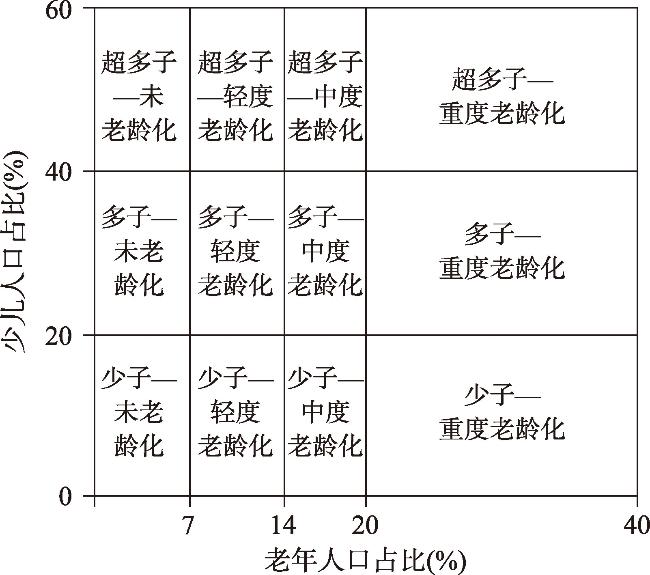
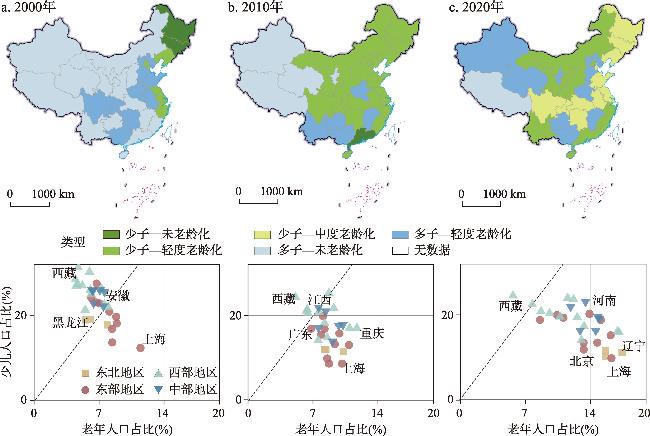
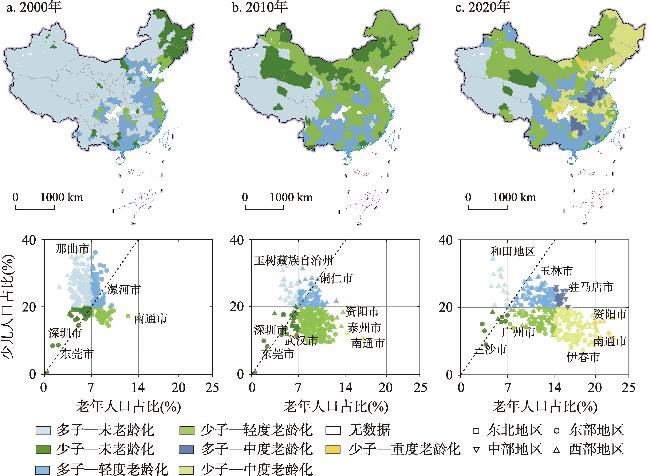
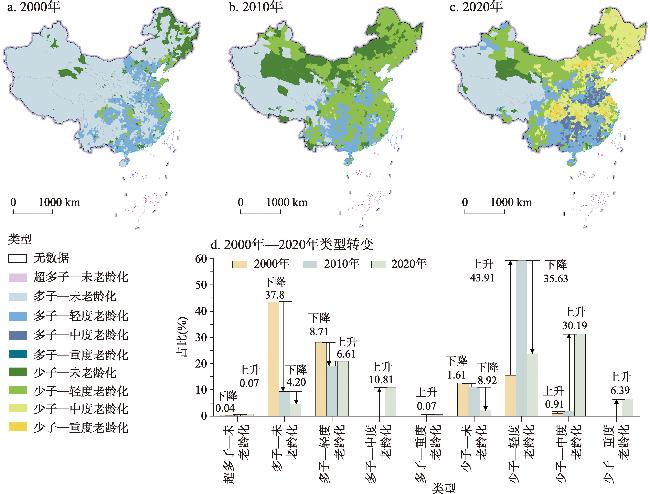
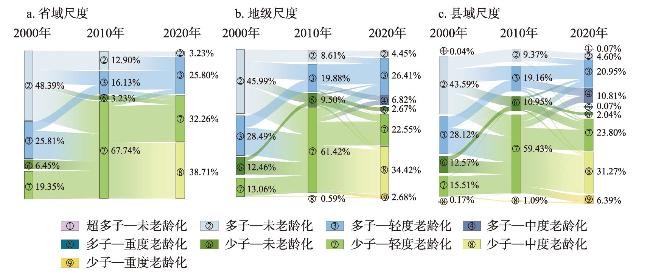
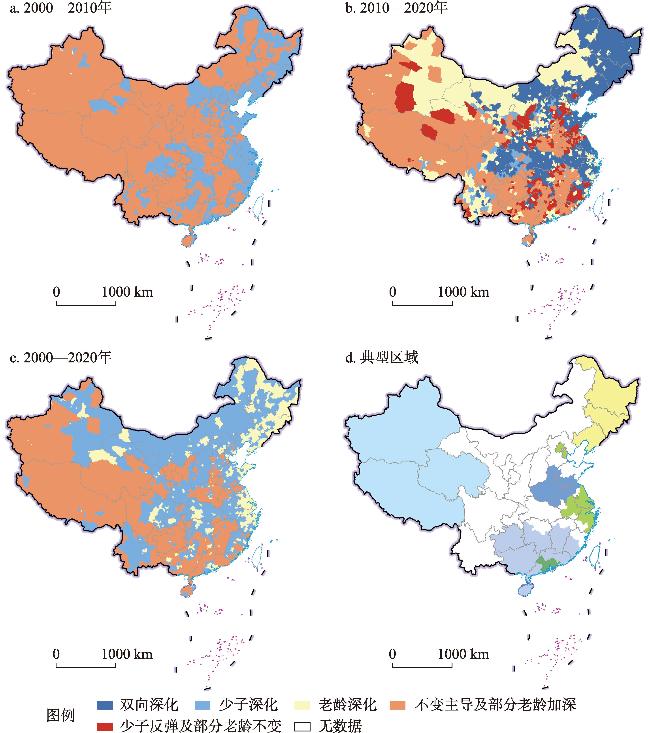
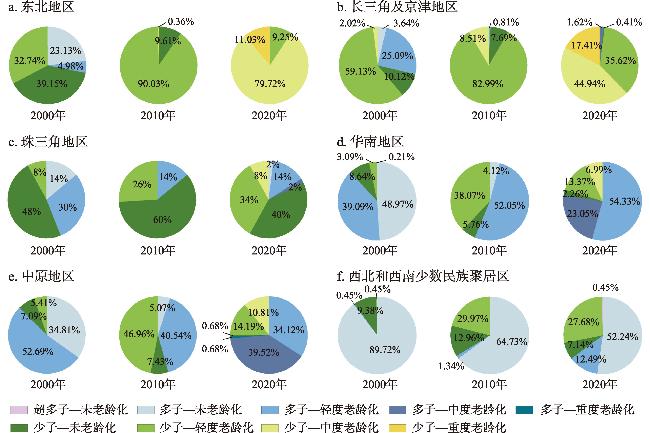
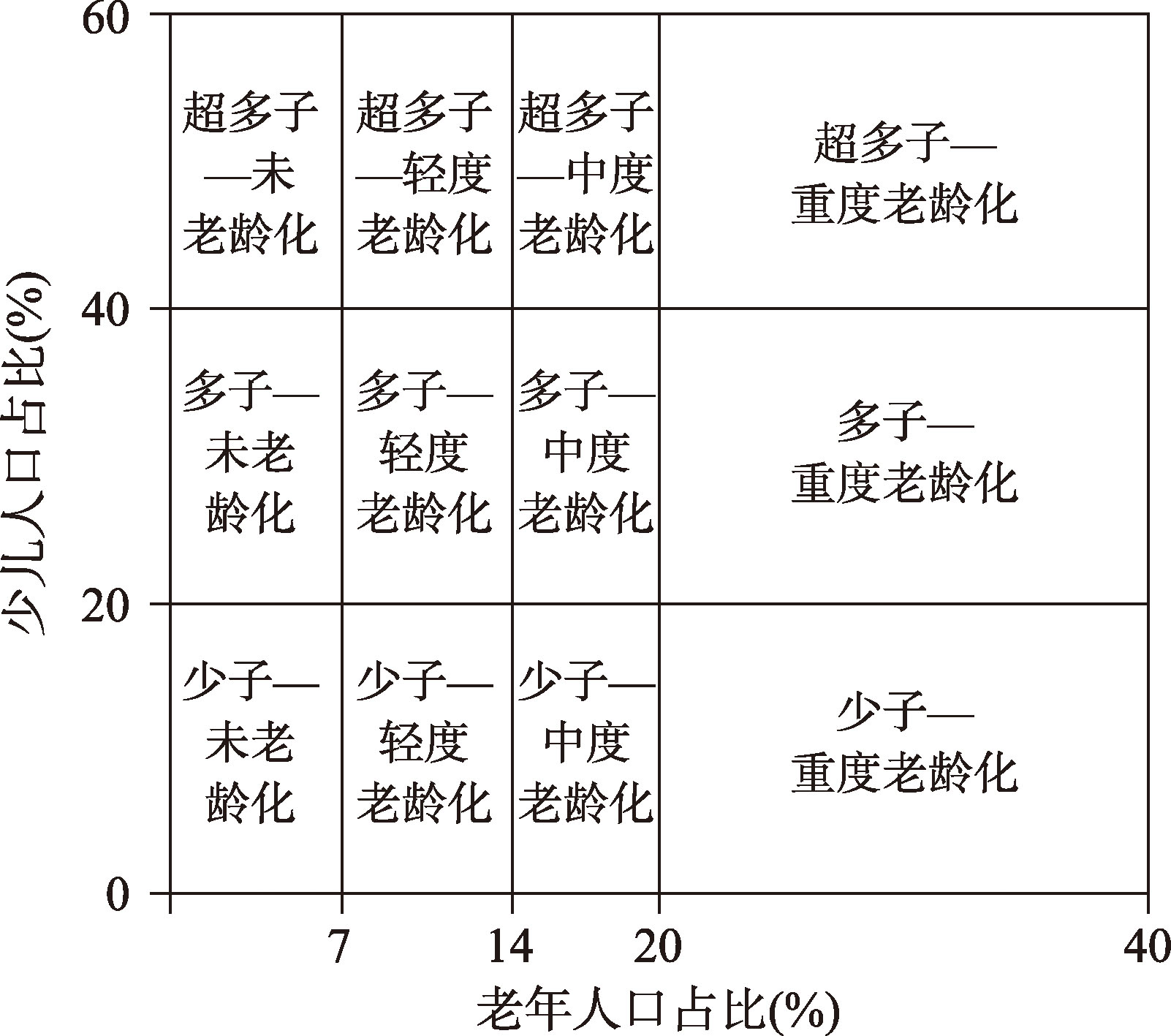
摸清中国少子—老龄化类型转变和区域差异对总结中国式现代化的历史经验具有重要意义,亦是以积极应对少子化、老龄化为重点完善人口发展战略的基础性工作。本文在将少子化和老龄化发展阶段进行交互而划分出少子—老龄化类型的基础上,利用2000—2020年人口普查数据,刻画中国少子—老龄化类型的多尺度演变特征和动态转型路径以及典型区域模式。研究发现:① 在时序特征上,2000—2020年间大部分区域基本遵循着从多子—未老龄化出发,到少子—轻度老龄化为主再到少子—中度老龄化、少子—轻度老龄化和多子—轻度老龄化平分秋色的转变历程,但少子—老龄化类型的转变并非简单的线性替代过程,而是形成具有时空压缩特征的复合转型路径;② 在空间格局演变上,中国少子—老龄化类型转变的空间梯度差异明显,呈由沿海向内陆、由东向西的“雁阵式”演进格局:东北、江浙沪京津走在前列,其他东部沿海和大部分中西部省份陆续跟随,西北和西南少数民族聚居地区尚未开始转变;③ 以县级尺度为评价单元,结合少子—老龄化类型转变历程和形成逻辑,可至少凝练出东北深度转型区、长三角—京津极低生育区、中原传统老化区、珠三角流动调节区、华南传统文化缓冲区及西南和西北少数民族聚居过渡区6种典型区域。
林李月 , 朱宇 , 陈香 , 柯文前 . 中国少子—老龄化类型的时空演变特征与典型区域模式[J]. 地理学报, 2025 , 80(6) : 1520 -1536 . DOI: 10.11821/dlxb202506006
Understanding the transformation process and regional differences of China's low fertility-aging types is of great importance for summarizing the historical experience of modernization with Chinese characteristics, and it is also a foundational task for improving population development strategies with a focus on addressing low fertility and aging. This paper constructs a joint framework of low fertility and aging to define the types of low fertility-aging, and uses population census data from 2000 to 2020 to analyze the spatiotemporal evolution characteristics of China's low fertility-aging types at multiple spatial scales. It also interprets the evolution characteristics and formation logic of typical regional low fertility-aging types. The study finds that: (1) In terms of temporal characteristics, most regions have experienced a transformation in low fertility-aging types over the past two decades, generally following a trajectory from multiple children-not aging, to predominantly low fertility-mild aging, and then to a balanced distribution of low fertility-moderate aging, low fertility-mild aging, and multiple children-mild aging. As the spatial scale becomes more detailed, the types and transformation paths of low fertility-aging tend to become more diverse and dispersed. (2) The spatial pattern of low fertility-aging type transformation exhibits a characteristic of expanding from points to areas: regions such as Jiangsu, Zhejiang, Shanghai, Beijing, and Northeast China are at the forefront of the transformation, followed by other eastern coastal and most central and western provincial-level areas, but most ethnic groups-inhabited areas in northwest and southwest China have not yet begun to transform. At the same time, the Central China Plains and southeast regions show a characteristic of asynchronous transformation in low fertility and aging. (3) Taking the county level as the evaluation unit, and based on local perspectives, the study identifies six typical regional patterns at the national level, including the Northeast, the Yangtze River Delta and Beijing-Tianjin, the Pearl River Delta, the Southeast, the Central China Plains, and the ethnic groups-inhabited areas in the northwest and southwest, by analyzing the commonalities and differences in the transformation process and main driving factors of low fertility-aging types. The conclusions not only provide theoretical references and practical guidance for various regions to deeply optimize national population strategies and improve fertility support policies in a location-specific manner, but also contribute new perspectives and insights to the study of population transformation, promoting the establishment of a community with a shared future for humanity in actively addressing low fertility and aging in developing countries.
表1 少子—老龄化类型转变的影响因素Tab. 1 Determinants of the low fertility and aging type changes |
| 维度 | 指标 | 变量 | 计算或说明 |
|---|---|---|---|
| 现代化发展 | 城镇化率 | X1 | 期末与期初城镇化率的差值 |
| 人口流动性 | 人口流入率 | X2 | 期末与期初人口流入率的差值 |
| 社会文化规范 | 社会性别不平等 | X3 | 期末与期初女性文盲率的差值 |
| 政策干预和调整的响应 | 生育水平 | X4 | 期末与期初出生率的差值 |
表2 2000—2020年少子—老龄化类型的转变路径Tab. 2 Evolution of low fertility and aging type changes in 2000-2020 |
| 转变路径 | 2000—2010年 | 2010—2020年 | |||
|---|---|---|---|---|---|
| 频率(个) | 占比(%) | 频率(个) | 占比(%) | ||
| 基本不变 | 1026 | 36.08 | 923 | 32.45 | |
| 双向同步深化 | 473 | 16.63 | 76 | 2.67 | |
| 少子化单极深化 | 756 | 26.58 | 35 | 1.23 | |
| 老龄化单极深化 | 589 | 20.71 | 1471 | 51.72 | |
| 少子化反弹老龄化不变 | - | - | 147 | 5.17 | |
| 少子化反弹老龄化加深 | - | - | 192 | 6.75 | |
| 总计 | 2844 | 100.00 | 2844 | 100.0 | |
注:“-”表示研究期间不存在此种转变类别。 |
表3 2000—2020年典型区域少子—老龄化类型演变的主要影响因素Tab. 3 The influencing factors of the evolution of low fertility and aging type in typical regions from 2000 to 2020 |
| 变量 | 东北地区 | 长三角及京津地区 | 珠三角地区 | 华南地区 | 中原地区 | 西北和西南少数民族聚居区 | ||||||||||||
|---|---|---|---|---|---|---|---|---|---|---|---|---|---|---|---|---|---|---|
| 2000— 2010年 | 2010— 2020年 | 2000— 2010年 | 2010— 2020年 | 2000— 2010年 | 2010— 2020年 | 2000— 2010年 | 2010— 2020年 | 2000— 2010年 | 2010— 2020年 | 2000— 2010年 | 2010— 2020年 | |||||||
| 双向 同步 深化 | X1 | -* | -* | - | - | - | - | -** | - | +*** | - | |||||||
| X2 | +*** | - | - | - | - | -** | - | - | - | -** | ||||||||
| X3 | - | - | - | - | -*** | - | - | - | +*** | - | ||||||||
| X4 | -*** | -*** | - | - | -*** | - | - | - | -*** | -** | ||||||||
| 少子化 单极 深化 | X1 | -*** | -*** | - | +** | - | - | - | +*** | - | ||||||||
| X2 | +** | +*** | - | - | - | - | - | - | - | |||||||||
| X3 | - | - | -*** | -* | - | -*** | - | +* | - | |||||||||
| X4 | -*** | - | - | -* | - | -** | - | -*** | - | |||||||||
| 老龄化 单极 深化 | X1 | - | - | - | - | - | - | - | - | -** | - | - | - | |||||
| X2 | +** | -*** | +*** | +* | - | -** | - | - | - | +** | - | -* | ||||||
| X3 | -* | - | - | - | - | - | -*** | - | - | - | +* | - | ||||||
| X4 | -*** | -* | - | - | - | - | - | - | - | - | -*** | -*** | ||||||
| 少子化 反弹 老龄化 不变 | X1 | - | -** | - | - | |||||||||||||
| X2 | - | - | - | - | ||||||||||||||
| X3 | - | +** | -*** | - | ||||||||||||||
| X4 | - | - | +** | - | ||||||||||||||
| 少子化 反弹 老龄化 加深 | X1 | - | - | - | -** | |||||||||||||
| X2 | - | - | - | +** | ||||||||||||||
| X3 | - | - | +*** | - | ||||||||||||||
| X4 | +*** | - | - | +*** | ||||||||||||||
注:因变量的参照组为“基本不变”;表中空白表示该地区该时段不存在此类转型类别;“-”表示无显著影响;“+”表示显著正向影响;“-”表示显著负向影响;***表示p < 0.01;**表示p < 0.05;*表示p < 0.1。 |
| [1] |
|
| [2] |
[胡湛, 彭希哲. 应对中国人口老龄化的治理选择. 中国社会科学, 2018(12): 134-155, 202.]
|
| [3] |
Ministry of Civil Affairs of the People's Republic of China, Office of the National Working Commission on Aging. 2023 National Aging Development Bulletin. 2024-10-11. https://www.mca.gov.cn/n152/n165/c1662004999980001752/content.html.
[民政部, 全国老龄办. 2023年度国家老龄事业发展公报. 2024-10-11. https://www.mca.gov.cn/n152/n165/c1662004999980001752/content.html.]
|
| [4] |
[蔡昉. 认识人口变化趋势性特征完善人口发展战略. 求是, 2025-01-01. http://www.qstheory.cn/20241231/5eb177cc717e48508a2ffa19527c213f/c.html.]
|
| [5] |
[朱荟, 陆杰华. 人口负增长的世界性现象与中国式应对. 山东女子学院学报, 2023(4): 21-29.]
|
| [6] |
[贾志科, 罗志华. 青年女性生育意愿与行为偏离的区域差异: 基于文化和社会经济视角的发现. 中国人口科学, 2024, 38(2): 66-81.]
|
| [7] |
[刘涛, 张家瑞, 曹广忠. 人口流动对区域老龄化进程的影响: 一个方法论探讨. 地理研究, 2022, 41(10): 2680-2696.]
|
| [8] |
[顾朝林, 张敏, 甄峰, 等. 人文地理学导论. 北京: 科学出版社, 2012.]
|
| [9] |
[蔡昉. 打破“生育率悖论”. 经济学动态, 2022(1): 3-13.]
|
| [10] |
|
| [11] |
[顾宝昌. 为什么要关注第二次人口转变理论. 现代管理(第一辑). 上海: 上海人民出版社, 2023: 89-110.]
|
| [12] |
|
| [13] |
|
| [14] |
|
| [15] |
|
| [16] |
|
| [17] |
|
| [18] |
|
| [19] |
|
| [20] |
[沈洁. “超少子化”现象的政策思考: 兼论日本与韩国的经验与教训. 社会政策研究, 2022(1): 79-90.]
|
| [21] |
[蔡昉. 社会流动性如何影响生育率? 社会学研究, 2024, 39(1): 45-63, 227.]
|
| [22] |
[於嘉, 谢宇. 中国的第二次人口转变. 人口研究, 2019, 43(5): 3-16.]
|
| [23] |
[林宝. 对中国“未富先老”判断的新考察. 人口研究, 2023, 47(3): 3-16.]
|
| [24] |
[计迎春, 郑真真. 社会性别和发展视角下的中国低生育率. 中国社会科学, 2018(8): 143-161, 207-208.]
|
| [25] |
[钟水映, 赵雨, 任静儒. 我国地区间“未富先老”现象研究. 人口研究, 2015, 39(1): 63-73.]
|
| [26] |
[敖荣军, 常亮. 基于结构方程模型的中国县域人口老龄化影响机制. 地理学报, 2020, 75(8): 1572-1584.]
|
| [27] |
|
| [28] |
[赵东霞, 韩增林, 王利. 中国老年人口分布的集疏格局及其形成机制. 地理学报, 2017, 72(10): 1762-1775.]
|
| [29] |
[王良健, 梁旷, 彭郁. 我国总和生育率的县域差异及其影响因素的实证研究. 人口学刊, 2015, 37(3): 16-25.]
|
| [30] |
[谭远发, 曾永明. 我国低生育水平稳定机制的时空演变及空间差异研究. 人口学刊, 2014, 36(2): 5-18.]
|
| [31] |
[尹文耀, 姚引妹, 李芬. 生育水平评估与生育政策调整: 基于中国大陆分省生育水平现状的分析. 中国社会科学, 2013(6): 109-128, 206-207.]
|
| [32] |
[刘鉴, 杨青山, 张郁, 等. 东北三省县级尺度人口老龄化空间格局演变及类型划分. 地理科学, 2020, 40(6): 918-927.]
|
| [33] |
[许昕, 赵媛, 张新林, 等. 江苏省人口老龄化空间分异演变及影响因素. 地理科学, 2017, 37(12): 1859-1866.]
|
| [34] |
[马妍, 刘爽. 中国省级人口转变的时空演变进程: 基于聚类分析的实证研究. 人口学刊, 2011, 33(1): 16-23.]
|
| [35] |
[吴连霞, 赵媛, 吴开亚, 等. 中国人口老龄化区域差异及驱动机制研究. 地理科学, 2018, 38(6): 877-884.]
|
| [36] |
[王春光. 地方性与县域现代化实践: 基于对太仓与晋江持续近三十年的调查. 社会学研究, 2023, 38(3): 1-22, 226.]
|
| [37] |
|
| [38] |
|
| [39] |
[丁金宏, 张伟佳, 毛仁俊, 等. 人口年龄结构演化轨迹与转变模式: 国际比较与中国特色. 人口研究, 2023, 47(1): 23-42.]
|
| [40] |
[权彤, 郭娜. 日本“超少子化”问题研究: 基于女性就业的视角. 山西高等学校社会科学学报, 2015, 27(5): 35-38.]
|
/
| 〈 |
|
〉 |