



基于地缘政治危机视角的华为的生产网络重组研究
|
刘清(1995-), 女, 甘肃华亭人, 博士生, 研究方向为城市地理与区域经济发展。E-mail: liuq527@mail2.sysu.edu.cn |
收稿日期: 2024-06-11
修回日期: 2024-10-30
网络出版日期: 2025-02-13
基金资助
国家自然科学基金重点项目(41930646)
Reconfiguration of Huawei's production network in the context of geopolitical risks
Received date: 2024-06-11
Revised date: 2024-10-30
Online published: 2025-02-13
Supported by
Key Program of National Natural Science Foundation of China(41930646)
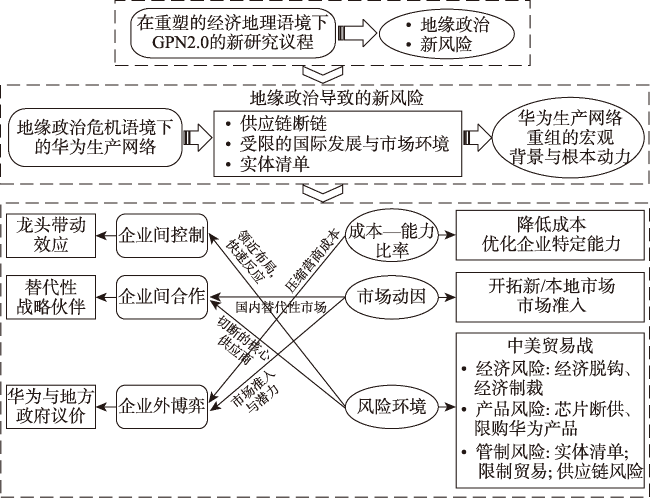
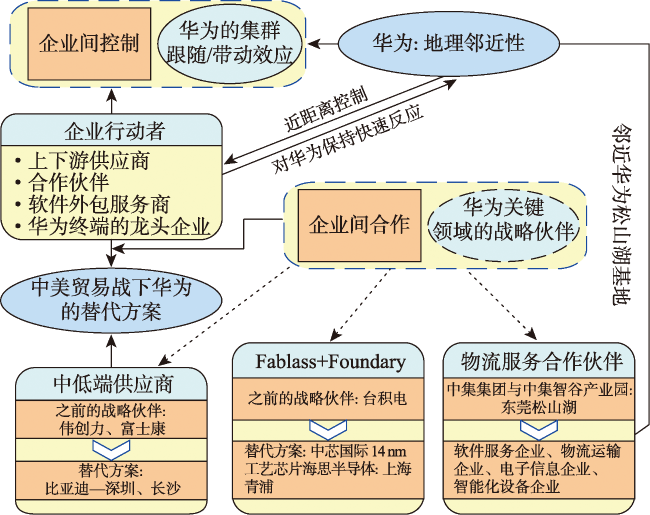
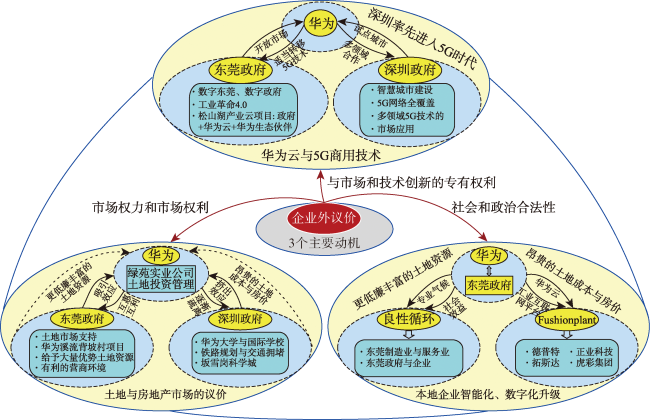
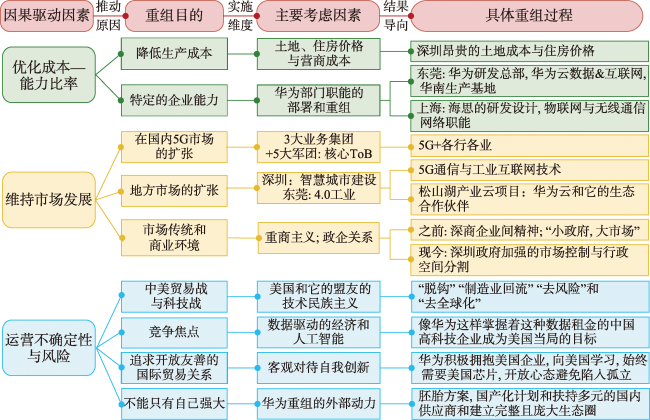
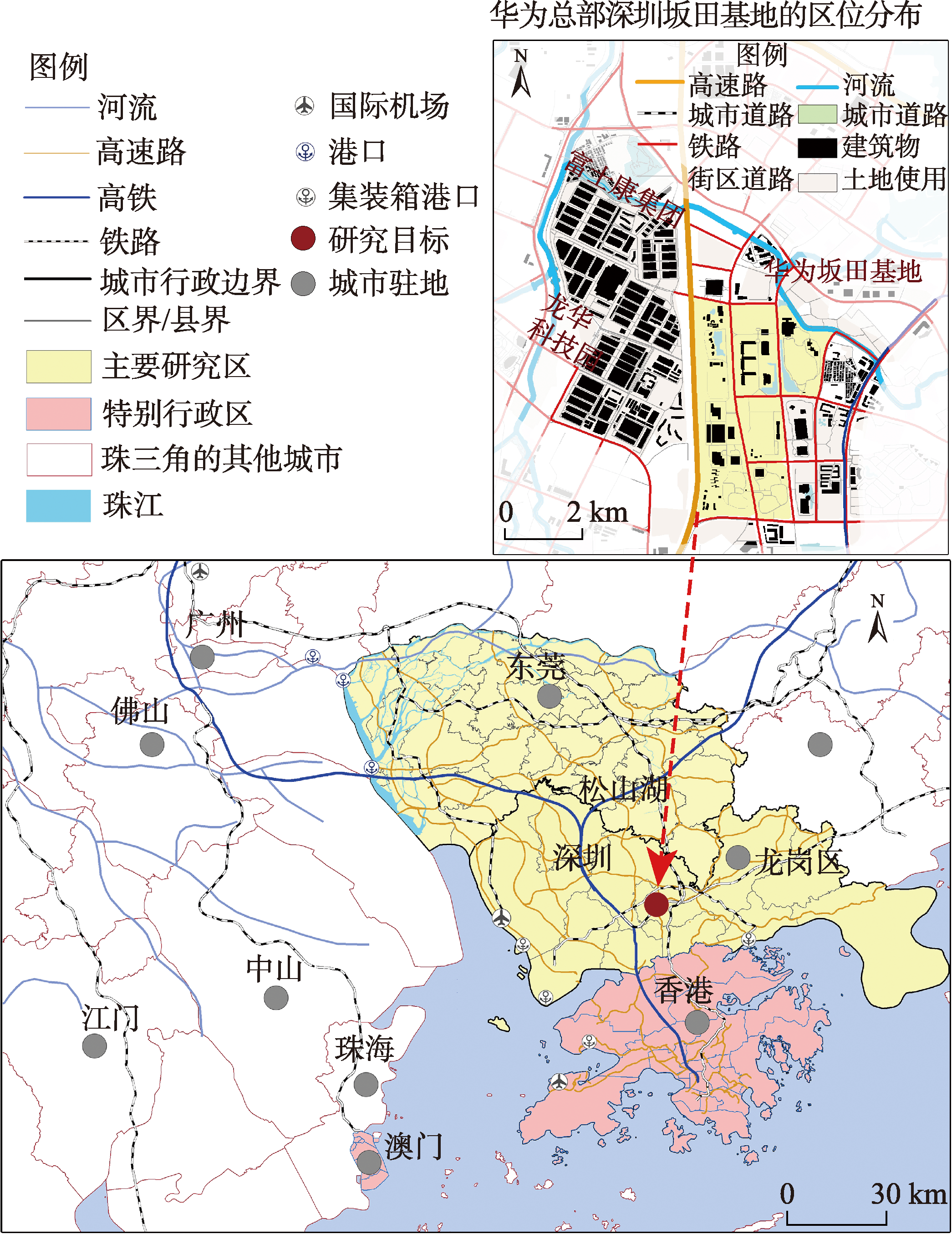
在中美贸易战全球地缘政治危机背景下,地缘政治与新风险的互动成为GPN 2.0研究的新方向,研究领先企业的全球生产网络的重构进程、战略反应和完整的因果解释动态具有现实和理论意义。本文利用2023年在上海、深圳、东莞调研的华为及其供应商32家企业访谈数据,研究了在当下中美地缘政治危机中最首当其冲的领先企业华为,从全球生产网络向部分国内生产网络的重构过程,尤其关注了它由深圳向东莞的产业再转移过程中的空间逻辑、区域再布局、行动动者策略和因果驱动机制。研究发现:① 华为重组的行动者战略主要有3种,一是基于龙头企业带动效应的企业间控制,二是寻求替代性战略伙伴的企业间合作,三是华为与深圳、东莞地方政府议价的企业外博弈战略。重组的焦点分别围绕着地理邻近性、战略联盟的国产替代、土地与房地产、5G市场展开;② 华为重组的动态因子有3种,一是成本—能力比率,主要考虑到降低土地成本和重新优化研发总部、华为南方生产基地、人才培训和员工配套职能;二是市场动因,以ToB为核心开拓国内新的5G市场,形成3大业务集团+5大军团模式,以深圳和东莞的智慧城市项目为主开拓本地市场;三是中美贸易战的风险环境推动了华为扶持国内多元产业链条;③ 华为重组的行动者战略与因果机制有着紧密的互动,风险环境驱动华为的企业间控制,市场动因和风险环境影响华为的企业间合作,优化成本—能力比率和挖掘5G/房地产市场又是华为与地方政府企业外博弈的核心。
刘清 , 薛德升 . 基于地缘政治危机视角的华为的生产网络重组研究[J]. 地理学报, 2025 , 80(2) : 433 -452 . DOI: 10.11821/dlxb202502011
In the context of U.S.-China trade war and COVID-19 pandemic and troubling global economy, the interaction between geopolitical risk (GPR) and global production network (GPN) has emerged as a new direction for GPN 2.0 research agenda. Exploring the reconfiguration process, strategic responses, and causal explanatory dynamics of lead firms is of practical and theoretical significance. This study uses interview data from 32 companies (Huawei and its suppliers) surveyed in Shanghai, Shenzhen, and Dongguan in 2023. Focusing on the spatial logic, regional redistribution, actor strategies, and causal interaction mechanisms, this study illuminates how Huawei navigates the causal dynamics and strategies of its production network, particularly the complex landscape of industrial transfer from Shenzhen to Dongguan. The results, based on the GPN 2.0 perspective, (1) reveal three actor-specific strategies employed by Huawei: inter-firm control based on the leader and follower effects, inter-firm partnership seeking alternative strategic partners. This strategy is further strengthened through extra-firm bargaining between Huawei and local governments in Shenzhen and Dongguan, where Huawei seeks to market entitlement of local real estate, expands its market reach for 5G technologies and fosters local industrial upgrading. (2) There are three dynamic factors influencing Huawei's restructuring: the first is the cost-capability ratio, primarily considering the reduction of land costs and the optimization of its R&D headquarters, southern production base, talent training, and employee facilities; the second is market-driven, with a focus on the To-Business (ToB) model to explore new domestic 5G markets, establishing the "three BGs + five major corps" model, and expanding local markets, particularly through smart city projects in Shenzhen and Dongguan; the third factor is the risk environment posed by the U.S.-China trade war, which has driven Huawei to support a diversified domestic supply chain. Overall, Huawei's production network restructuring is driven by these three considerations: reducing production costs, expanding a more feasible and stable domestic 5G and industrial internet market, and mitigating the geopolitical risks posed by U.S.-China tensions that could disrupt its current production network. (3) This, in turn, influences the interplay between Huawei's dynamics and strategies: The risky environment drives Huawei's inter-firm control, market imperatives and risks deeply affect Huawei's inter-firm partnership. The core of Huawei's extra-firm bargaining with local governments is optimising cost-capability ratios and sustaining 5G/real estate markets. Overall, this study extends GPN risk research to the major role and subjective initiative of lead firms beyond previously considered roles of the state, techno-nationalism, international relations and geopolitical interventions. This study demonstrates how Huawei internalises and interacts with specific GPR as a causal factor, shedding light on firm adaption and evolution in response to changing geopolitical challenges. This paper has three main research contributions as follows: firstly, it introduces actor strategies in the reconfiguration studies and extends to the issue of interaction between actor strategies and causal dynamics in the GPN 2.0; secondly, the internalisation of GPR as a causal consideration of corporate restructuring is a positive and effective attempt to bridge the new research agenda of GPN 2.0; and thirdly, the paper focuses on the reconfiguration of Huawei's DPN, and in particular explores the industrial transfer and reconfiguration of Huawei from Shenzhen to Songshanhu town in Dongguan.
表1 华为及其供应商企业的受访者统计Tab. 1 Statistics on respondents information from Huawei and its suppliers |
| 母国/区域 | 受访公司 | 供应的零部件/服务 | 受访者数量(人) | 受访者职务/职业 | 调研地方 |
|---|---|---|---|---|---|
| 中国(大陆) | 华为—云计算 | 单一云平台解决方案 | 1 | 计算机工程师 | 深圳 |
| 海思半导体 | 无晶圆厂 | 1 | 研发 | 深圳 | |
| 安洁科技 | 精密结构件 | 1 | 项目管理 | 上海 | |
| 深南电路 | 印制电路板,集成电路载板 | 2 | 工程和研发技术人员 | 上海 深圳 | |
| 潮州三环 | 精密陶瓷结构件 | 1 | 市场营销经理 | 深圳 | |
| 大族激光 | 激光设备 | 1 | 技术人员 | 深圳 | |
| 舜宇光学 | 相机及光学部件 | 1 | 研发人员 | 深圳 | |
| 立讯精密 | 连接器 | 1 | 项目经理 | 深圳 | |
| 瑞声科技 | 声学器件 | 1 | 市场营销经理 | 深圳 | |
| 华虹半导体 | 晶圆铸造 | 1 | 工程师 | 上海 | |
| 生益科技 | 印制电路板 | 2 | 市场营销经理、工程师 | 上海 东莞 | |
| 华天科技 | 集成电路测试和封装 | 2 | 工程师、项目经理 | 上海 深圳 | |
| 水晶光电 | 光学滤波器 | 1 | 工程师 | 上海 | |
| 德赛电池 | 锂电池 | 1 | 采购经理 | 深圳 | |
| 歌尔声学 | 声学器件 | 1 | 销售经理 | 上海 | |
| 闻泰科技 | 原始设备设计(ODM) | 1 | 市场营销经理 | 上海 | |
| 领益智造 | 精密结构件 | 1 | 销售经理 | 上海 | |
| 信维通信 | 射频电子元件 | 1 | 行业资讯 | 深圳 | |
| 南通富士通微电子 | 半导体封装和测试 | 2 | 工程师、采购经理 | 上海 深圳 | |
| 电连技术 | 连接器 | 2 | 技术人员、市场营销经理 | 深圳 东莞 | |
| 拓斯达 | 机器人与人工智能 | 1 | 项目经理 | 东莞 | |
| 正业科技 | 人工智能 | 1 | 销售经理 | 东莞 | |
| 兴森快捷 | 印制电路板、集成电路载板、封装基板 | 2 | 工程师、市场营销经理 | 深圳 广州 | |
| 中国台湾 | 台湾晶技 | 石英振荡器,表面声波振荡器 | 1 | 研发技术人员 | 上海 |
| 南亚科技 | 记忆芯片 | 1 | 研发技术人员 | 上海 | |
| 欣兴电子 | 印制电路板、集成电路载板 | 2 | 项目经理、 研发技术人员 | 上海 | |
| 日本 | 松下 | 芯片、面板 | 1 | 工程技术人员 | 上海 |
| 索尼 | 图像传感器、镜头模组 | 1 | 研发技术人员 | 上海 | |
| 广濑电机 | 连接器 | 1 | 研发技术人员 | 上海 | |
| 德国 | 罗森伯格 | 无线射频和光纤通信 | 1 | 采购工作人员 | 上海 |
| 瑞士 | 意法半导体 | 单片机、逻辑芯片、微控制单元 | 1 | 研发技术人员 | 上海 |
表2 2012—2022年华为在全球与宏观区域市场的营商统计(亿元)Tab. 2 Huawei's business revenue in global and macro-regional markets from 2012 to 2022 (billion yuan) |
| 年份 | 企业BG | 运营商 BG | 消费者 BG | 其他 业务 | 全球市 场总计 | 中国 市场 | 欧洲与 中东市场 | 亚太 市场 | 美洲 市场 | 其他区域 市场 | 中国市场 份额(%) | 欧洲与中东 市场份额(%) | 海外市场 份额(%) |
|---|---|---|---|---|---|---|---|---|---|---|---|---|---|
| 2012 | 115 | 1601 | 483 | 2 | 2202 | 736 | 774 | 374 | 318 | NULL | 33.4 | 35.1 | 66.6 |
| 2013 | 153 | 1665 | 670 | 3 | 2391 | 840 | 847 | 389 | 324 | NULL | 35.1 | 35.4 | 64.9 |
| 2014 | 192 | 1914 | 746 | 29 | 2882 | 1087 | 1007 | 424 | 308 | 56 | 37.7 | 34.9 | 62.3 |
| 2015 | 276 | 2323 | 1291 | 60 | 3950 | 1677 | 1280 | 505 | 390 | 98 | 42.5 | 32.4 | 57.5 |
| 2016 | 407 | 2906 | 1798 | 105 | 5216 | 2365 | 1565 | 675 | 441 | 170 | 45.3 | 30.0 | 54.7 |
| 2017 | 601 | 2978 | 2404 | 53 | 6036 | 3051 | 1639 | 744 | 393 | 210 | 50.5 | 27.2 | 49.5 |
| 2018 | 744 | 2940 | 3489 | 39 | 7212 | 3722 | 2045 | 819 | 479 | 147 | 51.6 | 28.4 | 48.4 |
| 2019 | 816 | 3020 | 4673 | 80 | 8589 | 5067 | 2060 | 705 | 525 | 231 | 58.9 | 24.0 | 41.1 |
| 2020 | 1003 | 3026 | 4289 | 55 | 8914 | 5849 | 1808 | 644 | 396 | 216 | 65.6 | 20.3 | 34.4 |
| 2021 | 1024 | 2815 | 2434 | 95 | 6368 | 4133 | 1315 | 537 | 292 | 91 | 64.9 | 20.7 | 35.1 |
| 2022 | 1331 | 2839 | 2144 | 107 | 6423 | 4040 | 1492 | 480 | 319 | 92 | 62.9 | 23.2 | 37.1 |
注:其他地区包括非洲、独联体国家;数据来源华为企业年报(2012—2022年)。 |
表3 2014—2024年华为在中国用地购置数量演化(块)Tab. 3 Evolution of Huawei's domestic land purchasing in China since 2014 (blocks) |
| 年份 | 工业用地 | 研发用地 | 居住用地 | 合计 |
|---|---|---|---|---|
| 2014—2017 | 2 | 1 | 1 | 4 |
| 2018 | 10 | 5 | 0 | 15 |
| 2019 | 10 | 0 | 0 | 10 |
| 2020 | 12 | 2 | 6 | 20 |
| 2021 | 20 | 3 | 2 | 25 |
| 2022—2024 | 1 | 1 | 1 | 3 |
表4 2014—2024年华为在中国用地购置的空间分布(块)Tab. 4 Spatial distribution of Huawei's land purchasing in China from 2014 to 2024 (blocks) |
| 城市 | 工业用地 | 研发用地 | 居住用地 | 合计 | 城市 | 工业用地 | 研发用地 | 居住用地 | 合计 |
|---|---|---|---|---|---|---|---|---|---|
| 东莞 | 23 | 8 | 2 | 33 | 南宁 | 2 | 0 | 0 | 2 |
| 上海 | 2 | 3 | 6 | 11 | 北京 | 0 | 0 | 1 | 1 |
| 贵阳 | 6 | 0 | 0 | 6 | 天津 | 1 | 0 | 0 | 1 |
| 西安 | 5 | 0 | 0 | 5 | 沈阳 | 1 | 0 | 0 | 1 |
| 乌兰察布 | 5 | 0 | 0 | 54 | 长春 | 1 | 0 | 0 | 1 |
| 深圳 | 3 | 0 | 1 | 4 | 福州 | 1 | 0 | 0 | 1 |
| 广州 | 3 | 0 | 0 | 3 | 昆明 | 1 | 0 | 0 | 1 |
真诚感谢新加坡国立大学Henry Wai-chung Yeung教授对本文的理论基础、解释框架、访谈数据提出宝贵指导意见;衷心感谢华东师范大学李炜博士以及上海工业大学4位研究生协助在上海的半导体企业调研工作。
| [1] |
|
| [2] |
|
| [3] |
|
| [4] |
[余盛. 芯片战争. 武汉: 华中科技大学出版社, 2022: 29-35.]
|
| [5] |
|
| [6] |
[金心异, 陈倩, 李宁. 先行:华为与深圳. 广州: 广东旅游出版社, 2021.]
|
| [7] |
[刘清, 薛德升, 黄耿志, 等. 中国半导体产业集群网络的空间组织与网络外部性影响: 基于半导体产业价值链细分视角. 地理研究, 2024, 43(4): 909-930.]
|
| [8] |
[刘洋, 张寒旭, 盘思桃. 东莞松山湖高新区综合发展与比较研究. 北京: 电子工业出版社, 2023.]
|
| [9] |
|
| [10] |
|
| [11] |
[陈肖飞, 杜景新, 李元为, 等. GPN视角下华为手机生产网络特征与影响因素研究. 地理研究, 2024, 43(1): 51-65.]
|
| [12] |
|
| [13] |
|
| [14] |
|
| [15] |
|
| [16] |
|
| [17] |
|
| [18] |
|
| [19] |
|
| [20] |
|
| [21] |
|
| [22] |
|
| [23] |
|
| [24] |
|
| [25] |
|
| [26] |
|
| [27] |
|
| [28] |
|
| [29] |
|
| [30] |
|
| [31] |
|
| [32] |
|
| [33] |
|
| [34] |
|
| [35] |
|
| [36] |
|
| [37] |
|
| [38] |
|
| [39] |
|
| [40] |
|
| [41] |
|
| [42] |
|
| [43] |
|
| [44] |
[梁若冰, 王英杰. 生产网络视角下的贸易自由化冲击与区域贸易传播: 基于福建省自贸试验区的经验研究. 经济学(季刊), 2024, 24(2): 677-691.]
|
| [45] |
[赵晓斐, 刘斌. 制造业投入数字化与国内生产网络关联. 国际贸易问题, 2023(8): 38-53.]
|
| [46] |
[欧定余, 廖纤. “双循环”新发展格局下嵌入东亚生产网络对中国出口产品质量影响研究. 重庆大学学报(社会科学版), 2024: 1-12. http://kns.cnki.net/kcms/detail/50.1023.C.20240426.1245.002.html.]
|
| [47] |
[包群, 廖赛男. 国内生产网络与间接出口外溢: 基于客户: 供应商关系的证据. 管理世界, 2023, 39(8): 20-45.]
|
| [48] |
[包群, 方浩丞, 王君. 对外直接投资的逆向技术溢出: 基于国内大循环的视角. 财贸研究, 2024, 35(6): 1-16.]
|
| [49] |
[张亮, 邱斌, 吴腊梅. 中国企业中间品全球采购的福利效应: 基于企业异质性与国内生产网络的视角. 国际贸易问题, 2023(12): 18-37.]
|
| [50] |
[明隆. 全球产业链重构、生产网络与发展中国家战略选择. 国际商务财会, 2022(20): 32-38, 54.]
|
| [51] |
[胡晓辉, 董柯, 杨宇. 战略耦合演化视角下的区域经济韧性分析框架. 地理研究, 2021, 40(12): 3272-3286.]
|
| [52] |
[孙继平, 韦素琼, 游小珺. 外部冲击下台资产业的战略耦合与本地发展韧性: 来自永福高山茶产业的实证. 地理研究, 2023, 42 (5): 1200-1214.]
|
| [53] |
[刘逸, 纪捷韩, 许汀汀, 等. 战略耦合对区域经济韧性的影响研究: 以广东省为例. 地理研究, 2021, 40(12): 3382-3398.]
|
| [54] |
[吴頔, 丁婧, 袁丰. 政府能动性对外部冲击型战略耦合断裂的暂时性调节研究: 以江苏省昆山市为例. 地理研究, 2021, 40(12): 3470-3482.]
|
| [55] |
[刘逸, 张一帆, 黄凯旋, 等. 战略耦合影响下珠三角产业升级模式及测度. 地理研究, 2022, 41(4): 1107-1121.]
|
| [56] |
[纪捷韩, 刘逸, 梅慕容, 等. 粤港澳大湾区战略耦合模式差异与区域协同. 热带地理, 2022, 42(2): 171-182.]
|
| [57] |
[沈静, 王毅斌, 曹媛媛. 从全球到地方: 东莞家具产业的绿色化升级路径. 地理研究, 2021, 40(12): 3455-3469.]
|
| [58] |
[王长建, 卢敏仪, 陈静, 等. 城市网络视角下华为手机全球价值链的建构与重构. 地理科学进展, 2022, 41(9): 1606-1621.]
|
| [59] |
[赵建吉, 王艳华, 苗长虹. 战略耦合及区位机会窗口与GPNs领先企业策略合作伙伴的区位重构: 以富士康为例. 地理学报, 2023, 78(4): 877-893.]
|
| [60] |
|
/
| 〈 |
|
〉 |