



1949—2022年登陆中国热带气旋变化特征及其影响因素
|
贺山峰(1980-), 男, 山东日照人, 教授, 硕士生导师, 中国地理学会会员(S110014091M), 研究方向为环境演变与灾害风险。E-mail: heshanfeng@163.com |
收稿日期: 2024-05-15
修回日期: 2024-12-09
网络出版日期: 2025-01-21
基金资助
山东省泰山学者青年专家计划(tsqn202103065)
国家自然科学基金项目(42371084)
Variation characteristics of landing tropical cyclones over China from 1949 to 2022 and their influencing factors
Received date: 2024-05-15
Revised date: 2024-12-09
Online published: 2025-01-21
Supported by
Young Taishan Scholars Program of Shandong Province(tsqn202103065)
National Natural Science Foundation of China(42371084)
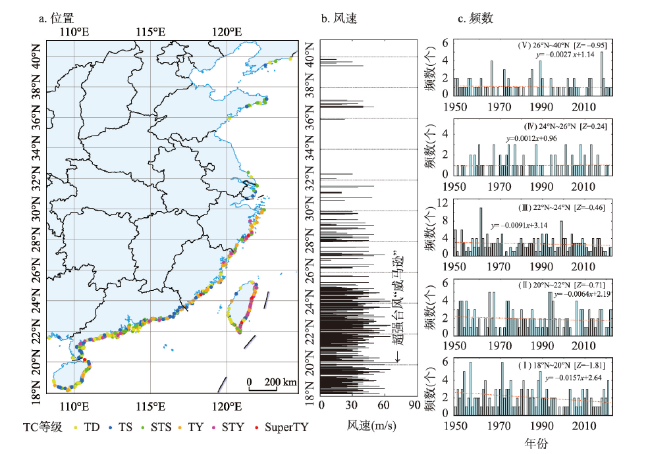
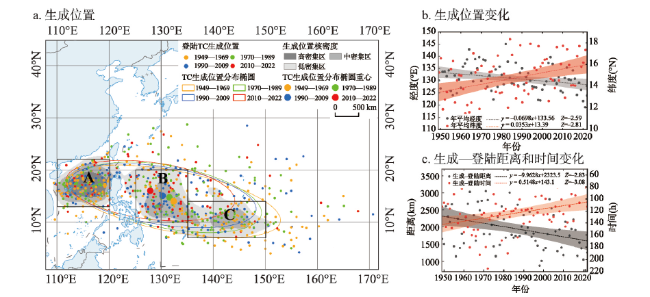
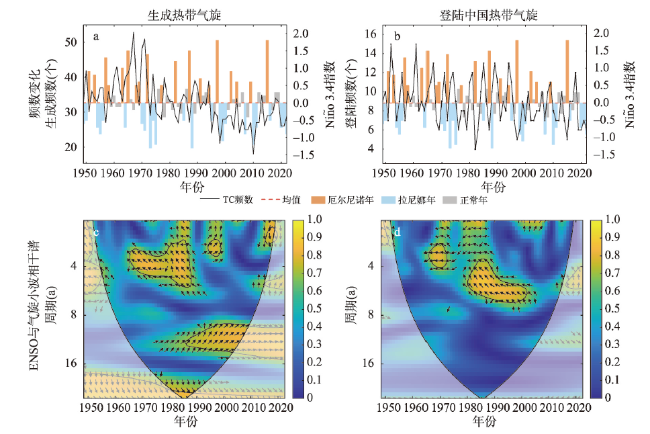
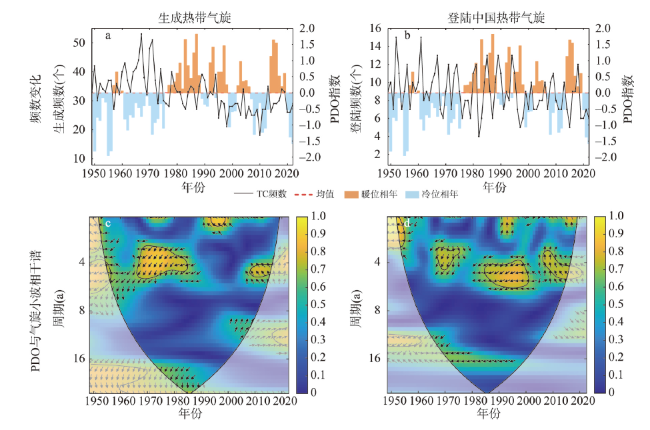
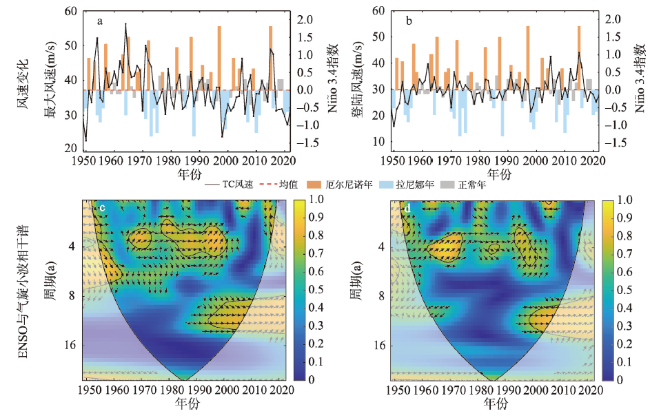
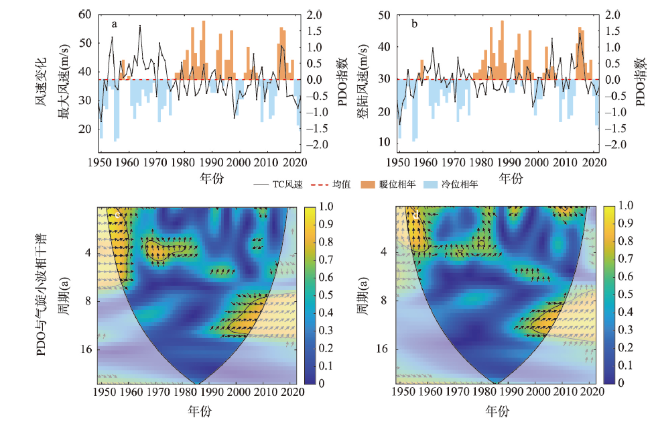
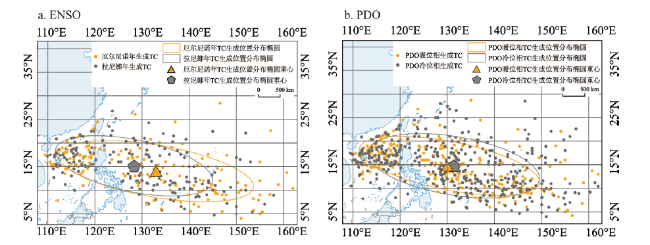
20世纪以来,热带气旋活动在全球气候变暖背景下发生了明显变化,登陆中国热带气旋的特征和趋势如何变化仍需进一步明确。基于中国气象局热带气旋最佳路径数据集资料,分析了1949—2022年登陆中国热带气旋的时空特征及变化趋势,并探讨了厄尔尼诺—南方涛动(ENSO)和太平洋年代际振荡(PDO)对登陆热带气旋活动的影响。结果表明:① 年均登陆中国的热带气旋约8.85个,总体呈显著减少趋势且随纬度降低降幅增大,但登陆热带气旋占生成总数的比例以及台风及以上等级热带气旋登陆占比均有增加;7—9月登陆中国热带气旋的数量占全年的76.3%,其中8月份最多。② 空间特征上,热带气旋登陆中国的位置主要集中在18°N~26°N,约占总数88.2%,30°N以北区域登陆的热带气旋频数锐减;登陆热带气旋的生成位置重心向西北方向移动趋势显著,愈加靠近中国,2010—2022年热带气旋生成位置的重心相比1949—1969年西移4.5个经度、北移2.0个纬度。③ ENSO与生成和登陆中国热带气旋频数的年际变化存在相关性,厄尔尼诺年促进了强热带气旋的形成,并且使得登陆热带气旋的生成位置更加偏向东南,拉尼娜年则相反;PDO也在一定程度上影响了热带气旋的生成,当处于PDO的暖位相时,生成热带气旋的数量较冷位相偏少且位置偏西。本文进一步厘清了1949年以来登陆中国热带气旋特征的变化趋势,并揭示了ENSO和PDO对热带气旋活动的影响,研究结果可为开展热带气旋模拟评估和防风减灾工作提供科学依据。

贺山峰 , 李铮 , 冯爱青 , 王伟 , 马运佳 , 吴绍洪 . 1949—2022年登陆中国热带气旋变化特征及其影响因素[J]. 地理学报, 2025 , 80(1) : 101 -119 . DOI: 10.11821/dlxb202501007
Tropical cyclone activity has undergone significant changes under the impact of the global warming since the 20th century. However, the characteristic and trend changes of landing tropical cyclones over China still need to be further clarified. We conducted an analysis of the spatiotemporal characteristics and trends of landing tropical cyclones over China from 1949 to 2022 using the dataset of the best tracks of tropical cyclones from the China Meteorological Administration. Additionally, we explored the influences of El Niño-Southern Oscillation (ENSO) and Pacific Decadal Oscillation (PDO) on landing tropical cyclone activities. The results indicate that: (1) The annual average number of landing tropical cyclones over China is approximately 8.85, showing a significant decreasing trend, and the decreasing range becomes larger with lower latitude overall. However, both the proportion of landing tropical cyclones to the total number and the percentage of higher intensity tropical cyclones increase. The landing tropical cyclones from July to September account for 76.3% of the total, in which August experiences the most. (2) The landing positions of tropical cyclones in China are mainly concentrated between 18°N and 26°N, accounting for approximately 88.2% of the total, and the landing frequency shows a sharp decline in the regions north of 30°N. The central landing position of tropical cyclones has shifted significantly northwestward, moving closer to China. Compared to 1949-1969, the central generating position from 2010 to 2022 shifted 4.5 degrees westward and 2.0 degrees northward. (3) There is a correlation between ENSO and the frequency variation of generating tropical cyclones in the Northwest Pacific and landing over China. El Niño promotes the formation of strong tropical cyclones and leads to a more southeastern bias in the generating positions of landing tropical cyclones, while La Niña has an opposite effect. The PDO also affects the tropical cyclones to a certain extent. During the warm phase of PDO, the generating position of tropical cyclones is westward and the number is less than that in the cold phase. This study further clarifies the changing trends and characteristics of the landing tropical cyclones over China since 1949. It also highlights the impacts of ENSO and PDO on tropical cyclone activities. The findings can serve as a scientific basis for conducting simulations and assessments of tropical cyclones and for disaster prevention and mitigation efforts.
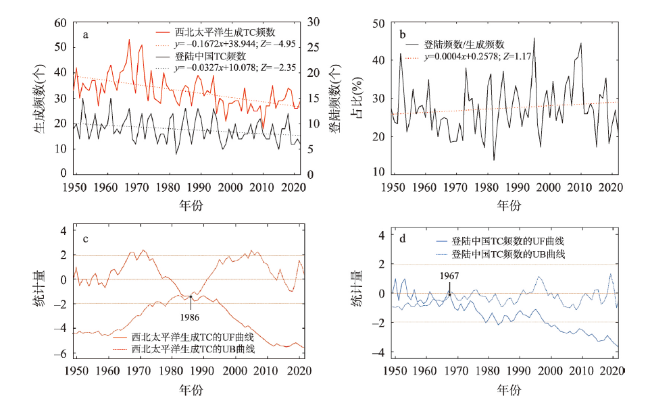
图1 1949—2022年西北太平洋生成热带气旋和登陆中国热带气旋频数、登陆频数占比及生成热带气旋频数和登陆热带气旋频数的M-K检验Fig. 1 The interannual variation of the frequency of generating and landing tropical cyclones over China, the proportion of landing frequency to the total number of generating tropical cyclones, M-K test for generating tropical cyclone frequency and landing tropical cyclone frequency from 1949 to 2022 |
| [1] |
|
| [2] |
|
| [3] |
[潘威, 满志敏, 刘大伟, 等. 1644—1911年中国华东与华南沿海台风入境频率. 地理研究, 2014, 33(11): 2195-2204.]
|
| [4] |
[苏朝晖, 方伟华. 1980—2015年中国沿海地区热带气旋暴露度变化分析. 自然灾害学报, 2023, 32(3): 102-117.]
|
| [5] |
[吴绍洪. 中国“气候变化的影响、风险与适应”研究进展: 中国《第四次气候变化国家评估报告·第二部分》解读. 中国人口·资源与环境, 2023, 33(1): 80-86.]
|
| [6] |
IPCC. Climate Change 2021: The Physical Science Basis. Cambridge: Cambridge University Press, 2021.
|
| [7] |
|
| [8] |
|
| [9] |
|
| [10] |
|
| [11] |
|
| [12] |
[姚秀萍, 彭思越. 秋季西北太平洋上热带气旋研究进展及展望. 海洋气象学报, 2023, 43(3): 1-8.]
|
| [13] |
[贺山峰, 李铮, 陈超冰, 等. 海南省登陆台风特征演变及其危险性分析. 地理科学进展, 2023, 42(7): 1355-1364.]
|
| [14] |
[殷洁, 戴尔阜, 吴绍洪, 等. 中国台风强度等级与可能灾害损失标准研究. 地理研究, 2013, 32(2): 266-274.]
|
| [15] |
|
| [16] |
|
| [17] |
|
| [18] |
[冯利华. 中国登陆热带气旋与太平洋海表温度的关系. 地理学报, 2003, 58(2): 209-214.]
|
| [19] |
[韩岩松, 姜伟, 肖玉雯, 等. 全球变化背景下热带气旋主要变化特征及影响因素. 地球科学进展, 2023, 38(5): 515-532.]
|
| [20] |
|
| [21] |
|
| [22] |
|
| [23] |
[陆晓婕, 董昌明, 李刚. 1951—2015年进入东海的台风频数及登陆点的变化. 大气科学学报, 2018, 41(4): 433-440.]
|
| [24] |
|
| [25] |
|
| [26] |
[王相军, 李秋胜. ENSO事件影响下登陆中国热带气旋年际变化特征的分位数回归分析. 热带气象学报, 2022, 38(1): 11-22.]
|
| [27] |
|
| [28] |
|
| [29] |
|
| [30] |
|
| [31] |
[周明珠, 徐晶. 西北太平洋热带气旋强度和尺度协同变化特征. 应用气象学报, 2023, 34(4): 463-474.]
|
| [32] |
|
| [33] |
|
| [34] |
|
| [35] |
|
| [36] |
[顾成林, 康建成, 闫国东, 等. 1951—2015年登陆中国热带气旋的时空变化特征及与ENSO的关系. 灾害学, 2018, 33(4): 129-134, 140.]
|
| [37] |
[赵作权. 空间格局统计与空间经济分析. 北京: 科学出版社, 2014.]
|
| [38] |
[许泽宁, 高晓路. 基于电子地图兴趣点的城市建成区边界识别方法. 地理学报, 2016, 71(6): 928-939.]
|
| [39] |
|
| [40] |
|
| [41] |
|
| [42] |
[聂心宇, 谭红建, 蔡榕硕, 等. 利用区域气候模式预估未来登陆中国热带气旋活动. 气候变化研究进展, 2023, 19(1): 23-37.]
|
| [43] |
|
| [44] |
|
| [45] |
|
| [46] |
|
| [47] |
|
| [48] |
|
| [49] |
|
/
| 〈 |
|
〉 |