



中国农村物流末端配送网点可达性与公平性测度
|
杨鹏(1980-), 男, 湖南岳阳人, 教授, 中国地理学会会员(S110019588M), 研究方向为大数据与物流网络优化、物流经济地理。E-mail: pengyang@hufe.edu.cn |
收稿日期: 2023-10-12
修回日期: 2024-08-17
网络出版日期: 2024-12-02
基金资助
国家社会科学基金项目(20BJY066)
国家自然科学基金项目(42121001)
国家自然科学基金项目(42225106)
Measuring accessibility and equity of rural logistics terminal facilities in China
Received date: 2023-10-12
Revised date: 2024-08-17
Online published: 2024-12-02
Supported by
National Social Science Foundation of China(20BJY066)
National Natural Science Foundation of China(42121001)
National Natural Science Foundation of China(42225106)
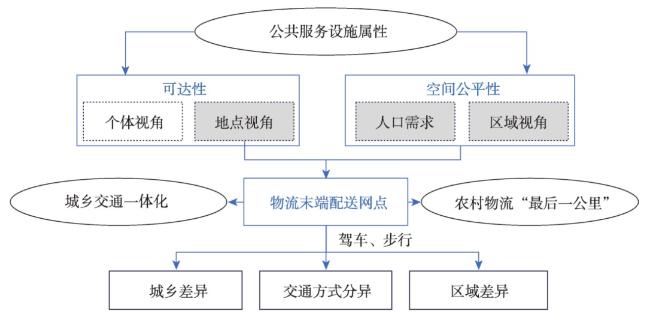
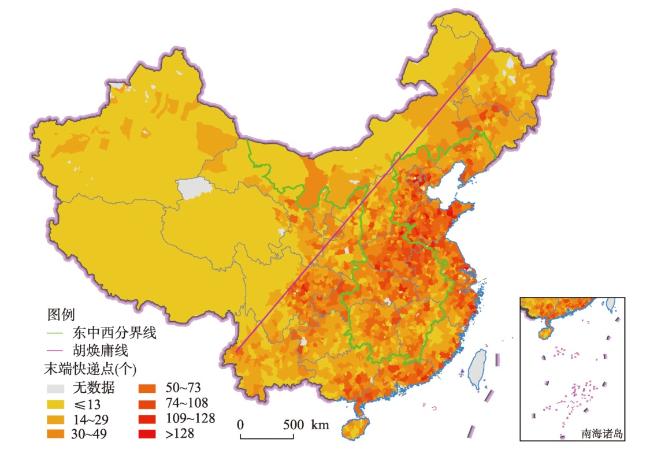
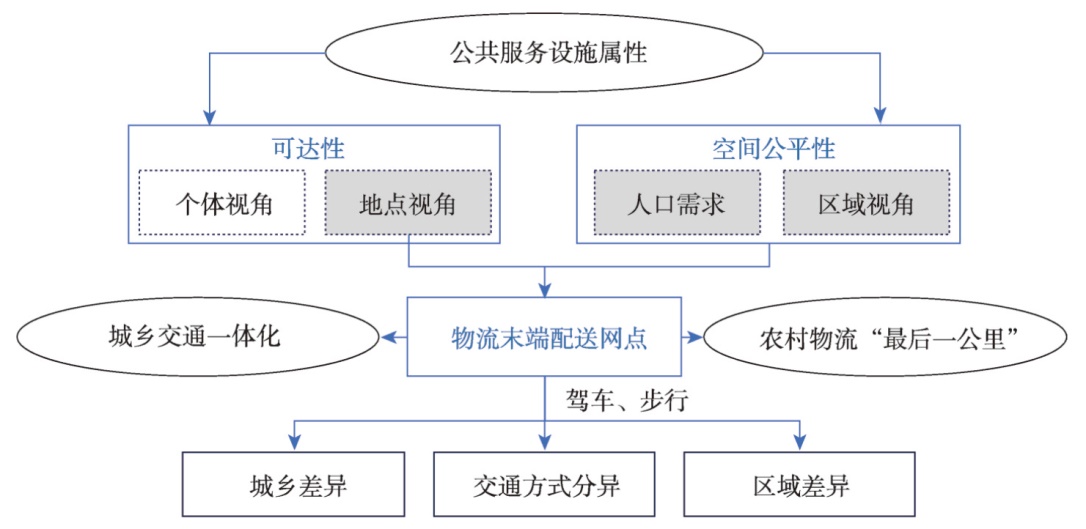
农村物流快递资源优化配置和科学管理是打通“国内大循环”的关键,也是交通强国、城乡交通一体化建设的重点。本文从驾车、步行双重视角,基于可达性和空间公平性,构建了农村物流末端配送网点可达性与公平性研究的分析框架。运用在线地图工具,以县级行政为基本单元,解析了中国44万个行政村点位到最近物流末端配送网点可达性,揭示了农村物流末端配送网点可达性的空间分布格局及区域差异,并运用洛伦兹曲线和基尼系数评价了县级行政单元农村物流末端配送网点分布的空间公平性。结果显示:① 农村物流快递末端配送网点可达性由沿海向内陆逐渐降低,存在较大区域差异,与社会经济空间分布格局基本一致。② 对比出行距离和出行时间、驾车与步行两种方式,物流快递末端配送网点可达性的城乡差距在出行时间、步行方式更进一步凸显。③ 农村人口分布及密集程度对物流快递末端配送网点布局呈现显著影响。上述发现将为农村物流快递末端配送网点布局提供科学支撑,对推进“以人为本”城乡交通一体化发展、助力乡村振兴、促进共同富裕等都具有十分重要的意义。
杨鹏 , 黄洁 , 王姣娥 , 肖玲 . 中国农村物流末端配送网点可达性与公平性测度[J]. 地理学报, 2024 , 79(11) : 2739 -2753 . DOI: 10.11821/dlxb202411003
The optimal allocation and scientific management of rural logistics resources is the key to unblock the domestic transportation cycle, and it is also the focus of the construction of a powerful transportation country and the integration of urban and rural transportation. From two perspectives of driving and walking, this study constructs a research framework for the evaluation of rural logistics terminal distribution with accessibility and equity. This study analyzes the accessibility of 440000 administrative villages in China and their nearest rural logistics terminal facilities. By using the online map tool, this study reveals the spatial distribution pattern and regional differences of rural logistics terminal facilities, and evaluates the spatial equity of rural logistics terminal facilities at the county level with Lorenz curves and Gini coefficients. The results show that: (1) Accessibility of rural logistics terminal facilities presents significant regional difference, and it declines from the coast to the interior, which is consistent with the socio-economic development pattern in China. (2) Accessibility of logistics terminal facilities presents significant urban-rural differences. According to the comparative analysis of travel distance, travel time, and travel modes, the urban-rural differences have been widened on travel time and by walking. (3) Based on the analysis with rural population distribution, the distribution of rural logistics terminal facilities presents the transport-related exclusion. The above findings can provide scientific support for the scientific layout of rural logistics terminal facilities so that we could promote the people-oriented integrated development of urban and rural transportation, and assist rural revitalization, so as to achieve common prosperity.
Key words: rural logistics; last-kilometer issue; accessibility; transport equity
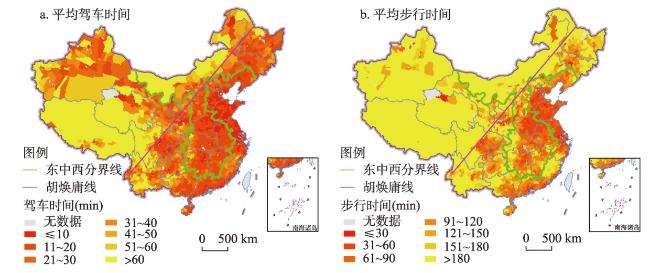
表1 2020年中国农村物流末端配送网点可达性等级分布(驾车时间)Tab. 1 Distribution of accessibility levels to rural logistics terminal facilities by auto in China in 2020 |
| 平均驾车时间(min) | 县级行政单元数量(个) | 面积占比(%) | 人口占比(%) |
|---|---|---|---|
| 0~10 | 684 | 7.05 | 30.0 |
| 11~20 | 1008 | 21.6 | 43.41 |
| 21~30 | 439 | 17.67 | 14.07 |
| 31~40 | 210 | 9.24 | 6.38 |
| 41~50 | 125 | 7.52 | 2.77 |
| 51~60 | 50 | 7.56 | 0.97 |
| 60以上 | 175 | 29.36 | 2.41 |
图4 2020年中国县域农村物流末端配送网点可达性分布注:基于自然资源部标准地图服务网站审图号为GS(2020)4630号标准地图制作,底图边界无修改。 Fig. 4 Distribution of access to rural logistics terminal facilities in China by car and walk in China in 2020 |
表2 2020年中国农村物流末端配送网点可达性等级分布(步行时间)Tab. 2 Distribution of accessibility levels to rural logistics terminal facilities by walk in China in 2020 |
| 平均步行时间(min) | 县级行政单元数量(个) | 面积占比(%) | 人口占比(%) |
|---|---|---|---|
| 0~30 | 164 | 1.58 | 5.41 |
| 31~60 | 647 | 6.49 | 30.93 |
| 61~90 | 433 | 7.47 | 20.66 |
| 91~120 | 329 | 6.88 | 13.67 |
| 121~150 | 233 | 8.01 | 8.26 |
| 151~180 | 175 | 6.06 | 6.09 |
| 180以上 | 710 | 63.52 | 14.98 |
表3 2020年中国农村物流末端配送网点可达性指数统计结果Tab. 3 Statistics of accessibility indicators to rural logistics terminal facilities in China in 2020 |
| 最大值 | 最小值 | 平均值 | 标准差 | ||
|---|---|---|---|---|---|
| 全国 | 驾车距离(km) | 569.90 | 0.09 | 17.07 | 32.48 |
| 驾车时间(min) | 651.25 | 0.55 | 25.58 | 39.06 | |
| 步行距离(km) | 569.90 | 0.08 | 14.92 | 31.94 | |
| 步行时间(min) | 7598.68 | 1.07 | 198.93 | 425.83 | |
| 东部 | 驾车距离(km) | 91.18 | 0.50 | 7.36 | 6.82 |
| 驾车时间(min) | 126.17 | 1.47 | 12.73 | 9.52 | |
| 步行距离(km) | 90.75 | 0.40 | 6.08 | 6.53 | |
| 步行时间(min) | 1210.02 | 5.28 | 81.01 | 87.06 | |
| 中部 | 驾车距离(km) | 101.59 | 0.09 | 12.17 | 11.24 |
| 驾车时间(min) | 112.47 | 0.55 | 18.57 | 12.85 | |
| 步行距离(km) | 96.08 | 0.08 | 9.94 | 9.96 | |
| 步行时间(min) | 1281.08 | 1.07 | 132.53 | 132.84 | |
| 西部 | 驾车距离(km) | 569.90 | 0.32 | 29.86 | 50.33 |
| 驾车时间(min) | 651.25 | 1.33 | 43.01 | 59.65 | |
| 步行距离(km) | 569.90 | 0.30 | 27.07 | 49.93 | |
| 步行时间(min) | 7598.68 | 3.93 | 360.92 | 665.75 |
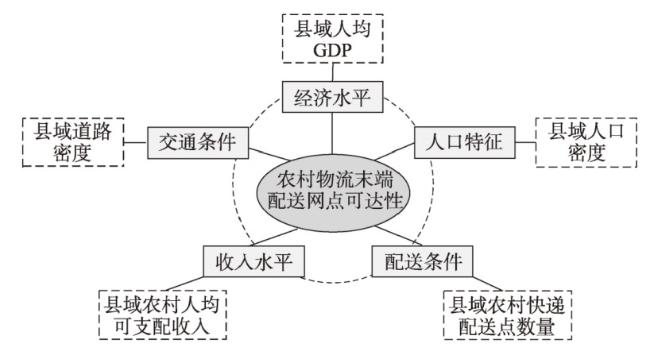
表4 农村物流末端配送网点可达性影响因素回归分析结果Tab. 4 Regression analysis results for the accessibility of rural logistics terminal facilities |
| 变量 | 农村物流配送可达性 | VIF |
|---|---|---|
| 配送条件 | 0.064***(2.87) | 2.75 |
| 人口密度 | 0.292***(17.39) | 2.49 |
| 经济水平 | 0.101***(5.70) | 2.08 |
| 物流基础 | 0.126***(6.64) | 1.55 |
| 农村收入 | 0.091***(6.00) | 1.45 |
| 观察值数量 | 2573 | - |
| R2 | 0.442 | - |
| F值 | 244.86 | - |
| P值 | < 0.001 | - |
真诚感谢匿名评审专家对本文相关研究进展、实证分析与结论等方面给出了十分细致的修改意见,使本文获益匪浅;感谢欧阳乐茜博士和学生龙润之为实证研究做的基础数据收集工作。
| [1] |
[李心萍. 农村邮政支撑畅通城乡经济循环. 人民日报, 2022-04-19.]
|
| [2] |
[徐向梅. 推进农村寄递物流体系现代化. 经济日报, 2023-01-09.]
|
| [3] |
[张智, 肖作鹏. 基于大数据的电商物流末端配送网点空间分布分析: 以深圳市为例. 城市观察, 2017(1): 73-81.]
|
| [4] |
|
| [5] |
|
| [6] |
|
| [7] |
|
| [8] |
|
| [9] |
|
| [10] |
|
| [11] |
|
| [12] |
|
| [13] |
[钟少颖, 杨鑫, 陈锐. 层级性公共服务设施空间可达性研究: 以北京市综合性医疗设施为例. 地理研究, 2016, 35(4): 731-744.]
|
| [14] |
[曹芳东, 黄震方, 吴江, 等. 国家级风景名胜区旅游效率测度与区位可达性分析. 地理学报, 2012, 67(12): 1686-1697.]
|
| [15] |
[王姣娥, 胡浩. 基于空间距离和时间成本的中小文化旅游城市可达性研究. 自然资源学报, 2012, 27(11): 1951-1961.]
|
| [16] |
|
| [17] |
|
| [18] |
|
| [19] |
|
| [20] |
|
| [21] |
|
| [22] |
|
| [23] |
|
| [24] |
[赵鹏军, 吕迪, 胡昊宇, 等. 适应人口发展的现代化综合交通运输体系研究. 地理学报, 2020, 75(12): 2699-2715.]
|
| [25] |
|
| [26] |
|
| [27] |
|
| [28] |
[方创琳. 城乡融合发展机理与演进规律的理论解析. 地理学报, 2022, 77(4): 759-776.]
|
| [29] |
|
| [30] |
|
| [31] |
|
| [32] |
|
| [33] |
|
| [34] |
|
| [35] |
|
| [36] |
|
| [37] |
|
| [38] |
[高金龙, 包菁薇, 刘彦随, 等. 中国县域土地城镇化的区域差异及其影响因素. 地理学报, 2018, 73(12): 2329-2344.]
|
| [39] |
|
| [40] |
|
| [41] |
|
| [42] |
|
| [43] |
|
| [44] |
[王盈盈, 谢漪, 王敏. 精准扶贫背景下农村电商关系网络与地方营造研究: 以广东省五华县为例. 世界地理研究, 2017, 26(6): 119-130.]
|
| [45] |
[王武林, 曹小曙, 黄晓燕. 1980—2010年中国乡村公路发展及其影响因素研究. 经济地理, 2013, 33(3): 22-27.]
|
| [46] |
|
| [47] |
|
| [48] |
|
| [49] |
[耿满国, 张伟, 唐相龙, 等. 中国乡村旅游地的空间分布特征及影响因素. 世界地理研究, 2024, 33(2): 151-163.]
|
| [50] |
[应奎, 丁金宏, 陈益豪, 等. 贵州县域人口收缩空间特征及影响因素的MGWR探测. 世界地理研究, 2023, 32(12): 172-184.]
|
/
| 〈 |
|
〉 |