



生态系统服务流概念内涵与量化方法
|
夏沛(1996-), 男, 江西信丰人, 博士生, 研究方向为生态系统服务。E-mail: xiapei@stu.pku.edu.cn |
收稿日期: 2023-06-19
修回日期: 2024-01-17
网络出版日期: 2024-04-02
基金资助
宁夏回族自治区重点研发计划(2021BEG03019)
Conceptual connotation and quantification methods of ecosystem service flows
Received date: 2023-06-19
Revised date: 2024-01-17
Online published: 2024-04-02
Supported by
Key Research and Development Program of Ningxia(2021BEG03019)
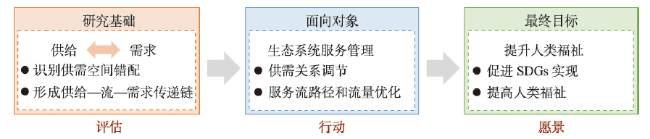
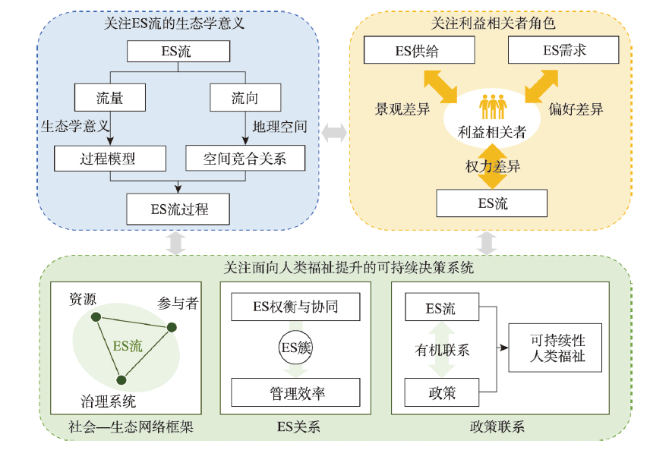
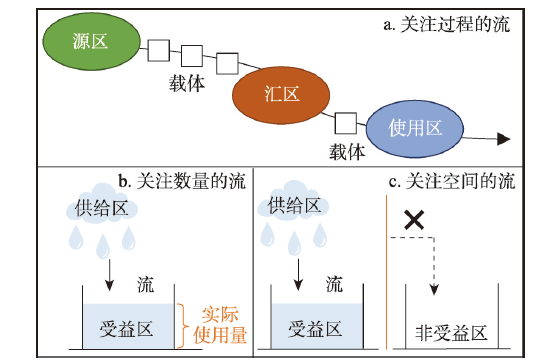
生态系统服务流指示实际被使用的服务,是连接生态系统服务供给与需求的纽带。理解生态系统服务流的概念内涵、厘清其量化方法是推动生态系统服务流有效实践应用的基本前提。近年来生态系统服务流概念愈发受到重视,但仍然缺乏连接概念内涵、量化方法和实践应用的系统性梳理。因此,为强化生态系统服务供需评估的实践性意义,本文基于过程、数量和空间3种视角梳理生态系统服务流的概念内涵,据此明晰生态系统服务流的量化方法,探讨生态系统服务流系统研究框架。研究认为,应该建立“生态系统服务供需评估—生态系统服务管理行动—人类福祉提升愿景”系统性研究框架,聚焦生态学意义与地理空间过程、利益相关者角色和面向人类福祉提升的可持续决策系统,将生态系统服务流研究推向更广阔的发展前景与实践空间。
夏沛 , 彭建 , 徐子涵 , 顾恬玮 , 王佳斌 . 生态系统服务流概念内涵与量化方法[J]. 地理学报, 2024 , 79(3) : 584 -599 . DOI: 10.11821/dlxb202403003
Ecosystem service flows indicate the actually-used services, which act as a link between ecosystem services supply and demand. For effective practical application, it is crucial to understand and clarify its concept and quantification methods. In recent years, the concept of ecosystem service flows has received more and more attention, but there is still a lack of a systematic review connecting the conceptual connotation, quantification method and practical application. Therefore, in order to strengthen the practical significance of ecosystem service supply and demand assessment, and to make up for the limitation of current research, we clarify the conceptual definition of ecosystem service flows based on the perspectives of process, quantity and space, summarize the quantitative methodology of ecosystem services and explore a systematic framework for research of ecosystem service flows. Focusing on the ecological significance and geospatial processes, stakeholder roles and decision-making systems for human well-being enhancement, this paper suggests establishing a systematic research framework of 'ecosystem services supply and demand assessment-ecosystem services management action-human well-being enhancement vision', which is projected to propel a broader prospect and practical domain for future research of ecosystem service flows.
表1 生态系统服务流的量化方式对比Tab. 1 Contrast of approaches to quantifying ecosystem service flows |
| 流的类型 | 概念内涵 | 量化方式 | 参考文献 |
|---|---|---|---|
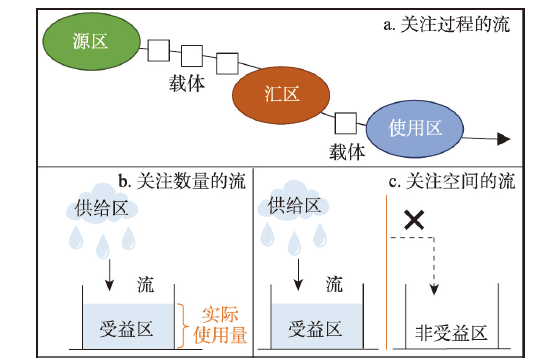
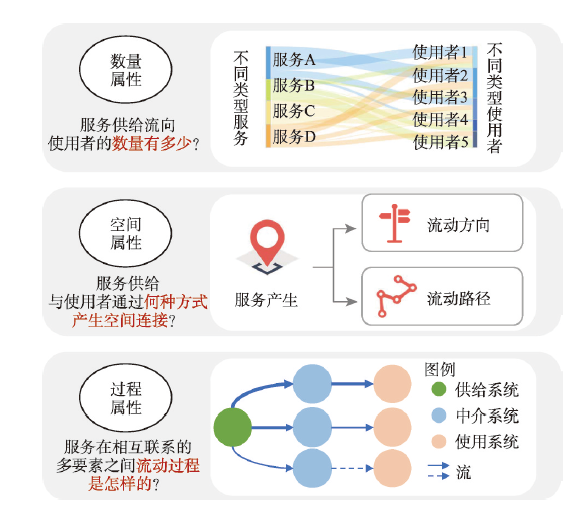
| 关注数量的流 | 强调生态系统服务的交付和实际使用的数量 | 统计数据法:用统计数据中得到的数量表征服务流,一般用于供给服务。统计数据表征服务流量直观准确,但局限于供给服务且一般缺失对空间流动路径的刻画。 受惠面积法:通过计算享受服务的区域面积或人口数量来表征流的数量,一般用于不便直接量化的调节服务和文化服务,在缺乏相关数据的情况下能够比较简单直观量化关键生态系统服务的受益范围,但缺乏精准性。 物质量模型模拟法:基于土地利用数据量化服务的物理量,一般用于易于直接计算实际服务量的调节服务,更好体现服务流的生态学意义,但难以从受益者角度评价流的数量在何种程度上满足其需求。 | [21]、[22]、[29]、[46]、[57] |
| 关注空间的流 | 强调生态系统服务供给和受益的空间连接 | 供需差异法:考虑空间距离,认为服务由供大于需的区域就近流向供不应求的区域,通常借助引力模型和基于DEM的水流动模型刻画服务流的空间流动路径,优势是能够在考虑距离条件下直观连接供给与需求,但对多元影响因素的考虑仍存在不足。 节点连接法:将特定服务的供给和受益区抽象为供需节点,基于载体在节点间的流动表征服务的流,较好兼顾流量和流向,但获取全面的载体属性较难,因此适用的服务类型较少。 固定路径法:通过河道和路网传递服务,如文化服务受益者随公路或飞机航线移动,与水有关的服务被视为沿河道传递等,固定路径的还原有助于刻画更清晰的服务流动方向,但适用的服务类型较少。 | [33]、[42]、[45] |
| 关注过程的流 | 强调流从产生经过汇消耗再到使用者被消费的完整过程 | 以ARIES模型为代表的方式通过量化要素间相互联系的连接数量表征流的大小,优势是抽象化的网络关系结构可以更清晰地表征各要素间的联系程度,缺点在于一定程度上忽略了生态学意义,且空间制图仍存在不足。 通过构建生态系统服务的发送、接受和传输系统还原生态系统服务流的完整过程,从系统角度评估服务流的区域流动有助于从整体视角理解流的过程并更好支持决策,但数据限制导致部分类型服务(如调节服务)难以纳入该框架。 | [18]、[49] |
| [1] |
|
| [2] |
|
| [3] |
Millennium Ecosystem Assessment. Ecosystems and Human Well-being:Synthesis. Washington, DC: Island Press, 2005.
|
| [4] |
|
| [5] |
|
| [6] |
|
| [7] |
|
| [8] |
|
| [9] |
|
| [10] |
|
| [11] |
|
| [12] |
|
| [13] |
|
| [14] |
|
| [15] |
|
| [16] |
|
| [17] |
[ 彭建, 胡晓旭, 赵明月, 等. 生态系统服务权衡研究进展:从认知到决策. 地理学报, 2017, 72(6): 960-973.]
|
| [18] |
|
| [19] |
|
| [20] |
|
| [21] |
|
| [22] |
|
| [23] |
[ 肖玉, 谢高地, 鲁春霞, 等. 基于供需关系的生态系统服务空间流动研究进展. 生态学报, 2016, 36(10): 3096-3102.]
|
| [24] |
[ 姚婧, 何兴元, 陈玮. 生态系统服务流研究方法最新进展. 应用生态学报, 2018, 29(1): 335-342.]
|
| [25] |
|
| [26] |
|
| [27] |
[ 刘慧敏, 刘绿怡, 丁圣彦. 人类活动对生态系统服务流的影响. 生态学报, 2017, 37(10): 3232-3242.]
|
| [28] |
|
| [29] |
|
| [30] |
|
| [31] |
|
| [32] |
|
| [33] |
|
| [34] |
|
| [35] |
|
| [36] |
|
| [37] |
|
| [38] |
|
| [39] |
|
| [40] |
|
| [41] |
|
| [42] |
|
| [43] |
|
| [44] |
|
| [45] |
|
| [46] |
|
| [47] |
|
| [48] |
|
| [49] |
|
| [50] |
|
| [51] |
|
| [52] |
|
| [53] |
|
| [54] |
|
| [55] |
|
| [56] |
|
| [57] |
|
| [58] |
|
| [59] |
|
| [60] |
|
| [61] |
[ 王军, 顿耀龙. 土地利用变化对生态系统服务的影响研究综述. 长江流域资源与环境, 2015, 24(5): 798-808.]
|
| [62] |
|
| [63] |
|
| [64] |
|
| [65] |
|
| [66] |
|
| [67] |
|
| [68] |
[ 马琳, 刘浩, 彭建, 等. 生态系统服务供给和需求研究进展. 地理学报, 2017, 72(7): 1277-1289.]
|
| [69] |
|
| [70] |
|
| [71] |
|
| [72] |
|
| [73] |
|
| [74] |
|
| [75] |
|
| [76] |
|
| [77] |
|
| [78] |
|
| [79] |
|
| [80] |
|
| [81] |
|
| [82] |
|
| [83] |
[ 黄璐, 邬建国, 王珂, 等. 可持续景观规划: 融合景观可持续性研究与地理设计. 生态学报, 2022, 42(2): 442-449 ]
|
| [84] |
[ 邬建国, 郭晓川, 杨稢, 等. 什么是可持续性科学? 应用生态学报, 2014, 25(1): 1-11.]
|
| [85] |
|
| [86] |
|
| [87] |
|
| [88] |
|
| [89] |
|
| [90] |
|
| [91] |
|
| [92] |
|
| [93] |
|
| [94] |
|
| [95] |
[ 王嘉丽, 周伟奇. 生态系统服务流研究进展. 生态学报, 2019, 39(12): 4213-4222.]
|
| [96] |
|
| [97] |
|
/
| 〈 |
|
〉 |