



中国COVID-19疫情时空演化与综合防控
|
李钢(1979-), 男, 四川成都人, 教授, 博导, 中国地理学会会员(S110009694M), 主要研究方向为人地关系与空间安全、灾害地理与犯罪地理。E-mail: lig@nwu.edu.cn |
收稿日期: 2020-03-31
要求修回日期: 2020-10-30
网络出版日期: 2021-01-25
基金资助
西北大学防治新型冠状病毒肺炎紧急科研专项引导基金重点项目(2020)
西北大学“仲英青年学者”支持计划(2016)
西北大学“人地关系与空间安全”特色优势科研团队建设项目(2019)
版权
Spatio-temporal evolution process and integrated measures for prevention and control of COVID-19 epidemic in China
Received date: 2020-03-31
Request revised date: 2020-10-30
Online published: 2021-01-25
Supported by
Key Project of the Special Guidance Fund for Emergency Study on the Prevention and Treatment of COVID-19 by Northwest University(2020)
Tang Scholar Program of Northwest University(2016)
"Human-Environment Relations and Space Security" Characteristic & Advantage Research Team Construction Project of Northwest University(2019)
Copyright
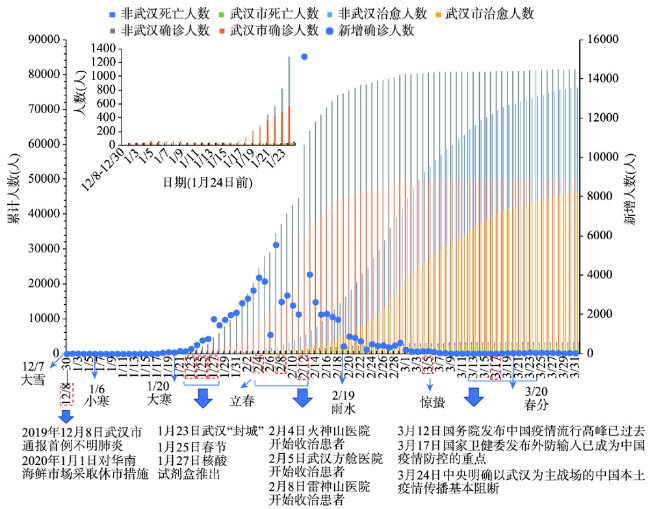
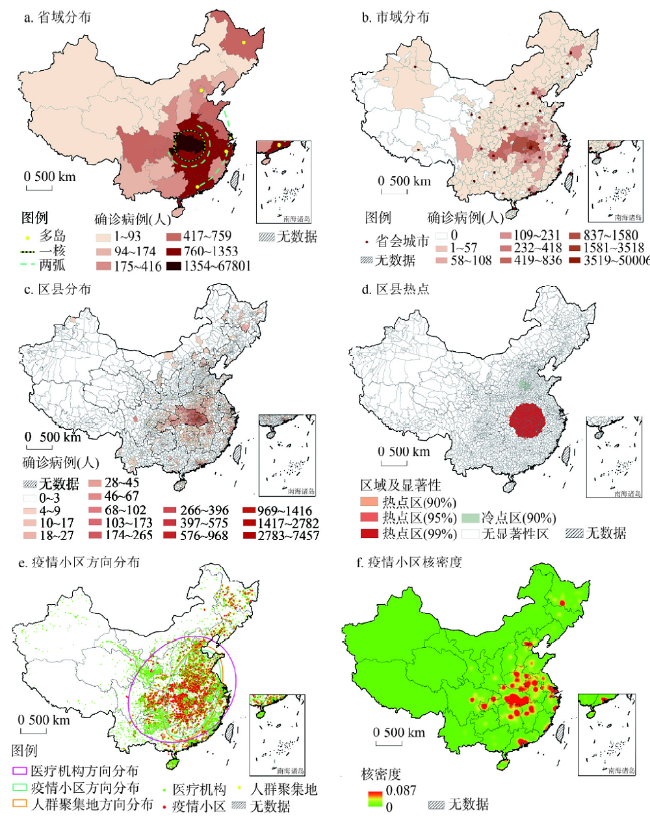
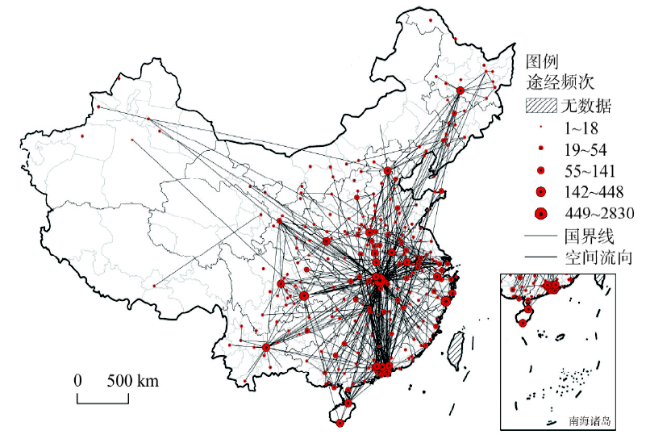
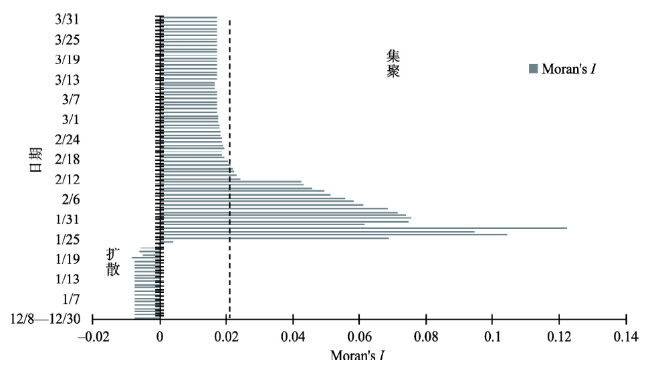
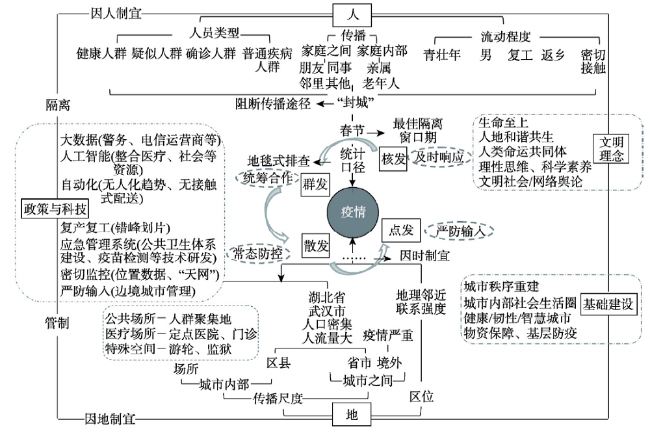
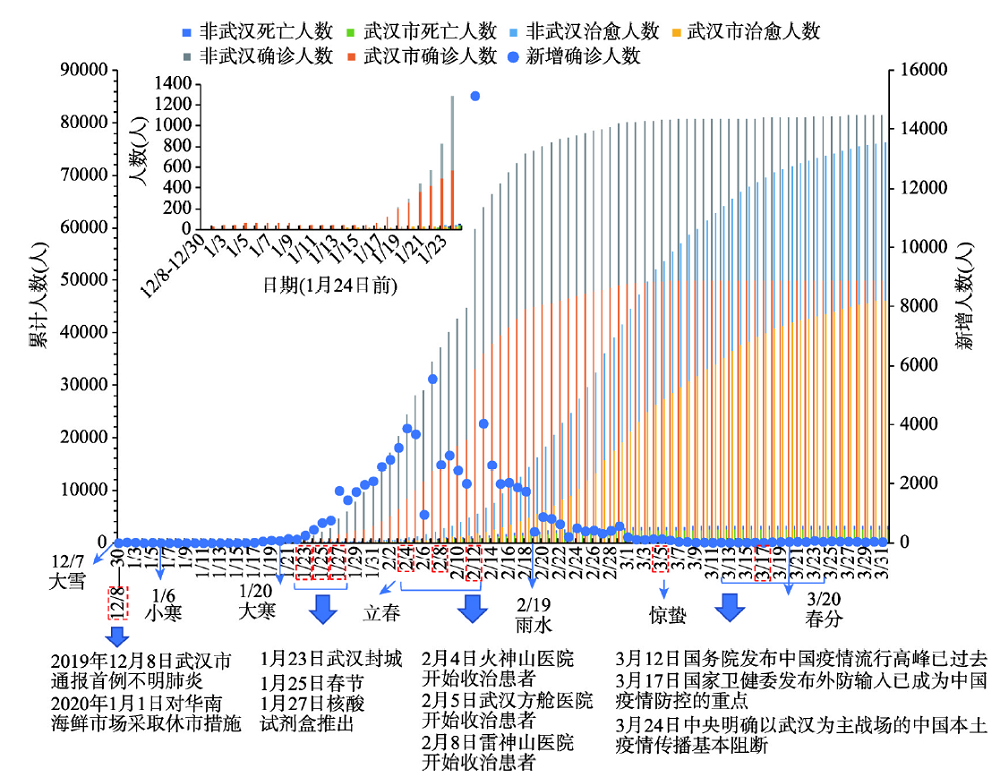
新型冠状病毒肺炎(COVID-19)疫情仍在全球范围内蔓延,是当前人类社会面临的重大突发公共卫生事件,对个人、家庭、社会乃至国家均产生深远影响。基于官方通报的病例数据及相关POI数据,综合运用数理统计与空间分析等方法,从省域、市域、县域和小区4个空间尺度探究疫情在中国的时空演化过程,进而探索疫情防控的综合机制与策略。结果表明:① 中国COVID-19疫情在时间演变上,始于大雪,盛于立春,衰于惊蛰,滞于春分,并经历早期武汉主导暴发、中期全国差异扩散、后期武汉主导衰减及末期本土疫情传播基本阻断4个阶段,对重要事件节点响应明显;② 空间分布呈现“喇叭”状的“一核两弧多岛”格局,主要受邻近性与联系强度影响;空间演化经历“核发—群发—散发—点发”4阶段模态,各阶段核心聚集区均位于湖北省内。最后,整合中国疫情演化的影响因素及相关措施,提出针对当前疫情发展和应对未来类似挑战的人地互馈协同发展的有效对策,具体随时间表现为及时响应、统筹合作、常态防控及严防输入等,并展望未来深入探究的方向。
李钢 , 王皎贝 , 徐婷婷 , 高兴 , 金安楠 , 于悦 . 中国COVID-19疫情时空演化与综合防控[J]. 地理学报, 2020 , 75(11) : 2475 -2489 . DOI: 10.11821/dlxb202011015
The sudden outbreak of the novel coronavirus disease (COVID-19), an unexpected emergency event in human society, is spreading globally and has severe impacts on human health and social development. Based on the confirmed COVID-19 cases' details manually extracted from the official reports and the relevant Point of Interest (POI) data, this paper aims to explore the sociodemographic characteristics of confirmed COVID-19 cases and examine the spatio-temporal evolution patterns on different spatial scales in China by using text analysis, spatial analysis and other methods. Furthermore, we provide targeted measures for prevention and control of this epidemic. The results indicate that: (1) In contrast to the twenty-four solar terms, the epidemic started at Heavy Snow, ran rampant in the Beginning of Spring, declined in the Awakening of Insects, and stagnated at the Vernal Equinox. It experienced four stages: the early period of Wuhan dominant outbreak, the middle period of cross-country diffusion, the later period of Wuhan dominant decline and the ending period of rare local epidemic transmission. (2) The spatial distribution presents a pattern of "one core, two arcs and multiple islands", mainly affected by the distance to Wuhan and the flow of population; the spatial evolution is manifested in the mode of "core outbreak - cluster occurrence - dispersion occurrence - point occurrence". The core aggregation area in each stage was located in Hubei province. Finally, by integrating the influencing factors and effective measures of the epidemic evolution in China, this paper proposes effective countermeasures for the spread of the current epidemic and the coordinated development of human resources in response to similar challenges in the future, which are manifested in instant response, coordinated cooperation, regular prevention and control, and strict prevention of importation, etc. Also, the directions of in-depth study in the future are pointed out.
表1 湖北迁出指数平均值(%)Tab. 1 The average emigration index from Hubei |
| 地域 | 平均值 | 属性 | 地域 | 平均值 | 属性 | 地域 | 平均值 | 属性 |
|---|---|---|---|---|---|---|---|---|
| 广东 | 27.79 | 沿海弧 | 安徽 | 2.60 | 邻近 | 海南 | 0.59 | 其他 |
| 浙江 | 14.29 | 沿海弧 | 陕西 | 2.27 | 邻近 | 辽宁 | 0.42 | 其他 |
| 湖南 | 7.81 | 邻近 | 四川 | 2.23 | 其他 | 甘肃 | 0.37 | 其他 |
| 江苏 | 7.00 | 沿海弧 | 山东 | 1.88 | 沿海弧 | 西藏 | 0.33 | 其他 |
| 河南 | 5.94 | 邻近 | 河北 | 1.57 | 沿海弧 | 新疆 | 0.31 | 其他 |
| 上海 | 4.31 | 多岛 | 广西 | 1.35 | 其他 | 黑龙江 | 0.22 | 多岛 |
| 福建 | 4.29 | 沿海弧 | 贵州 | 1.15 | 其他 | 内蒙古 | 0.21 | 其他 |
| 江西 | 3.66 | 邻近 | 云南 | 1.07 | 其他 | 吉林 | 0.20 | 其他 |
| 重庆 | 3.39 | 邻近 | 天津 | 0.71 | 多岛 | 宁夏 | 0.13 | 其他 |
| 北京 | 3.17 | 多岛 | 山西 | 0.68 | 其他 | 青海 | 0.12 | 其他 |
表2 中国COVID-19疫情分时段市域集聚类型Tab. 2 The city cluster types of the COVID-19 epidemic in China in different periods |
| 时间 | 高—高型 | 低—高型 |
|---|---|---|
| 随机扩散期 | 武汉市、黄冈市、孝感市 | 鄂州市* |
| 高度集聚期 | 十堰市*、宜昌市、襄阳市、荆门市、随州市、孝感市、武汉市、仙桃市、荆州市、咸宁市、黄石市、黄冈市、鄂州市 | |
| 集聚衰退期 | 随州市*、孝感市、武汉市、荆州市*、黄石市、黄冈市、鄂州市 | |
| 集聚停滞期 | 随州市*、孝感市、武汉市、荆州市*、黄石市*、黄冈市、鄂州市 |
注:*表示显著性水平在0.01 ≤ p ≤ 0.05的市域。 |
| [1] |
|
| [2] |
|
| [3] |
National Health Committee General Office "About print and distribute new coronavirus pneumonia diagnosis and treatment scheme (trial version 5)" notice. http://www.nhc.gov.cn/wjw/gfxwjj/list.shtml, 2020-02-05.
[ 国家卫生健康委办公厅《关于印发新型冠状病毒感染肺炎诊疗方案 (试行第五版)》的通知. http://www.nhc.gov.cn/wjw/gfxwjj/list.shtml, 2020-02-05.]
|
| [4] |
|
| [5] |
[ 周涛, 刘权辉, 杨紫陌, 等. 新型冠状病毒肺炎基本再生数的初步预测. 中国循证医学杂志, 2020,20(3):359-364.]
|
| [6] |
|
| [7] |
[ 龚胜生. 中国疫灾的时空分布变迁规律. 地理学报, 2003,58(6):870-878.]
|
| [8] |
[ 余新忠. 从避疫到防疫: 晚清因应疫病观念的演变. 华中师范大学学报(人文社会科学版), 2008,47(2):51-60.]
|
| [9] |
[ 程杨, 李海蓉, 杨林生. 中国明清时期疫病时空分布规律的定量研究. 地理研究, 2009,28(4):1059-1068.]
|
| [10] |
[ 谭见安, 李日邦, 朱文郁. 我国医学地理研究的主要进展和展望. 地理学报, 1990,45(2):187-201.]
|
| [11] |
[ 武继磊, 王劲峰, 孟斌, 等. 2003年北京市SARS疫情空间相关性分析. 浙江大学学报(农业与生命科学版), 2005,31(1):97-101.]
|
| [12] |
[ 范新生, 应龙根. 中国SARS疫情的探索性空间数据分析. 地球科学进展, 2005,20(3):282-291.]
|
| [13] |
[ 王劲峰, 孟斌, 郑晓瑛, 等. 北京市2003年SARS疫情的多维分布及其影响因素分析. 中华流行病学杂志, 2005,26(3):164-168.]
|
| [14] |
[ 曹志冬, 曾大军, 郑晓龙, 等. 北京市SARS流行的特征与时空传播规律. 中国科学: 地球科学, 2010,40(6):776-788.]
|
| [15] |
[ 曹志冬, 王劲峰, 高一鸽, 等. 广州SARS流行的空间风险因子与空间相关性特征. 地理学报, 2008,63(9):981-993.]
|
| [16] |
[ 冯业荣, 朱科伦, 纪忠萍, 等. 广州大气环境因素与SARS疫情短期变化关系的研究. 热带气象学报, 2005,21(2):191-198.]
|
| [17] |
[ 刘纪远, 钟耳顺, 庄大方, 等. SARS控制与预警地理信息系统. 现代科学仪器, 2003(4):10-13.]
|
| [18] |
[ 刘纪远, 钟耳顺, 庄大方, 等. SARS控制与预警地理信息系统的研制与应用. 遥感学报, 2003,7(5):337-344, 433.]
|
| [19] |
|
| [20] |
[ 王皎贝, 李钢, 王建坡, 等. 陕西省COVID-19疫情时空演化与风险画像. 热带地理, 2020,40(3):432-445.]
|
| [21] |
[ 刘逸, 李源, 黎卓灵, 等. 新冠肺炎疫情在广东省的扩散特征. 热带地理, 2020,40(3):367-374.]
|
| [22] |
[ 金安楠, 李钢, 王皎贝, 等. 深圳市新型冠状病毒肺炎(COVID-19)疫情时空演化与防控对策. 陕西师范大学学报(自然科学版), 2020,48(3):18-32.]
|
| [23] |
[ 王姣娥, 杜德林, 魏冶, 等. 新冠肺炎疫情的空间扩散过程与模式研究. 地理研究, 2020,39(7):1450-1462.]
|
| [24] |
|
| [25] |
|
| [26] |
|
| [27] |
|
| [28] |
|
| [29] |
[ 蔡彦, 陈惠军, 陈创荣. 中医节气思想浅析. 中医研究, 2007,20(8):9-11.]
|
| [30] |
[ 项飚. 跨越边界的社区:北京“浙江村”的生活史. 北京: 生活—读书—新知三联书店, 2000.]
|
| [31] |
[ 刘志佳, 黄河清. 珠三角地区建设用地扩张与经济、人口变化之间相互作用的时空演变特征分析. 资源科学, 2015,37(7):1394-1402.]
|
| [32] |
[ 邓厚培. 疾病地理研究的基本理论和方法. 首都师范大学学报(自然科学版), 1994,15(3):94-98.]
|
| [33] |
|
/
| 〈 |
|
〉 |