



基于珠海实证的城市旅游增长极限分析框架
|
梁增贤(1984-), 男, 广西南宁人, 博士, 副教授, 博士生导师, 研究方向为主题公园、城市旅游、旅游房地产。E-mail:liangzx3@mail.sysu.edu.cn |
收稿日期: 2019-01-04
要求修回日期: 2020-06-15
网络出版日期: 2020-10-25
基金资助
国家自然科学基金重点项目(41920104002)
版权
The growth of urban tourism: With or without limit
Received date: 2019-01-04
Request revised date: 2020-06-15
Online published: 2020-10-25
Supported by
Key Program of National Natural Science Foundation of China(41920104002)
Copyright
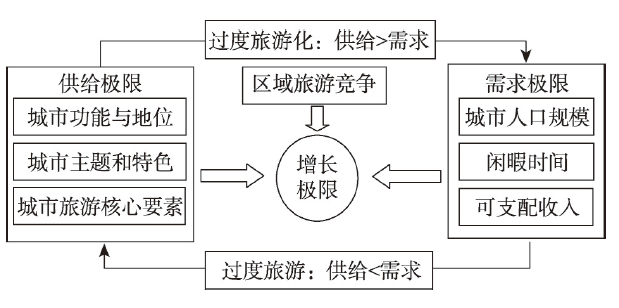
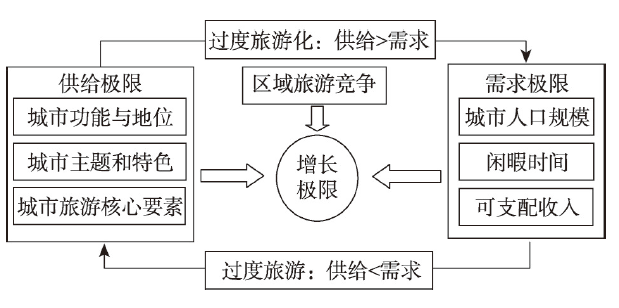
城市旅游是城市的一个开放、高流动的子系统,在一定时期内是相对稳定,有增长极限的。城市旅游增长极限受到供需极限影响,当旅游需求超过供给时,出现过度旅游;而当供给超过需求,就会导致过度旅游化。城市旅游需求增长极限呈现阶梯式,只有当影响城市旅游需求增长的长期因素发生持续重大变化时,城市旅游需求增长才可能突破原有的极限,进入一个新的阶段。城市旅游需求极限规定了城市旅游供给极限,决定了城市在一定时期内适合开发的景区、酒店、餐饮、购物等旅游设施规模。本文基于珠海的实证分析表明,过去十几年,由于旅游供需两方面影响因素缺乏持续重大的变化,城市功能和地位、城市主题和特色等因素相对稳定,加之受到区域其他城市的激烈竞争,珠海中高端旅游需求相对稳定,星级酒店等中高端旅游产品面临增长极限。此时,新增旅游景区和星级酒店并不会带来过夜旅游需求的实质增长,反而可能加剧现阶段旅游供需的失衡,造成过度旅游化。本文也讨论了超越旅游极限的条件以及旅游增长与旅游发展的关系,并进一步建议了旅游统计的改革举措。
梁增贤 , 保继刚 . 基于珠海实证的城市旅游增长极限分析框架[J]. 地理学报, 2020 , 75(8) : 1711 -1724 . DOI: 10.11821/dlxb202008011
The growth of urban tourism has received wide attentions from tourism geography. Over the past four decades, China has been witnessed rapid, continuous and non-limit growths of urban tourism in most cities. The local governments and developers were encouraged by this miracle of past growth expectation or plan to a more optimistic glowing future. However, the urban tourism is an open and high mobility subsystem of city system, and its growth is stable and faces limits from both supply and demand sides for a certain period. When tourist demand exceeds its supply, it will lead to overtourism. Oppositely, when tourism supply exceeds tourist demand, which will result in over tourismification. The growth of urban tourism demand curve is stepped. Only when the long-term influencing factors of urban tourist demand continue to undergo major changes, can the growth of urban tourism break through the original limit and enter a new stage. The limit of urban tourist demand stipulates the urban tourism supply and determines the scale and level of tourist facilities such as scenic spots, hotels, restaurants, and shopping mall which are cater to the need of urban tourists within a certain period. This study defines a phenomenon of over tourismification as the status of tourism supply over tourist demand, which is manifested as three conditions: whole over-supply, partial over-supply and no over-supply but facing negative reaction to tourism growth by enterprises and locals. This study also proposes an analytical framework on limits to growth of urban tourism and uses it to empirically analyze urban tourism of Zhuhai city. It is found that middle- and high-end tourist demand of the study city has been stable and faced limit since less constant change in function, status, features and image of Zhuhai city took place and more intense competition from surrounding cities occurred in the past decade. This indicated that the supply of middle- and high-end hotels and other tourist facilities in Zhuhai reached a saturation point and any new more such tourist facilities will make for over tourismification. The conditions of breaking through limit and the relationship between growth of urban tourism and tourism development were discussed and suggestions on the improvement of tourism statistics in China were also proposed.
表1 2000—2019年全国主要旅游城市国内旅游人数增长(万人次)Tab.1 The growth of tourist number from 2000 to 2019 in main tourism cities of China (ten thousand) |
| 北京 | 上海 | 广州 | 深圳 | 杭州 | 南京 | 桂林 | 珠海 | 黄山 | |
|---|---|---|---|---|---|---|---|---|---|
| 2000年 | 10200 | 7848.10 | 1879.24 | 927.71 | 2305 | 1501 | 868.37 | 632.29 | 532.95 |
| 2005年 | 12500 | 9011.94 | 2340.25 | 1526.38 | 3265.96 | 3220 | 1104.99 | 467.29 | 958.0 |
| 2010年 | 18000 | 21463.16 | 3691.58 | 2264.71 | 6304.89 | 6366 | 2097.71 | 1884.63 | 2439.7 |
| 2015年 | 27000 | 27569.42 | 4854.37 | 4156.50 | 12000 | 10175.19 | 4253.61 | 3121.47 | 4470.8 |
| 2019年 | 31800 | 36140.51 | 5873.72 | 5501.08 | 20700.4 | 14596.69 | 13500 | 4077.07 | 7115.27 |
| 倍增量 | 3.12 | 4.61 | 3.13 | 5.93 | 8.98 | 9.72 | 15.55 | 6.45 | 13.35 |
注:倍增量=2019年国内旅游人数/2000年国内旅游人数,数据来源于各个城市相应年度国民经济和社会发展统计公报。由于各城市过夜游客统计发布不同,本文只能使用国内旅游人数作为替代指标,反映各城市旅游增长态势,但不宜直接作为旅游投资参考。 |
表2 2009—2018年珠海市酒店业发展情况Tab. 2 The growth of hotel industry from 2009 to 2018 in Zhuhai city |
| 项目 | 2009 | 2010 | 2011 | 2012 | 2013 | 2014 | 2015 | 2016 | 2017 | 2018 |
|---|---|---|---|---|---|---|---|---|---|---|
| 住宿业销售总额(万元) | 61040 | 69488 | 81310 | 76552 | 74630 | 155784 | 193646 | 203148 | 263141 | 312240 |
| 法人企业数(个) | 90 | 92 | 87 | 89 | 100 | 108 | 111 | 117 | 128 | 129 |
| 年末从业人员数(人) | 14508 | 14873 | 14458 | 14104 | 16969 | 19464 | 20044 | 20156 | 21164 | 22157 |
| 营业额(万元) | 153942 | 179124 | 192744 | 206498 | 201033 | 421366 | 539800 | 585476 | 661682 | 737534 |
| 旅游饭店(家) | 76 | 76 | 73 | 75 | 85 | 92 | 95 | 100 | 96 | 108 |
| 一般旅馆(家) | 11 | 14 | 12 | 12 | 13 | 15 | 16 | 17 | 32 | 21 |
| 其他住宿服务(家) | 3 | 2 | 2 | 2 | 2 | 1 | 0 | 0 | 0 | 0 |
注:数据来源《珠海统计年鉴(2009—2019)》,2014年住宿业销售额和营业额统计口径范围有所扩大,按照可比口径范围,2014年销售总额仅比2013年增长9.6%,营业额的增长与销售总额增长基本相当。 |
表3 2005—2018珠海市星级酒店发展情况Tab. 3 The growth of star-rated hotels from 2005 to 2018 in Zhuhai city |
| 项目 | 2005 | 2006 | 2007 | 2008 | 2009 | 2010 | 2011 | 2012 | 2013 | 2014 | 2015 | 2016 | 2017 | 2018 |
|---|---|---|---|---|---|---|---|---|---|---|---|---|---|---|
| 星级酒店(家) | 76 | 80 | 87 | 88 | 93 | 93 | 87 | 83 | 81 | 76 | 66 | 66 | 66 | 68 |
| 五星级(家) | 5 | 5 | 6 | 8 | 8 | 8 | 8 | 9 | 9 | 8 | 8 | 8 | 8 | 8 |
| 四星级(家) | 9 | 8 | 8 | 8 | 9 | 10 | 9 | 8 | 8 | 8 | 8 | 8 | 8 | 8 |
| 三星级(家) | 46 | 54 | 61 | 64 | 68 | 67 | 64 | 62 | 60 | 56 | 47 | 47 | 47 | 49 |
| 客房数(间) | 10598 | 10276 | 11613 | 11816 | 11940 | 12116 | 11579 | 11384 | 11650 | 12139 | 9905 | 9905 | 9832 | 10197 |
| 床位数(张) | 18030 | 20048 | 20231 | 19701 | 20089 | 19429 | 18691 | 18136 | 18585 | 19367 | 15819 | 15819 | 15575 | 16150 |
| 出租率(%) | 68.06 | 68.11 | 66.9 | 64.6 | 53.7 | 58.6 | 60.2 | 60.53 | 60.18 | 61.5 | 59.04 | 59.04 | 60.57 | 62.38 |
| 日均客房出租量(间) | 7213 | 6999 | 7769 | 7633 | 6411 | 7100 | 6971 | 6891 | 7011 | 7465 | 5848 | 5848 | 5955 | 6361 |
注:日均客房出租量=客房数×出租率;数据来源《珠海统计年鉴(2006—2019)》。 |
| [1] |
[ 保继刚, 龙江智. 城市旅游驱动力的转化及其实践意义. 地理研究, 2005,24(2):274-282.]
|
| [2] |
[ 保继刚, 梁增贤. 基于层次与等级的城市旅游供给分析框架. 人文地理, 2011,26(6):1-9.]
|
| [3] |
[ 梁增贤, 保继刚. 大城市旅游结构性增长的驱动力: 基于广州和西安的比较研究. 人文地理, 2014,29(5):127-133.]
|
| [4] |
[ 保继刚, 甘萌雨. 改革开放以来中国城市旅游目的地地位变化及因素分析. 地理科学, 2004,24(3):365-370.]
|
| [5] |
|
| [6] |
|
| [7] |
|
| [8] |
|
| [9] |
[ 李琛, 成升魁, 陈远生. 25年来中国旅游容量研究的回顾与反思. 地理研究, 2009,28(1):235-245.]
|
| [10] |
[ 卢松, 陆林, 徐茗, 等. 古村落旅游地旅游环境容量初探: 以世界文化遗产西递古村落为例. 地理研究, 2005,24(4):581-590.]
|
| [11] |
[ 章小平, 朱忠福. 九寨沟景区旅游环境容量研究. 旅游学刊, 2007,22(9):50-57.]
|
| [12] |
[ 梁增贤, 董观志. 主题公园游客心理容量及其影响因素研究: 来自深圳欢乐谷的实证. 人文地理, 2011,26(2):139-143.]
|
| [13] |
[ 王群, 章锦河, 杨兴柱. 黄山风景区水生态承载力分析. 地理研究, 2009,28(4):1105-1114.]
|
| [14] |
[ 黄震方, 袁林旺, 葛军连, 等. 海滨型旅游地环境承载力评价研究: 以江苏海滨湿地生态旅游地为例. 地理科学, 2008,28(4):578-584.]
|
| [15] |
|
| [16] |
|
| [17] |
|
| [18] |
|
| [19] |
|
| [20] |
|
| [21] |
|
| [22] |
|
| [23] |
|
| [24] |
|
| [25] |
[ 杨锐. 从游客环境容量到LAC理论: 环境容量概念的新发展. 旅游学刊, 2003,18(5):62-65.]
|
| [26] |
|
| [27] |
|
| [28] |
[ 谢慧明, 沈满洪, 李中海. 中国城市居民旅游需求函数的实证研究. 旅游学刊, 2014,29(9):24-34.]
|
| [29] |
[ 陶伟, 倪明. 中西方旅游需求预测对比研究: 理论基础与模型. 旅游学刊, 2010,25(8):12-17.]
|
| [30] |
[ 杨勇. 社会交往、旅游情境对旅游需求的影响研究: 基于春节“黄金周”的实证分析. 旅游学刊, 2016,31(10):56-69.]
|
| [31] |
[ 刘睿. 国内外旅游化研究综述. 旅游学刊, 2015,30(2):110-117.]
|
| [32] |
|
| [33] |
|
| [34] |
|
| [35] |
|
| [36] |
|
| [37] |
|
| [38] |
|
| [39] |
[ 吴必虎, 李咪咪, 黄国平. 中国世界遗产地保护与旅游需求关系. 地理研究, 2002,21(5):617-626.]
|
| [40] |
|
| [41] |
|
| [42] |
[ 滕丽, 王铮, 蔡砥. 中国城市居民旅游需求差异分析. 旅游学刊, 2004,19(4):9-13.]
|
| [43] |
|
| [44] |
|
| [45] |
|
| [46] |
|
| [47] |
[ 徐红罡. 资源型旅游地增长极限的理论模型. 中国人口·资源与环境, 2006,16(5):35-40.]
|
| [48] |
[ 陆林, 宣国富, 章锦河, 等. 海滨型与山岳型旅游地客流季节性比较: 以三亚、北海、普陀山、黄山、九华山为例. 地理学报, 2002,57(6):731-740.]
|
| [49] |
[ 保继刚, 王亚娟, 汤勇刚, 等. 大数据视角下的游客人数统计问题研究. 旅游论坛, 2020,13(1):1-12.]
|
| [50] |
[ 王兴斌. 国内旅游统计应去水分. 中国青年报, 2012-02-10(11).]
|
| [51] |
[ 保继刚. 将尺度观引入旅游统计工作的几点思考. 旅游导刊, 2019,3(1):1-8.]
|
| [52] |
[ 李艳平. 国际饭店集团在华扩张战略之比较: 以洲际集团和香格里拉酒店集团为例. 宜宾学院学报, 2011,11(5):40-42.]
|
| [53] |
[ 保继刚, 朱竑, 陈虹. 基于双赢战略的澳门: 珠海旅游互动发展. 热带地理, 1999,19(4):348-352.]
|
| [54] |
[ 保继刚, 朱竑. 珠海城市旅游发展. 人文地理, 1999,14(3):7-12.]
|
| [55] |
[ 徐红罡, 相阵迎. 珠海旅游产业集群的案例研究. 人文地理, 2007,22(6):76-80.]
|
| [56] |
|
| [57] |
[ 金万富, 周春山. 2000—2010年广东省对流动人口吸引力变化及影响因素. 南方人口, 2016,31(1):38-50.]
|
| [58] |
[ 王维. 大数据结合小调查: 旅游统计的新思路. 统计与管理, 2017(3):12-14.]
|
| [59] |
[ 戴斌. 文旅融合时代: 大数据、商业化与美好生活. 人民论坛·学术前沿, 2019(11):6-15.]
|
/
| 〈 |
|
〉 |