



The influence of social infrastructure on the formation of marginalized groups and governance transformation in Shenzhen
Received date: 2024-10-21
Revised date: 2025-04-13
Online published: 2026-02-05
Supported by
National Natural Science Foundation of China(42430515)
National Natural Science Foundation of China(42401265)
National Natural Science Foundation of China(42071183)
Rural Regional System of Observation and Research Station of Guangdong Province(2021B 1212050026)
The study enriches the dimensions of social infrastructure research by introducing the concept of "marginalized social infrastructure", deepening the understanding and interpretation of the role of social infrastructure within the framework of urban governance. Taking the Jingle North and South Areas of Longhua district in Shenzhen as an example, the research focuses on the formation of marginalized groups driven by social infrastructure and the transformation of urban governance strategies. The study finds that the marginalized social infrastructure centered around the original Sanhe Talent Market and its surrounding low-cost living facilities not only provides a low-cost living space for the "Sanhe group" but also shapes its unique social ecology, lifestyle, and group identity, becoming a grassroots practice through which the group distances itself from mainstream social norms, while simultaneously reinforcing their self-marginalization. In urban governance practice, the government gradually regulates and improves these marginalized facilities through a multi-stakeholder collaborative model, promoting the enhancement of spatial quality and social order in the Sanhe area. The research points out that while acknowledging the positive functions of social infrastructure in serving the public, it is also essential to recognize the role of marginalized social infrastructure within the traditional urban governance system. The social infrastructure relied upon by marginalized groups can also become an important medium for pluralistic urban governance by reshaping the governance process in reverse.
ZHU Hong , MENG Siqi , DONG Haoping , XIE Xiaoru . The influence of social infrastructure on the formation of marginalized groups and governance transformation in Shenzhen[J]. Acta Geographica Sinica, 2026 , 81(2) : 453 -471 . DOI: 10.11821/dlxb202602009
表1 访谈对象基本信息Tab. 1 Basic information of the interviewees |
| 编号 | 人员类型 | 地区 | 编号 | 人员类型 | 地区 |
|---|---|---|---|---|---|
| F1 | 中介职员 | 景乐新村(南) | F18 | 自由职业者 | 龙华汽车站 |
| F2 | 环卫管理人员 | 景乐新村(北) | F19 | 自由职业者 | 高坳新村 |
| F3 | 便利店顾客 | 景乐新村(北) | F20 | 自由职业者 | 高坳新村 |
| F4 | 出租车司机 | 龙华汽车站 | F21 | 自由职业者 | 郭吓村 |
| F5 | 便利店老板 | 景乐新村(北) | F22 | 自由职业者 | 郭吓村 |
| F6 | 中介职员 | 龙华汽车站 | F23 | 自由职业者 | 弓村 |
| F7 | 中介职员 | 山咀头小区 | F24 | 自由职业者 | 弓村 |
| F8 | 中介职员 | 弓村 | F25 | 餐饮老板 | 景乐新村(南) |
| F9 | 商业中心管理人员 | 梅苑 | F26 | 党群中心工作人员 | 景龙社区党群中心 |
| F10 | 中介职员 | 郭吓村 | F27 | 餐厅后厨人员 | 奋斗者广场 |
| F11 | 自由职业者 | 龙华汽车站 | F28 | 景乐新村居民 | 景乐新村(南) |
| F12 | 自由职业者 | 龙华汽车站 | F29 | 租房工作人员 | 景乐新村(北) |
| F13 | 自由职业者 | 龙华汽车站 | F30 | 义工 | 龙华公园 |
| F14 | 自由职业者 | 龙华汽车站 | F31 | 物业管理 | 景乐新村(南) |
| F15 | 自由职业者 | 龙华汽车站 | F32 | 便利店老板 | 龙华汽车站 |
| F16 | 自由职业者 | 龙华汽车站 | F33 | 公安人员 | 奋斗者广场 |
| F17 | 自由职业者 | 龙华汽车站 | F34 | 中介职员 | 郭吓村 |
注:自由职业者为本文所指的“三和群体”。 |
表2 边缘化社会基础设施驱动下的城市治理策略与效果对比Tab. 2 Comparison of urban governance strategies and effects driven by marginalized social infrastructure |
| 治理领域 | 存在的问题 | 治理措施 | 治理目标与转型方向 | 治理效果及反思 |
|---|---|---|---|---|
| 住宿、餐 馆、网吧 | 安全隐患、环境卫生差、管理混乱。 | 多部门协作,引入物业管理与经济激励机制,采取取缔、严格安全检查、停业及吊牌等行政执法措施。 | 整合并提升社会治理水平,改造非正规空间并纳入主流城市治理体系,改善公共安全和居住环境。 | 短期内,针对边缘化社会基础设施的治理措施显著提高了生活成本和居住门槛,迫使低收入边缘群体离开原区域。“三和”地方符号逐渐淡化,原先混乱的市场空间转型为党群服务与公共文化平台。然而,这些改变并未从根本上解决低收入群体的生计与生活问题,部分群体只是向其他区域转移,形成新的“边缘地带”和管理难题。尽管治理后区域的空间面貌和管理水平得到明显改善,社会经济也呈现出正规化趋势,但边缘群体面临的生存压力依然存在,治理过程中的问题呈现出明显的外部化特征。 |
| 三和人才 市场 | 松散运作,充斥低薪、日结等短期就业信息,非正规手段泛滥,易滋生颓废文化。 | 坚持打击黑职介与规整市场,建设公益性人力资源园区,引入企业整体租赁升级改造,形成“龙华奋斗者广场”等新业态。 | 规范化原低端中介服务,改善中介就业服务环境,培养奋斗文化的社会基础设施,助力城市治理现代化。 | |
| 社会支持与 群体疏导 | 群体社会支持体系薄弱,长期处于边缘状态,特别是疫情及人口流动造成流动人口集中,公共卫生与社会救助体系不足。 | 组织社工开展心理辅导、返乡动员等“软性”工作,构建以“人”为主体的临时性支持网络,通过面对面交流、个性化辅导传递政策信息与情感支持。 | 缓解疫情期间的公共卫生风险,帮助边缘群体改变依赖低成本的生存方式,促进其向更稳定、规范的生活模式转型。 | |
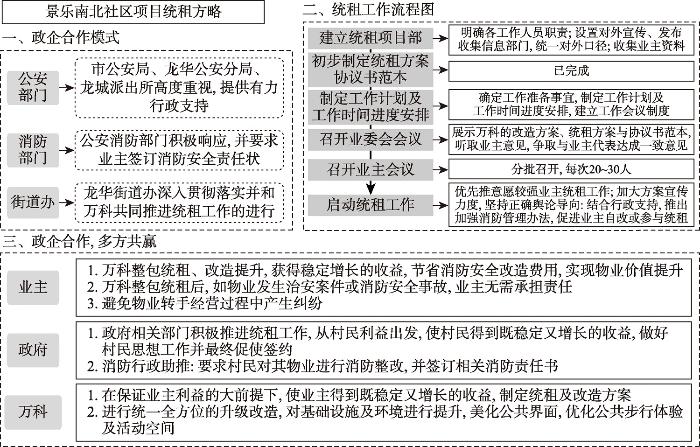
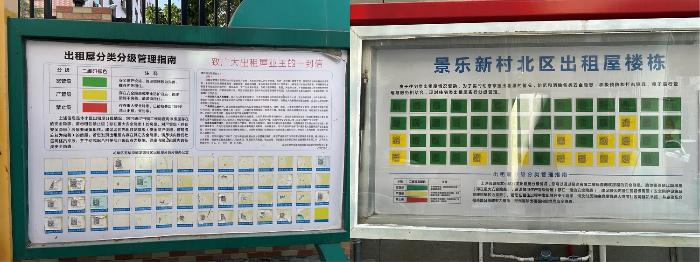
| 城市空间功 能升级改造 | 原三和地区长期依赖低成本的边缘化社会基础设施,空间功能单一,城市空间整体低标准,难以满足现代化管理与生活品质提升的要求。 | 借助政企合作推动城中村社区改造,实施统租模式对出租屋进行网格化、分类分级管理,引入高品质物业品牌,进行消防整改和环境优化,加强社区公共设施的建设与长期管理机制的建立。 | 将区域由边缘空间转变为正规、长效管理的城市生活区,平衡多方利益,实现社区品质提升和社会经济的规范化发展。 |
| [1] |
[张锡明, 程福财. 何处依归: “三和大神”是如何形成的. 青年学报, 2021(1): 62-69.]
|
| [2] |
[田丰, 林凯玄. 岂不怀归:三和青年调查. 北京: 海豚出版社, 2020.]
|
| [3] |
[赵巍. 从留守儿童到三和青年: 新生代农民工的社会化与自我认同. 求索, 2021(2): 90-97.]
|
| [4] |
|
| [5] |
[欧楚颖, 杜美玲. 反抗与固化: 三和青年在线生活的自恋式情感结构研究. 粤海风, 2022(3): 61-68.]
|
| [6] |
|
| [7] |
|
| [8] |
|
| [9] |
|
| [10] |
|
| [11] |
|
| [12] |
|
| [13] |
|
| [14] |
|
| [15] |
[潘教峰, 万劲波. 构建现代化强国的十大新型基础设施. 中国科学院院刊, 2020, 35(5): 545-554.]
|
| [16] |
|
| [17] |
|
| [18] |
|
| [19] |
[王成金, 谢永顺, 陈沛然, 等. 铁路技术跨越式转移的制度—经济—文化适应性: 基于亚吉铁路的实证分析. 地理学报, 2020, 75(6): 1170-1184.]
|
| [20] |
|
| [21] |
|
| [22] |
|
| [23] |
|
| [24] |
|
| [25] |
|
| [26] |
|
| [27] |
|
| [28] |
|
| [29] |
|
| [30] |
|
| [31] |
|
| [32] |
|
| [33] |
|
| [34] |
|
| [35] |
|
| [36] |
|
| [37] |
|
| [38] |
|
| [39] |
|
| [40] |
|
| [41] |
|
| [42] |
Piñeira Mantiñán M J, Lois González R C, González Pérez J M. New models of urban governance in Spain during the post-crisis period: The fight against vulnerability on a local scale. Territory, Politics, Governance, 2019, 7(3): 336-364.
|
| [43] |
|
| [44] |
|
| [45] |
|
| [46] |
|
| [47] |
|
| [48] |
|
| [49] |
|
| [50] |
|
| [51] |
|
| [52] |
|
| [53] |
|
| [54] |
|
| [55] |
|
| [56] |
|
| [57] |
|
| [58] |
|
| [59] |
|
| [60] |
|
| [61] |
|
| [62] |
|
| [63] |
|
| [64] |
|
| [65] |
|
| [66] |
|
| [67] |
|
| [68] |
|
| [69] |
|
| [70] |
|
| [71] |
|
| [72] |
|
| [73] |
|
| [74] |
|
| [75] |
|
| [76] |
|
| [77] |
|
| [78] |
|
| [79] |
|
| [80] |
|
| [81] |
|
| [82] |
|
| [83] |
[韩彦超. 三和青年的反工厂文化是如何形成的: 以文化工具箱理论为视角. 青年学报, 2021(1): 55-61.]
|
| [84] |
|
/
| 〈 |
|
〉 |