



Patterns and evolution path of regional industrial upgrading under globalization
Received date: 2021-11-29
Revised date: 2022-09-07
Online published: 2023-02-16
Supported by
Special Construction Project of Guangdong Academy of Sciences(2020GDASYL-20200102002)
National Natural Science Foundation of China(42271182)
National Natural Science Foundation of China(42101178)
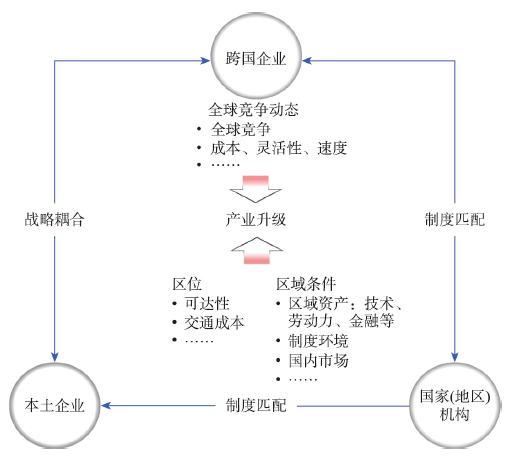
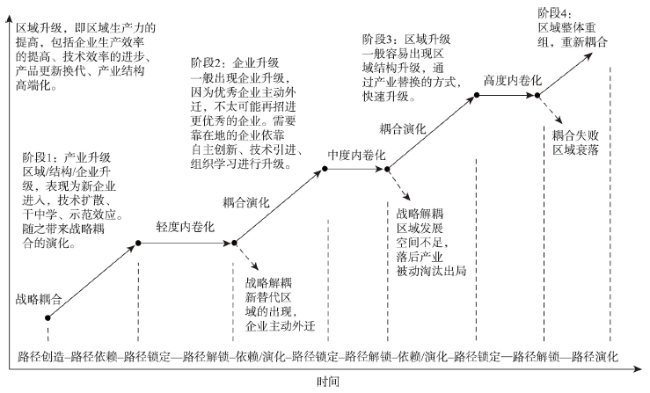
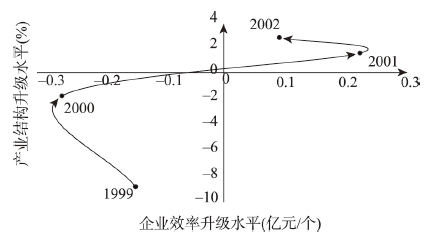
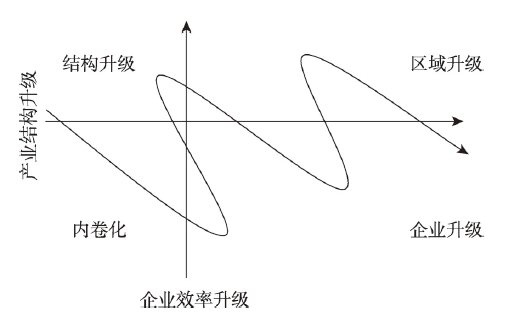
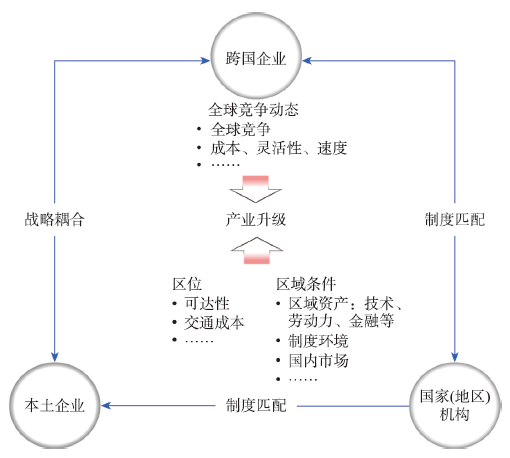
Industrial upgrading is one of the most concerned topics for latecomer economies, but existing research in this field has unpacked regional industrial upgrading from geographical aspects. This paper conducts a critical review on the research progress of industrial upgrading and points out that current studies tend to describe spatial changes rather than disclose geographical motivations of industrial upgrading. Thus, the geographical attributes, patterns and evolution paths of industrial upgrading are yet to be revealed. Based on the perspective of relational economic geography and to explore industrial upgrading patterns, this paper constructs an analytical framework from both the enterprise and the region levels, and find four upgrading patterns: enterprise upgrading, structural upgrading, regional upgrading, and involutional development. Following that, this paper reveals that there is a general evolution path of regional industrial upgrading under globalization. Regions have the tendency to evolve from enterprise upgrading or structural upgrading to regional upgrading and then to involutional development. This evolutionary path is well matched with the industrial upgrading trajectory of the Pearl River Delta. Also, industrial upgrading in the delta has shown a circuitous evolutionary path, which can be termed an "S-type paradigm". Overall, this research suggests that regional industrial upgrading is affected by external forces outside regions under globalization. The performances and achievement of regions can be analyzed from both the corporate and the regional levels. From the aspect of technology, capital and market, latecomer regions can use their geographic advantages to bargain with transnational corporations, in the process of which local institutions and territorial environment have a significant role to play. The major contribution of this paper comes from its new analytical perspective to understand the process of regional industrial upgrading and its finding about different performances of industrial upgrading in different scales, including the enterprises and the region scales. Also, an industrial upgrading pattern that is different from the well-known "the flying geese paradigm" has been proposed, which tentatively provides an innovative framework to understand development of latecomer economies under globalization and refine theories about globalization in economic geography.
LIU Yi , ZHANG Yifan , HUANG Kaixuan , WU Di . Patterns and evolution path of regional industrial upgrading under globalization[J]. Acta Geographica Sinica, 2023 , 78(2) : 351 -370 . DOI: 10.11821/dlxb202302006
表1 全球化背景下的区域发展与产业升级的3个研究主题Tab. 1 Three research topics of regional development and industrial upgrading under globalization |
| 主题 | 后发经济体的追赶 | 产业管治与升级 | 全球产业迁移与重构 |
|---|---|---|---|
| 学科 | •发展研究 | •产业经济、战略管理 | •经济地理 |
| 主要 内容 | •国家干预、发展型国家、国家创新网络 | •全球价值链、产业管治形态、不均衡权力关系、企业升级战略、产业集群 | •产业迁移、劳动空间分工、全球化空间性、非贸易依赖、区域创新体系、产业集群、全球生产网络 |
| 核心 思想 | •强势经济政策可加快国内产业升级 •国家干预可扶植内生创新,并为本国企业增权 | •全球价值链管治决定后发地区产业升级 •集体行动和产业集群可对抗跨国企业控制 | •生产要素空间不均匀分布导致产业转移 •全球—地方互动加速产业转型与升级 •空间嵌入性影响经济组织 |
| 局限 | •国家中心主义,忽略政商关系负面影响和多尺度企业互动的积极作用 | •企业中心主义,以交易成本为核心变量,忽略空间和制度因素 | •传统研究局限在区域内部,近年来开始用多尺度视角解析产业升级,但理论化不足 |
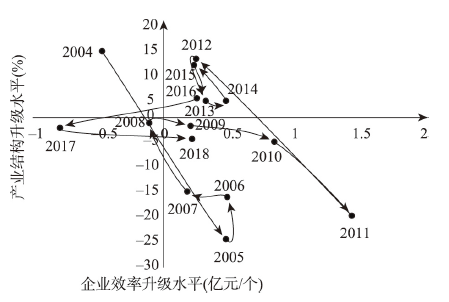
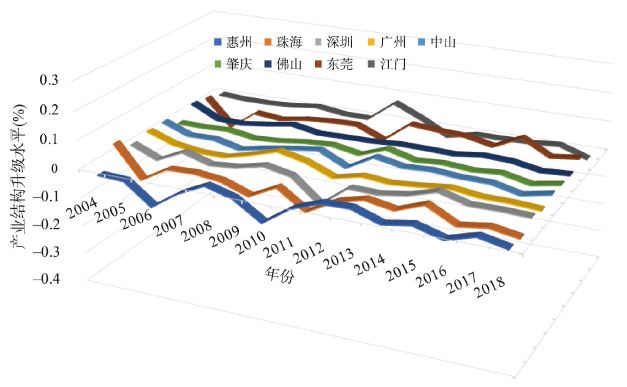
图6 2004—2018年珠三角逐年产业结构升级曲线Fig. 6 Annual industrial structure upgrading in the Pearl River Delta from 2004 to 2018 |
| [1] |
|
| [2] |
[ 赵蓉, 赵立祥, 苏映雪. 全球价值链嵌入、区域融合发展与制造业产业升级: 基于双循环新发展格局的思考. 南方经济, 2020(10): 1-19.]
|
| [3] |
[ 毛蕴诗. 使基于创新的跨产业升级成为我国经济增长的亮点. 中国产业, 2012(3): 29.]
|
| [4] |
|
| [5] |
|
| [6] |
|
| [7] |
|
| [8] |
|
| [9] |
|
| [10] |
|
| [11] |
|
| [12] |
|
| [13] |
|
| [14] |
|
| [15] |
|
| [16] |
|
| [17] |
|
| [18] |
|
| [19] |
|
| [20] |
|
| [21] |
|
| [22] |
|
| [23] |
|
| [24] |
|
| [25] |
|
| [26] |
|
| [27] |
|
| [28] |
|
| [29] |
|
| [30] |
|
| [31] |
|
| [32] |
|
| [33] |
|
| [34] |
|
| [35] |
|
| [36] |
|
| [37] |
|
| [38] |
|
| [39] |
|
| [40] |
|
| [41] |
|
| [42] |
|
| [43] |
|
| [44] |
|
| [45] |
|
| [46] |
|
| [47] |
|
| [48] |
|
| [49] |
[ 毛蕴诗, 林晓如, 李玉惠. 劳动密集型产业升级研究: 以台湾自行车产业整体升级及其竞合机制为例. 学术研究, 2011(6): 63-70.]
|
| [50] |
|
| [51] |
|
| [52] |
|
| [53] |
|
| [54] |
|
| [55] |
|
| [56] |
|
| [57] |
|
| [58] |
|
| [59] |
|
| [60] |
|
| [61] |
[ 刘卫东, 金凤君, 张文忠, 等. 中国经济地理学研究进展与展望. 地理科学进展, 2011, 30(12): 1479-1487.]
|
| [62] |
|
| [63] |
[ 王敬甯, 马铭波, 王缉慈. 台中市后里区乐器产业升级的案例及启示. 地域研究与开发, 2011(6): 37-41.]
|
| [64] |
|
| [65] |
|
| [66] |
|
| [67] |
|
| [68] |
|
| [69] |
|
| [70] |
|
| [71] |
|
| [72] |
|
| [73] |
|
| [74] |
|
| [75] |
|
| [76] |
|
| [77] |
|
| [78] |
|
| [79] |
|
| [80] |
|
| [81] |
|
| [82] |
|
| [83] |
|
| [84] |
|
| [85] |
|
| [86] |
|
| [87] |
|
| [88] |
|
| [89] |
|
| [90] |
|
| [91] |
|
| [92] |
|
| [93] |
[ 薛凤旋, 杨春. 外资: 发展中国家城市化的新动力: 珠江三角洲个案研究. 地理学报, 1997, 52(3): 193-206.]
|
| [94] |
[ 刘逸, 杨伟聪. 全球生产网络视角下珠三角区域经济的战略耦合与产业升级. 热带地理, 2019, 39(2): 155-169.]
|
| [95] |
[ 丘晴, 丘海雄. 珠三角创新的比较优势分析: 基于制度嵌入性的视角. 南方经济, 2016(3): 103-116.]
|
| [96] |
[ 王缉慈, 李鹏飞. 珠三角产业面临“空心化”? 中国报道, 2008(5): 48-49.]
|
| [97] |
[ 李燕, 贺灿飞. 1998—2009年珠江三角洲制造业空间转移特征及其机制. 地理科学进展, 2013, 32(5): 777-787.]
|
| [98] |
[ 符文颖, 李郇. 企业创新与产业升级: 珠江三角洲(广州、东莞)电子企业问卷调查报告. 南方经济, 2010(1): 71-82.]
|
| [99] |
[ 刘逸, 张一帆, 黄凯旋, 等. 战略耦合影响下珠三角产业升级模式及测度. 地理研究, 2022, 41(4): 1107-1121.]
|
/
| 〈 |
|
〉 |