



Geography and international development studies: China's opportunity
Received date: 2022-06-08
Revised date: 2022-11-06
Online published: 2022-12-29
Supported by
National Natural Science Foundation of China(42201189)
National Natural Science Foundation of China(42171180)
The Second Tibetan Plateau Scientific Expedition and Research(2019QZKK1007)
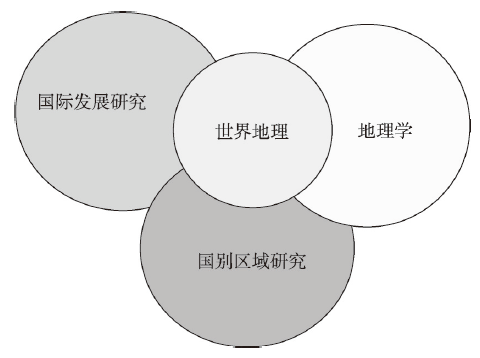
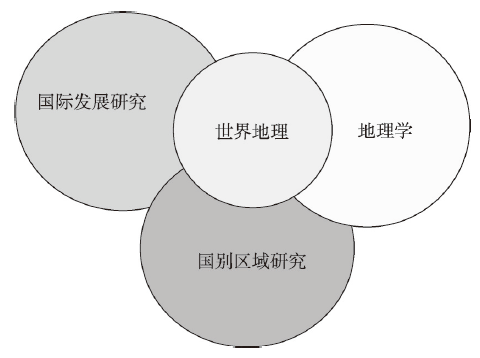
International Development Studies refers to the study of the localization process of development experience and knowledge of relatively developed countries in developing countries, and is a classic topic of Western geographic research. This paper reviews and summarizes the disciplinary development of International Development Studies since the mid-20th century, including the background and process of its emergence, and its current disciplinary pattern. It also systematically discusses four phases of evolution in international development knowledge, including the modernization theory phase (1950s-1970s), the neoliberal phase (1980s-1990s), the neo-structural phase (2000s), and the new modernization theory phase (2010s-present). Drawing on the Western experience and considering the current rise of China, we suggest that China has reached a new stage when it needs to provide international development knowledge to developing countries and should actively promote the study of International Development Geography. In relation to the requirement of constructing the Belt and Road Initiative towards a new stage of high-quality development, and based on the disciplinary advantages of geographic research, we propose four directions of future research in International Development Geography, including China's regional development experience and spatial governance model, the modernization geography of developing countries, case studies of major overseas projects of the Belt and Road construction, and the geography of international development financing.
CHENG Han , LIU Weidong . Geography and international development studies: China's opportunity[J]. Acta Geographica Sinica, 2022 , 77(12) : 3090 -3103 . DOI: 10.11821/dlxb202212010
表1 国际发展研究领域的部分学术期刊Tab. 1 Selected journals in international development studies |
| 期刊名称(曾用名) | 创办年份 | 编辑部所在地 |
|---|---|---|
| Economic Development and Cultural Change | 1952 | 美国 |
| Development | 1957 | 美国 |
| Journal of Development Studies | 1965 | 英国 |
| Development and Change | 1970 | 荷兰 |
| Oxford Development Studies (Oxford Agrarian Studies) | 1996 (1972) | 英国 |
| World Development | 1973 | 加拿大 |
| Forum for Development Studies | 1974 | 挪威 |
| Third World Quarterly | 1979 | 英国 |
| Canadian Journal of Development Studies | 1980 | 加拿大 |
| Development Policy Review (ODI Review) | 1983 (1974) | 英国 |
| Journal of International Development (Manchester Papers on Development) | 1989 (1981) | 英国 |
| European Journal of Development Research | 1989 | 英国 |
| Development in Practice | 1991 | 英国 |
| Progress in Development Studies | 2001 | 英国 |
注:根据参考文献[3]整理。 |
表2 国际发展知识的4个阶段Tab. 2 The four phases of international development knowledge |
| 现代化理论 | 新自由主义 | 新结构主义 | 新现代化理论 | |
|---|---|---|---|---|
| 时间跨度 | 20世纪50—70年代 | 20世纪80—90年代 | 21世纪初10年 | 21世纪10年代至今 |
| 地缘政治格局 | 二战结束、冷战开始 | 债务危机、苏联解体 | “9·11”事件、脆弱国家 | 金融危机、中国崛起 |
| 西方国内背景 | 福利国家、对抗苏联 | 撒切尔主义、里根主义 | 新左派、第三条道路 | 新凯恩斯主义 |
| 核心理论观点 | 基于现代主义和经典结构主义理论,依据罗斯托经济增长阶段论、刘易斯模型、梯度转移原理和空间扩散理论等,提出工业化的作用和农村发展的落后性 | 国家干预对私营部门造成挤出现象,导致市场低效和腐败;完全市场竞争可以带来帕累托最优状态;通过就业,将出口增长的收益下渗到贫困人口 | 基于新结构主义理论,提出国家维护和促进社会公平正义的角色;确保从全球化当中获益,并将获益下渗 | 国家的主要职能是为经济增长提供便利,应避免出现私营部门的挤出现象,国家为私营部门保驾护航;李嘉图比较优势理论和促贸援助 |
| 国际发展目标 | 促进工业部门增长、推动城市化、降低农村发展的低效性 | 缩减国家规模、提高生产力、刺激出口 | 减贫、促进公平、市场机制提升援助有效性 | 经济增长、基础设施建设、刺激贸易和投资的国际发展融资 |
| 国际发展政策 | 出口替代战略、土地改革、总预算支持(GBS)及人力资源开发 | 结构调整方案、出口导向、私有化、国家空洞化、社会性支出压缩、良治、基于市场的援助 | 联合国千年发展目标、利他的并不与援助国利益直接挂钩的援助议程、减贫战略文件、基于减贫的援助项目、全部门路径(SWAPs)、国家重建 | 基础设施、捆绑援助项目、新型国际发展融资、援助国利益与援助议程挂钩、部分回归到总预算支持 |
注:根据参考文献[68]整理。 |
| [1] |
|
| [2] |
[ 刘卫东, 等. “一带一路”建设案例研究:包容性全球化的视角. 北京: 商务印书馆, 2021.]
|
| [3] |
|
| [4] |
|
| [5] |
[ 秦大河, 张国友, 宋长青, 等. 今天的中国为什么比任何时候都需要世界地理学. 世界地理研究, 2020, 29(1): 1-7.]
|
| [6] |
[ 邓祥征, 金贵, 何书金, 等. 发展地理学研究进展与展望. 地理学报, 2020, 75(2): 226-239.]
|
| [7] |
|
| [8] |
|
| [9] |
|
| [10] |
|
| [11] |
|
| [12] |
|
| [13] |
|
| [14] |
|
| [15] |
|
| [16] |
|
| [17] |
|
| [18] |
|
| [19] |
|
| [20] |
|
| [21] |
|
| [22] |
|
| [23] |
|
| [24] |
|
| [25] |
|
| [26] |
|
| [27] |
|
| [28] |
|
| [29] |
|
| [30] |
|
| [31] |
|
| [32] |
|
| [33] |
|
| [34] |
|
| [35] |
|
| [36] |
|
| [37] |
|
| [38] |
|
| [39] |
|
| [40] |
|
| [41] |
|
| [42] |
|
| [43] |
|
| [44] |
|
| [45] |
|
| [46] |
|
| [47] |
|
| [48] |
|
| [49] |
|
| [50] |
|
| [51] |
|
| [52] |
|
| [53] |
|
| [54] |
|
| [55] |
|
| [56] |
|
| [57] |
|
| [58] |
|
| [59] |
|
| [60] |
|
| [61] |
|
| [62] |
|
| [63] |
|
| [64] |
|
| [65] |
|
| [66] |
|
| [67] |
|
| [68] |
|
| [69] |
|
| [70] |
[ 刘卫东. “一带一路”引领包容性全球化. 中国科学院院刊, 2017, 32(4): 331-339.]
|
| [71] |
|
| [72] |
|
| [73] |
|
| [74] |
[ 林毅夫. 新结构经济学. 北京: 北京大学出版社, 2019.]
|
| [75] |
[ 金贵, 邓祥征, 董寅, 等. 发展地理学视角下中国多维贫困测度及时空交互特征. 地理学报, 2020, 75(8): 1633-1646.]
|
| [76] |
|
| [77] |
[ 刘卫东, 宋周莺, 刘志高, 等. “一带一路”建设研究进展. 地理学报, 2018, 73(4): 620-636.]
|
| [78] |
[ 刘卫东, 姚秋蕙. “一带一路”建设模式研究: 基于制度与文化视角. 地理学报, 2020, 75(6): 1134-1146.]
|
| [79] |
[ 宋周莺, 姚秋蕙, 胡志丁, 等. 跨境经济合作区建设的“尺度困境”: 以中老磨憨—磨丁经济合作区为例. 地理研究, 2020, 39(12): 2705-2717.]
|
| [80] |
[ 刘志高, 王涛. 中国境外政府间合作园区多尺度耦合建设机制: 以中白工业园为例. 地理学报, 2020, 75(6): 1185-1198.]
|
| [81] |
[ 宋涛, 刘卫东, 高菠阳, 等. 合作伙伴关系视角下的海外园区政策移动性研究: 以泰中罗勇工业园为例. 地理学报, 2020, 75(6): 1199-1209.]
|
| [82] |
|
| [83] |
[ 王姣娥, 杜方叶, 刘卫东. 制度与文化对嵌入式技术海外转移的影响: 以蒙内铁路为例. 地理学报, 2020, 75(6): 1147-1158.]
|
| [84] |
[ 王成金, 谢永顺, 陈沛然, 等. 铁路技术跨越式转移的制度—经济—文化适应性: 基于亚吉铁路的实证分析. 地理学报, 2020, 75(6): 1170-1184.]
|
| [85] |
|
/
| 〈 |
|
〉 |