



Conceptual connotation and quantitative characterization of surface urban heat island effect
Received date: 2021-09-22
Revised date: 2022-07-01
Online published: 2022-11-03
Supported by
Key Project of National Natural Science Foundation of China(42130505)
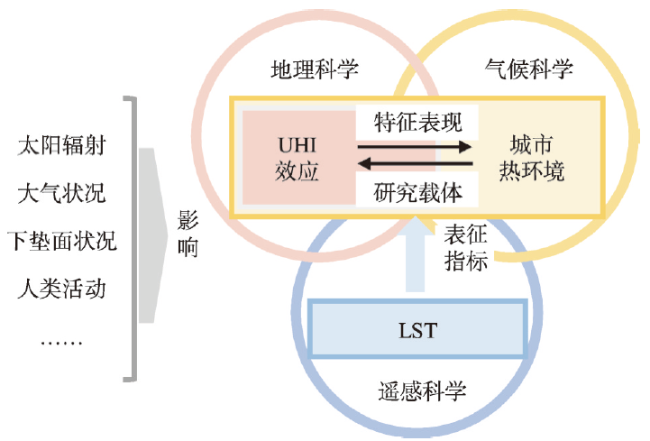
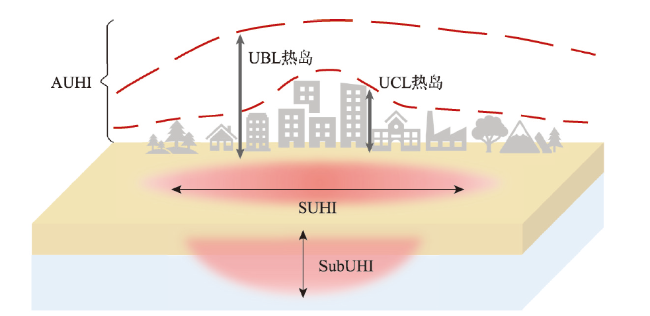
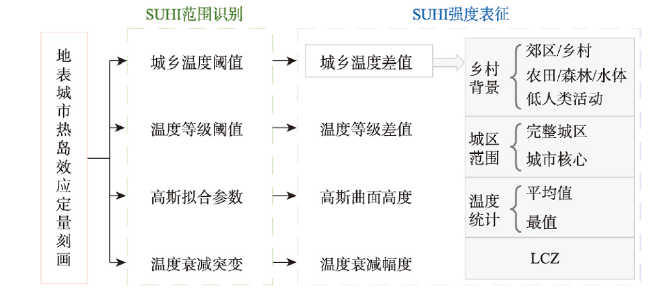
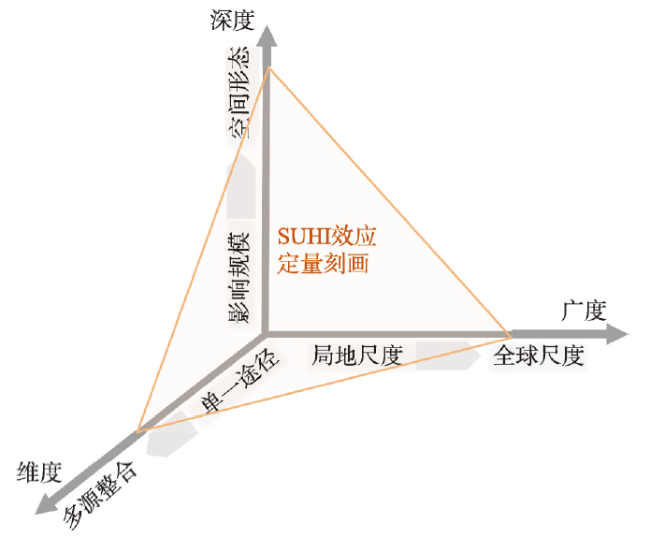
Understanding the conceptual connotation related to urban heat island (UHI) effect and clarifying its quantitative characterization methods are important foundations for effective UHI effect research. The global urbanization has made the UHI effect more and more common, which leads to a rapid increase in the number of related studies. In this context, different concepts related to UHI effect have emerged, and particularly, various quantitative characterization methods have been developed for surface urban heat island (SUHI) which has the advantage of spatial heterogeneity characterization. However, there is still a lack of systematic review of quantitative characterization methods of SUHI. Therefore, this study distinguished and analyzed the confusing concepts such as urban heat island, urban heat island effect, surface temperature and urban thermal environment. Then, the typical spatial locations and scale ranges of various UHIs were summarized. In the quantitative characterization of SUHI effect, this study categorized the SUHI range identification methods into four categories: methods based on urban and rural temperature threshold, temperature grade threshold, Gaussian fitting parameter, and temperature attenuation mutation. The current SUHI range identification research focuses on the cognition of the SUHI impact scale. This study also sorted out the SUHI intensity indicators corresponding to various range identification methods. Understanding the essential connotation of each indicator is the prerequisite for grasping the potential differences between the indicators. Future research should integrate multi-source SUHI monitoring methods, develop large-scale SUHI quantitative characterization methods, and cognize connected SUHI spatial morphology.
JIANG Song , PENG Jian , DONG Jianquan , CHENG Xueyan , DAN Yuzhuo . Conceptual connotation and quantitative characterization of surface urban heat island effect[J]. Acta Geographica Sinica, 2022 , 77(9) : 2249 -2265 . DOI: 10.11821/dlxb202209008
| [1] |
United Nations Department of Economic Social Affairs. World urbanization prospects 2018:Highlights. New York: United Nations, 2019.
|
| [2] |
|
| [3] |
|
| [4] |
|
| [5] |
|
| [6] |
|
| [7] |
|
| [8] |
|
| [9] |
[肖荣波, 欧阳志云, 李伟峰, 等. 城市热岛的生态环境效应. 生态学报, 2005, 25(8): 2055-2060.]
|
| [10] |
|
| [11] |
|
| [12] |
|
| [13] |
|
| [14] |
[寿亦萱, 张大林. 城市热岛效应的研究进展与展望. 气象学报, 2012, 70(3): 338-353.]
|
| [15] |
[白杨, 王晓云, 姜海梅, 等. 城市热岛效应研究进展. 气象与环境学报, 2013, 29(2): 101-106.]
|
| [16] |
|
| [17] |
|
| [18] |
|
| [19] |
|
| [20] |
[刘焱序, 彭建, 王仰麟. 城市热岛效应与景观格局的关联: 从城市规模、景观组分到空间构型. 生态学报, 2017, 37(23): 7769-7780.]
|
| [21] |
|
| [22] |
|
| [23] |
|
| [24] |
|
| [25] |
|
| [26] |
|
| [27] |
|
| [28] |
[江斯达, 占文凤, 杨俊, 等. 局地气候分区框架下城市热岛时空分异特征研究进展. 地理学报, 2020, 75(9): 1860-1878.]
|
| [29] |
|
| [30] |
|
| [31] |
|
| [32] |
|
| [33] |
|
| [34] |
|
| [35] |
|
| [36] |
|
| [37] |
|
| [38] |
|
| [39] |
|
| [40] |
|
| [41] |
|
| [42] |
NASA. Land surface temperature. https://earthobservatory.nasa.gov/global-maps/MOD_LSTD_M.
|
| [43] |
|
| [44] |
|
| [45] |
|
| [46] |
|
| [47] |
[孙铁钢, 肖荣波, 蔡云楠, 等. 城市热环境定量评价技术研究进展及发展趋势. 应用生态学报, 2016, 27(8): 2717-2728.]
|
| [48] |
|
| [49] |
[姚远, 陈曦, 钱静. 城市地表热环境研究进展. 生态学报, 2018, 38(3): 1134-1147.]
|
| [50] |
|
| [51] |
[柳孝图, 陈恩水, 余德敏, 等. 城市热环境及其微热环境的改善. 环境科学, 1997, 18(1): 54-59.]
|
| [52] |
|
| [53] |
|
| [54] |
|
| [55] |
|
| [56] |
|
| [57] |
|
| [58] |
|
| [59] |
|
| [60] |
|
| [61] |
|
| [62] |
[张伟, 蒋锦刚, 朱玉碧. 基于空间统计特征的城市热环境时空演化. 应用生态学报, 2015, 26(6): 1840-1846.]
|
| [63] |
[谢志清, 杜银, 曾燕, 等. 长江三角洲城市带扩展对区域温度变化的影响. 地理学报, 2007, 62(7): 717-727.]
|
| [64] |
|
| [65] |
|
| [66] |
|
| [67] |
|
| [68] |
|
| [69] |
|
| [70] |
[刘勇洪, 徐永明, 张方敏, 等. 北京城市空间形态对热岛分布影响研究. 地理学报, 2021, 76(7): 1662-1679.]
|
| [71] |
|
| [72] |
|
| [73] |
|
| [74] |
|
| [75] |
|
| [76] |
|
| [77] |
|
| [78] |
|
| [79] |
|
| [80] |
|
| [81] |
|
| [82] |
|
| [83] |
|
| [84] |
|
| [85] |
|
| [86] |
|
| [87] |
|
| [88] |
|
| [89] |
|
| [90] |
|
| [91] |
|
| [92] |
|
| [93] |
|
| [94] |
|
| [95] |
|
| [96] |
|
| [97] |
|
| [98] |
|
| [99] |
|
| [100] |
|
| [101] |
|
| [102] |
|
| [103] |
[吴健生, 何海珊, 胡甜. 地表温度“源—汇”景观贡献度的影响因素分析. 地理学报, 2022, 77(1): 51-65.]
|
| [104] |
|
| [105] |
|
/
| 〈 |
|
〉 |