



The neighborhood effect of residential greenery on residents' self-rated health:A case study of Guangzhou, China
Received date: 2020-06-12
Request revised date: 2021-07-08
Online published: 2021-10-25
Supported by
National Natural Science Foundation of China(51678577)
National Natural Science Foundation of China(41871161)
National Natural Science Foundation of China(41871140)
National Natural Science Foundation of China(41971194)
Guangdong Provincial Technical Innovation Program for the Top Young Talents
Guangzhou Science and Technology Project(201804010241)
Copyright
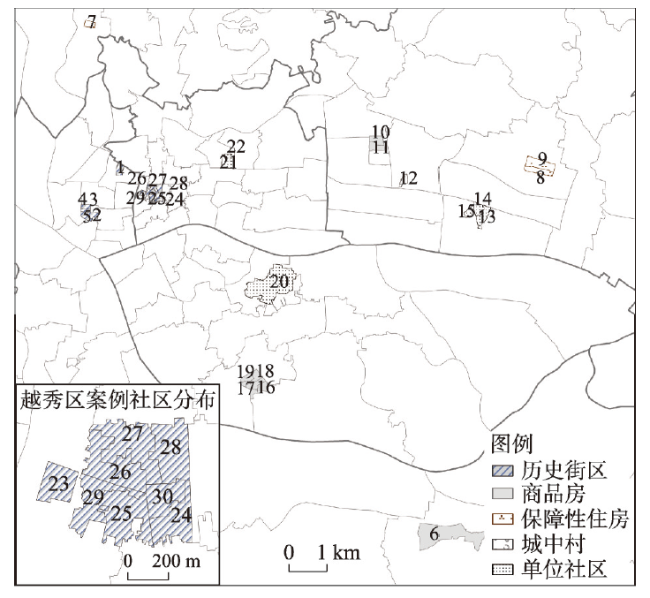
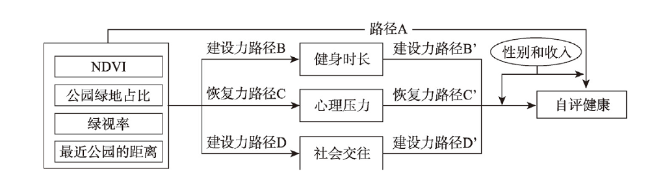
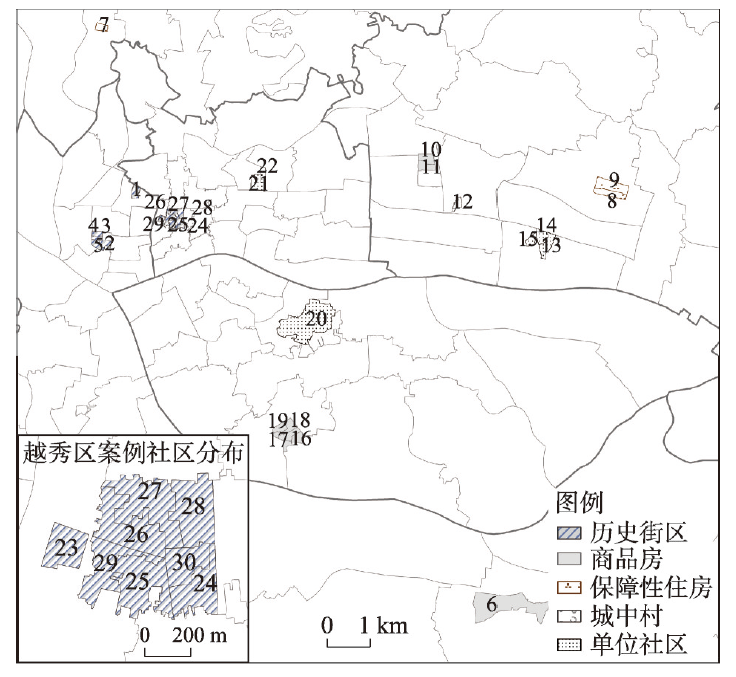
Urban natural environment especially greenery environment has been consistently linked to better health outcome. Previous studies have shown that the greenery environment of neighborhood is related to residents' health, but scant attention has been paid to biopsychosocial pathways through which neighborhood greenery affects resident' wellbeing. In addition, a limited number of studies have evaluated the healthy pathways between neighborhood greenery and residents' wellbeing among Chinese vulnerable groups in urban setting. Based on neighborhood effect, three potential mediating pathways (namely, increasing physical activity duration, reducing psychological stress and facilitating social interaction) linking neighborhood greenery to residents' self-rated health were explored from 757 participants of Guangzhou, China. In view of questionnaire data involving 30 communities and greenery data obtained from remote sensing image and streetscape data and etc., this research employed multilevel linear regression model and mediating effect model and propensity score matching method to examine biopsychosocial pathways and mechanism linking neighborhood greenery to residents' self-rated health, as well as the difference among different social strata (e.g. different income and gender groups). According to this empirical analysis, the following conclusions can be achieved. Firstly, residential neighborhood greenery is significantly associated with residents' self-rated health outcome. Secondly, reduction in psychological stress is a kind of pathway linking residential neighborhood greenery to residents' self-rated health. Thirdly, the impact of neighborhood greenery on residents' self-rated health differs significantly among different social strata, and neighborhood greenery has greater impact on the self-rated health of low-middle income residents and female residents group, which means the beneficial effect of reduction in psychological stress on self-rated health is strengthened by neighborhood greenery. This research findings enrich the empirical research on greenery environment and public health from the perspective of health geography, and suggest the necessity of improving active spatial intervention and greenspace construction of the "healthy community" at the neighborhood scale in promoting residents' wellbeing in Chinese urban settings.
YUAN Yuan , CHEN Yujie , LIU Ye , DING Kaili . The neighborhood effect of residential greenery on residents' self-rated health:A case study of Guangzhou, China[J]. Acta Geographica Sinica, 2021 , 76(8) : 1965 -1975 . DOI: 10.11821/dlxb202108011
表1 变量的描述性统计Tab. 1 Descriptive statistics of variables in sampled neighborhoods |
| 变量 | 均值/比重 (标准差) | 变量 | 均值/比重 (标准差) | 变量 | 均值/比重 (标准差) |
|---|---|---|---|---|---|
| 年龄 | 42.81(13.753) | 性别 | 自评健康水平 | 12.624(1.864) | |
| 户口 | 男性占比(%) | 49.10 | NDVI_1000 m | 0.117(0.093) | |
| 本市(%) | 77.30 | 女性占比(%) | 50.90 | 公园绿地占比 | 0.033(0.023) |
| 外地(%) | 22.70 | 个人月收入(元/月) | 绿视率 | 0.215(0.074) | |
| 学历 | 0~1499(%) | 2.40 | 最近公园的距离 | 0.843(0.328) | |
| 初中及以下占比(%) | 16.90 | 1500~4999(%) | 44.30 | 健身时长 | 4.485(3.395) |
| 高中/中专/大专占比(%) | 65.40 | 5000~8999(%) | 46.20 | 心理压力 | 1.794(0.790) |
| 本科及以上占比(%) | 17.70 | > 9000(%) | 7.10 | 社会交往 | 17.913(3.480) |
表2 社区绿化环境与自评健康、健身时长、心理压力和社会交往的关联及中介效应Tab. 2 The association and mediation effect between neighborhood greenery, self-rated health, physical activity duration, psychological stress and social interaction |
| 指标 | 模型1 因变量:自评健康(路径A) | 模型1a 因变量:健身时长(路径B) | 模型1b 因变量:心理压力(路径C) | 模型1c 因变量:社会交往(路径D) | 模型2 因变量:自评健康(路径A、B'、C'、D') | |||||||||
|---|---|---|---|---|---|---|---|---|---|---|---|---|---|---|
| 系数估计值 | 标准误 | 系数估计值 | 标准误 | 系数估计值 | 标准误 | 系数估计值 | 标准误 | 系数估计值 | 标准误 | |||||
| 绿化环境 | ||||||||||||||
| NDVI_1000m | 1.584*** | 0.589 | 3.353** | 1.318 | 0.202 | 0.338 | 1.091 | 1.266 | 1.757*** | 0.571 | ||||
| 公园绿地占比 | 1.489* | 0.692 | 2.364 | 1.545 | 0.296* | 0.304 | 2.101 | 1.157 | 1.719** | 0.670 | ||||
| 绿视率 | -1.418*** | 0.537 | 2.890** | 1.190 | 0.838*** | 0.303 | 0.287 | 1.157 | -1.428** | 0.521 | ||||
| 最近公园的距离 | -1.970*** | 0.533 | -2.868** | 1.189 | 0.591* | 0.304 | -2.036* | 1.147 | -1.786*** | 0.519 | ||||
| 中介变量 | ||||||||||||||
| 健身时长 | 0.022 | 0.017 | ||||||||||||
| 心理压力 | -0.431*** | 0.075 | ||||||||||||
| 社会交往 | 0.003 | 0.016 | ||||||||||||
| 个体属性 | ||||||||||||||
| 性别(参照组:男) | -0.374** | 0.101 | -0.389* | 0.208 | -0.055 | 0.048 | -0.565* | 0.235 | -0.397*** | 0.010 | ||||
| 年龄 | -0.770*** | 0.062 | 0.958*** | 0.131 | 0.086*** | 0.030 | 0.134 | 0.148 | -0.699*** | 0.065 | ||||
| 户口(参照组:本市) | -0.021 | 0.054 | 0.157 | 0.309 | 0.147 | 0.096 | -0.376 | 0.679 | -0.003** | 0.147 | ||||
| 教育(参照组:初中及以下) | ||||||||||||||
| 高中中专大专 | 0.394 | 0.172 | 0.095 | 0.352 | -0.052 | 0.081 | 0.526 | 0.397 | 0.385 | 0.168 | ||||
| 本科及以上 | 0.579** | 0.227 | 0.531 | 0.466 | -0.124 | 0.108 | 0.395 | 0.524 | 0.555 | 0.221 | ||||
| 收入 | 0.152 | 0.119 | -0.429* | 0.174 | -0.524*** | 0.162 | -0.237 | 0.198 | 0.135 | 0.084 | ||||
| 组间方差 | 0.442 | 2.251 | 0.151 | 1.985 | 0.407 | |||||||||
| 组内方差 | 1.752 | 7.351 | 0.391 | 9.467 | 1.679 | |||||||||
| 对数似然值 | -1313.042 | -1858.136 | -750.564 | -1949.368 | -1296.430 | |||||||||
| AIC | 2655.731 | 3750.272 | 1535.564 | 3928.736 | 2628.861 | |||||||||
注:* P < 0.10;** P < 0.05;*** P < 0.01。 |
表3 社区绿化与自评健康的关联:基于PSM的分析Tab. 3 PSM analysis of neighborhood greenery on self-rated health |
| 匹配方法 | NDVI_1000 mATT值 | 公园绿地占比ATT值 | 绿视率ATT | 最近公园的距离ATT值 |
|---|---|---|---|---|
| 邻近 | 0.792* | 0.670* | -0.560** | 0.590* |
| 半径 | 0.184* | 0.398*** | -0.378** | 1.075*** |
| 核心 | 0.201* | 0.392*** | -0.392** | 1.076*** |
注:* P < 0.10;** P < 0.05;*** P < 0.01。 |
表4 社区绿化对不同群体健康影响的分层分析(收入与性别)Tab. 4 Stratified analysis of neighborhood greenery and self-rated health by income and gender |
| 指标 | 模型3 因变量:自评健康 (路径A) | 模型3a' 因变量:自评健康(路径A、B'、C'、D') | 模型4 因变量:自评健康 (路径A) | 模型4a' 因变量:自评健康(路径A、B'、C'、D') | |||||||
|---|---|---|---|---|---|---|---|---|---|---|---|
| 系数 (中低收入) | 系数 (高收入) | 系数 (中低收入) | 系数 (高收入) | 系数 (女性) | 系数 (男性) | 系数 (女性) | 系数 (男性) | ||||
| 绿化环境 | |||||||||||
| NDVI_1000 m | 1.163* | 1.856*** | 1.448** | 1.857*** | 1.366** | 1.647** | 1.629*** | 1.532** | |||
| 公园绿地占比 | 1.630** | 1.483** | 1.941** | 1.498** | 0.998** | 2.059*** | 1.439** | 1.974*** | |||
| 绿视率 | 1.273* | 1.527*** | 0.710** | 1.299** | -0.802 | -1.887*** | -0.251 | -1.894*** | |||
| 最近公园的距离 | -1.273* | -2.431*** | -1.112*** | -2.142*** | -2.319*** | -1.549*** | -2.034*** | -1.359** | |||
| 中介变量 | |||||||||||
| 健身时长 | -0.049* | 0.034 | -0.063** | 0.033 | |||||||
| 心理压力 | -0.538*** | -0.354*** | -0.612*** | -0.173* | |||||||
| 社会交往 | 0.001 | -0.005 | 0.010 | -0.003 | |||||||
| 组间方差 | 0.526 | 0.428 | 0.481 | 0.338 | 0.462 | 0.489 | 0.403 | 0.430 | |||
| 组内方差 | 2.302 | 1.245 | 2.137 | 1.215 | 1.787 | 1.513 | 1.616 | 1.506 | |||
| 对数似然值 | -664.696 | -640.479 | -651.443 | -633.171 | -677.395 | -626.098 | -657.723 | -623.857 | |||
| AIC | 1357.393 | 1308.957 | 1336.886 | 1300.455 | 1386.790 | 1284.195 | 1353.446 | 1285.715 | |||
注:* P < 0.10;** P < 0.05;*** P < 0.01。模型已控制了表1所列的所有控制变量。 |
| [1] |
|
| [2] |
|
| [3] |
|
| [4] |
|
| [5] |
|
| [6] |
|
| [7] |
|
| [8] |
|
| [9] |
|
| [10] |
|
| [11] |
|
| [12] |
|
| [13] |
|
| [14] |
|
| [15] |
|
| [16] |
|
| [17] |
|
| [18] |
|
| [19] |
|
| [20] |
|
| [21] |
|
| [22] |
|
| [23] |
|
| [24] |
|
| [25] |
|
| [26] |
|
| [27] |
|
| [28] |
|
| [29] |
|
| [30] |
|
| [31] |
[ 赵雪雁, 王伟军, 万文玉. 中国居民健康水平的区域差异: 2003—2013. 地理学报, 2017, 72(4):685-698.]
|
| [32] |
[ 顾丽娟,
|
| [33] |
[ 马静, 周创文,
|
| [34] |
[ 孙斌栋, 阎宏, 张婷麟. 社区建成环境对健康的影响: 基于居民个体超重的实证研究. 地理学报, 2016, 71(10):1721-1730.]
|
| [35] |
[ 张延吉, 秦波, 唐杰. 基于倾向值匹配法的城市建成环境对居民生理健康的影响. 地理学报, 2018, 73(2):333-345.]
|
| [36] |
[ 刘义, 刘于琪, 刘晔, 等. 邻里环境对流动人口主观幸福感的影响: 基于广州的实证. 地理科学进展, 2018, 37(7):986-998.]
|
| [37] |
|
| [38] |
[ 邱婴芝, 陈宏胜, 李志刚, 等. 基于邻里效应视角的城市居民心理健康影响因素研究: 以广州市为例. 地理科学进展, 2019, 38(2):283-295.]
|
| [39] |
|
/
| 〈 |
|
〉 |