



Theorizing the construction of the Belt and Road Initiative: Based on institutional and cultural perspectives
Received date: 2019-10-07
Request revised date: 2020-04-20
Online published: 2020-08-25
Supported by
Priority Research Program of Chinese Academy of Sciences(XDA20080000)
Copyright
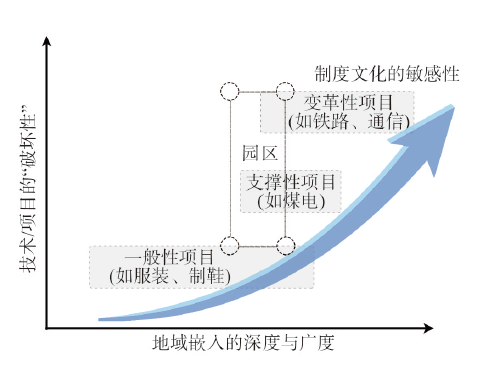
Promoting the construction of the Belt and Road initiative (BRI) towards a new stage of high-quality development raises new subjects for academic research, which demands in-depth study of existing BRI projects, summarizing experiences and lessons and theorizing construction models to guide future development. Research in the field of economic geography focused on outward foreign direct investment (FDI) of Chinese firms, but BRI construction is much broader in scope, consisting of not only FDI projects but also China-financed projects and emerging mixed projects. Case studies of BRI projects have shown that significant cultural and institutional difference between China and host country is the factor that tends to be ignored by Chinese firms in the "going global" efforts. Thus, revisiting the institutional and cultural turn in economic geography and employing its research framework to analyze BRI projects and summarize their construction models may contribute to the development of both economic geography and BRI. This article will first briefly review the background and research trends of the institutional and cultural turn; then summarize three major construction models of BRI projects, namely EPC (Engineering Procurement Construction)-based, concession-based and FDI models; finally draw on the institutional and cultural turn to classify BRI projects according to two indicators of "Breadth and Depth of Territorial Embeddedness" and "Destructive Effects of Technology and Project" into four types, i.e. transformative, supportive and ordinary projects as well as industrial parks. Different institutional and cultural sensitivity can be identified for each type of projects. The preliminary theorization proposed in this article may offer a potential framework for future research on BRI construction.
LIU Weidong , YAO Qiuhui . Theorizing the construction of the Belt and Road Initiative: Based on institutional and cultural perspectives[J]. Acta Geographica Sinica, 2020 , 75(6) : 1134 -1146 . DOI: 10.11821/dlxb202006003
| [1] |
|
| [2] |
|
| [3] |
|
| [4] |
[ 刘卫东, 等. “一带一路”建设进展第三方评估报告(2013—2018年). 北京: 商务印书馆, 2019.]
|
| [5] |
[ 习近平. 齐心开创共建“一带一路”美好未来: 在第二届“一带一路”国际合作高峰论坛开幕式上的主旨演讲. 中华人民共和国国务院公报, 2019.]
|
| [6] |
[ 刘卫东, 宋周莺, 刘志高, 等. “一带一路”建设研究进展. 地理学报, 2018,73(4):620-636.]
|
| [7] |
|
| [8] |
|
| [9] |
|
| [10] |
|
| [11] |
|
| [12] |
|
| [13] |
|
| [14] |
|
| [15] |
|
| [16] |
|
| [17] |
|
| [18] |
|
| [19] |
|
| [20] |
|
| [21] |
|
| [22] |
[ 寇, 凯利, 杨伟聪. 文化与企业: 国家和公司是否有经济文化?//刘卫东, 等, 译. 当代经济地理学导论. 北京: 商务印书馆, 2012: 261-281.]
|
| [23] |
|
| [24] |
|
| [25] |
|
| [26] |
|
| [27] |
|
| [28] |
|
| [29] |
|
| [30] |
|
| [31] |
|
| [32] |
|
| [33] |
|
| [34] |
|
| [35] |
|
| [36] |
[ 李小建. 国际背景与中国特色的经济地理学. 人文地理, 2004,19(1):33-37.]
|
| [37] |
[ 吕拉昌, 魏也华. 新经济地理学中的制度转向与区域发展. 经济地理, 2005,25(4):437-441.]
|
| [38] |
[ 刘卫东, 金凤君, 张文忠, 等. 中国经济地理学研究进展与展望. 地理科学进展, 2011,30(12):1479-1487.]
|
| [39] |
[ 刘卫东, 陆大道. 经济地理学研究进展. 中国科学院院刊, 2004,19(1):35-39.]
|
| [40] |
[ 刘卫东. 经济地理学与空间治理. 地理学报, 2014,69(8):1109-1116.]
|
| [41] |
[ 刘卫东. 论全球化与地区发展之间的辩证关系—被动嵌入. 世界地理研究, 2003,12(1):1-9.]
|
| [42] |
[ 陆大道. 关于我国区域发展战略与方针的若干问题. 经济地理, 2009,29(1):2-7.]
|
| [43] |
[ 刘卫东, 王蓓, 余金艳, 等. 深入推进西部开发的战略思路研究. 经济地理, 2010,30(4):553-557, 578.]
|
| [44] |
[ 樊杰. 我国主体功能区划的科学基础. 地理学报, 2007,62(4):339-350.]
|
| [45] |
[ 顾朝林. 城市群研究进展与展望. 地理研究, 2011,30(5):771-784.]
|
| [46] |
[ 刘卫东, 等. 共建绿色丝绸之路: 资源环境基础与社会经济背景. 北京: 商务印书馆, 2019: 1-5.]
|
| [47] |
The Office of the Leading Group for Promoting the Belt and Road Initiative. The Belt and Road Initiative: Progress, Contributions and Prospects. Beijing: Foreign Languages Press, 2019.
[ 推进“一带一路”建设工作领导小组办公室. 共建“一带一路”倡议: 进展、贡献与展望. 北京: 外文出版社, 2019.]
|
| [48] |
[ 温灏, 沈继奔. “一带一路”投融资模式与合作机制的政策思考. 宏观经济管理, 2019(2):54-61.]
|
| [49] |
[ 宋涛, 星焱, 等. 资金融通//刘卫东, 等. “一带一路”建设进展第三方评估报告(2013—2018年). 北京: 商务印书馆, 2019: 124-148.]
|
| [50] |
[ 姚智美, 姜钰羡, 肖翔. “一带一路”项目融资现状与融资模式探析: 以交通基础设施为例. 北方经贸, 2019(4):35-38.]
|
| [51] |
[ 刘珈琪. 基于PPP模式的“一带一路”融资模式理论分析. 现代管理科学, 2019(5):35-37, 62.]
|
| [52] |
|
| [53] |
|
| [54] |
|
| [55] |
|
| [56] |
|
| [57] |
|
| [58] |
|
| [59] |
|
| [60] |
|
| [61] |
|
| [62] |
|
/
| 〈 |
|
〉 |