



Economic resilience and recovery efficiency in the severely affected area of Ms 8.0 Wenchuan earthquake
Received date: 2018-07-24
Request revised date: 2019-06-20
Online published: 2019-10-29
Supported by
National Natural Science Foundation of China(No.41501139)
National Natural Science Foundation of China(No.41630644)
Strategic Priority Research Program of Chinese Academy of Sciences(No.XDA20020301)
Copyright
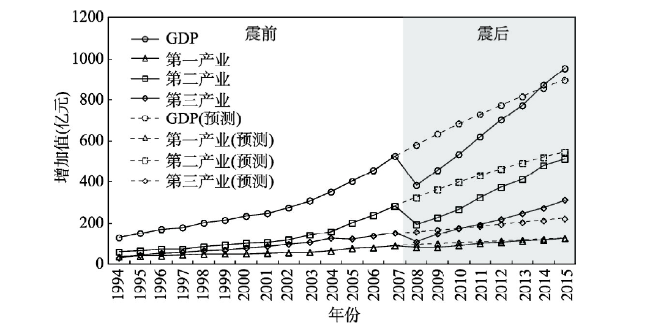
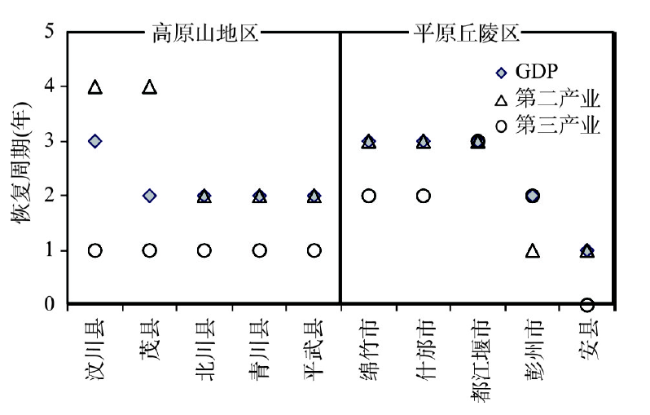
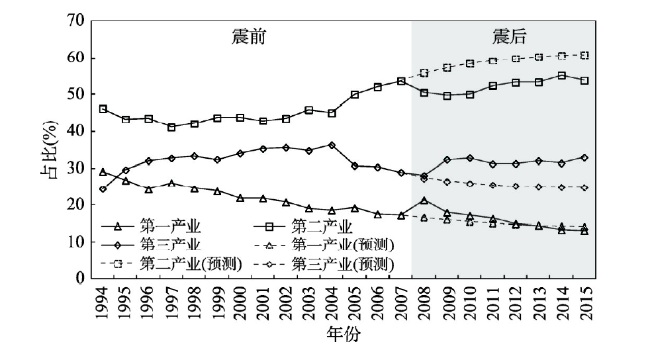
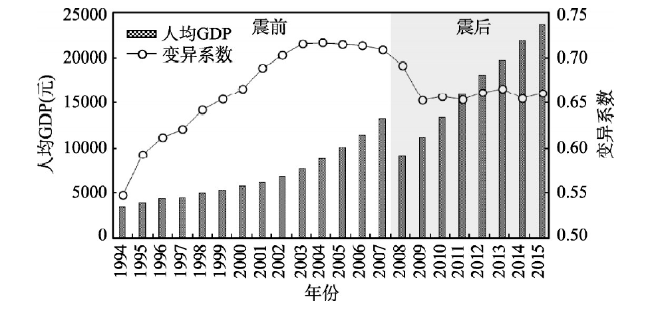
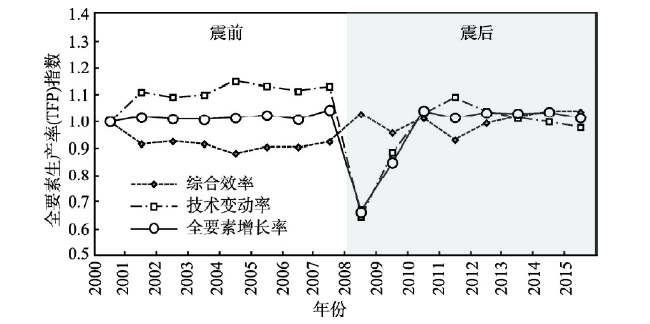
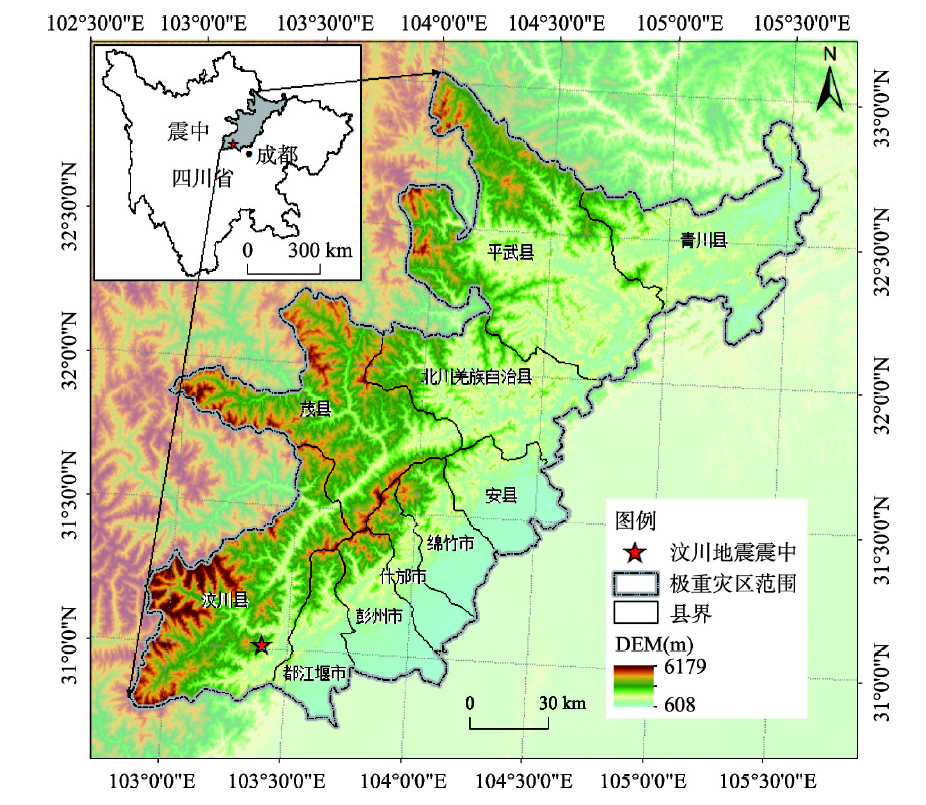
It is of great significance to enhance disaster prevention and response capacity to reveal the post-disaster economic development and recovery process, and to formulate the control policies and recovery methods for post-disaster economic reconstruction according to the economic resilience. Based on the long-term socio-economic data and ARIMA model, this paper calculated the economic resilience index of severely affected area of Wenchuan earthquake, and adopted the improved Variable Return to Scale (VRS) DEA model and Malmquist productivity index to analyze the efficiency and effect of annual post-disaster recovery. The results show that: (1) The economic resilience index of earthquake severely affected area is 0.877. The earthquake caused a short-term economic recession in the affected areas, but the economy returned to its pre-quake state within two years. In addition, the industrial economy is less resilient than agriculture and service industries. (2) The comprehensive economic recovery efficiency of the disaster-stricken area in the year after the disaster is 0.603. The comprehensive efficiency, pure technical efficiency and scale efficiency of the plain hilly area are significantly higher than those of the plateau mountain area. (3) The annual fluctuation of total factor productivity after the disaster was strong, and the economic recovery efficiency declined significantly, resulting in a short-term economic recession. The TFP index returned to steady state after a decline of 33.7% and 15.2% in the two years after the disaster. (4) The significant decline in the post-disaster recovery efficiency is mainly caused by technological changes, and the renewal of production system is the leading factor in determining the economic resilience after the disaster. With the decline in the scale of economic recovery, the long-term economic recovery in the study areas mainly depends on pure technical efficiency, and the improvement of pure technical efficiency is the driving force to maintain the long-term growth of post-disaster economy. Therefore, in view of the differences between the reconstruction of natural conditions and the stage of economic development, the disaster-stricken areas need to change and readjust their economic structures actively. Meanwhile, we should pay attention to updating production system to enhance the level of technological progress, and give full play to the scale effect of large-scale capital, facilities, manpower and other factors investment, so as to enhance the response to the disaster impact of economic resilience and recovery efficiency.
ZHOU Kan , LIU Baoyin , FAN Jie . Economic resilience and recovery efficiency in the severely affected area of Ms 8.0 Wenchuan earthquake[J]. Acta Geographica Sinica, 2019 , 74(10) : 2078 -2091 . DOI: 10.11821/dlxb201910009
表1 2008年汶川地震极重灾区县经济恢复相对效率及分解结果Tab. 1 Economic recovery relative efficiency and decomposition results in 2008 |
| 地区 | 综合效率 | 纯技术效率 | 规模效率 | 规模收益 |
|---|---|---|---|---|
| 汶川县 | 0.505 | 1.000 | 0.505 | 递增 |
| 北川羌族自治县 | 0.293 | 1.000 | 0.293 | 递增 |
| 绵竹市 | 1.000 | 1.000 | 1.000 | 不变 |
| 什邡市 | 1.000 | 1.000 | 1.000 | 不变 |
| 青川县 | 0.321 | 1.000 | 0.321 | 递增 |
| 茂县 | 0.269 | 1.000 | 0.269 | 递增 |
| 都江堰市 | 0.912 | 0.939 | 0.971 | 递减 |
| 平武县 | 0.299 | 0.580 | 0.515 | 递增 |
| 彭州市 | 0.637 | 1.000 | 0.637 | 递减 |
| 安县 | 0.798 | 0.981 | 0.813 | 递增 |
| 平均值 | 0.603 | 0.950 | 0.632 | — |
表2 2007-2015年汶川地震极重灾区Malmquist指数及分解结果Tab. 2 Malmquist index and its decomposition results in 2007-2015 |
| 年份 | 综合效率 | 技术变动率 | 纯技术效率 | 规模效率 | 全要素增长率 |
|---|---|---|---|---|---|
| 2007年 | 0.924 | 1.131 | 0.974 | 0.948 | 1.044 |
| 2008年 | 1.027 | 0.646 | 1.053 | 0.975 | 0.663 |
| 2009年 | 0.957 | 0.886 | 0.854 | 1.121 | 0.848 |
| 2010年 | 1.011 | 1.030 | 0.988 | 1.023 | 1.041 |
| 2011年 | 0.930 | 1.092 | 1.012 | 0.919 | 1.015 |
| 2012年 | 0.993 | 1.039 | 1.060 | 0.937 | 1.032 |
| 2013年 | 1.019 | 1.011 | 1.069 | 0.953 | 1.030 |
| 2014年 | 1.037 | 0.999 | 1.029 | 1.007 | 1.036 |
| 2015年 | 1.037 | 0.977 | 0.991 | 1.047 | 1.014 |
| [1] |
[ 秦大河, 张建云, 闪淳昌 , 等. 中国极端天气气候事件和灾害风险管理与适应国家评估报告. 北京: 科学出版社, 2015.]
|
| [2] |
[ 陈运泰, 杨智娴, 张勇 , 等. 2013. 从汶川地震到芦山地震. 中国科学: 地球科学, 43(6):1064-1072.]
|
| [3] |
[ 史培军, 王季薇, 张钢锋 , 等. 透视中国自然灾害区域分异规律与区划研究. 地理研究, 2017,36(8):1401-1414.]
|
| [4] |
[ 樊杰, 周成虎, 顾行发 , 等. 国家汶川地震灾后重建规划: 资源环境承载能力评价. 北京: 科学出版社. 2009.]
|
| [5] |
[ 周侃, 樊杰, 徐勇 . 面向重建规划的灾后资源环境承载能力应急评价范式. 地理科学进展, 2017,36(3):286-295.]
|
| [6] |
[ 葛全胜, 邹铭, 郑景云 . 中国自然灾害风险综合评估初步研究. 北京: 科学出版社, 2008.]
|
| [7] |
[ 马宗晋 . 中国重大自然灾害及减灾对策: 总论. 北京: 科学出版社, 1994.]
|
| [8] |
|
| [9] |
[ 宋崇振, 杨济源, 王瑛 . 自然灾害后的经济恢复研究进展. 北京师范大学学报(自然科学版), 2016,52(2):196-201.]
|
| [10] |
|
| [11] |
|
| [12] |
|
| [13] |
[ 丁先军, 杨翠红, 祝坤福 . 基于投入—产出模型的灾害经济影响评价方法. 自然灾害学报, 2010,19(2):113-118.]
|
| [14] |
[ 朱靖 . 基于投入—产出模型的灾后经济非均衡与路径恢复研究. 中国管理科学, 2013,21(4):121-128.]
|
| [15] |
[ 张红, 左娅菲 . 地震灾害对区域经济发展的影响及对策研究. 特区经济, 2013(2):145-146.]
|
| [16] |
[ 郑长德 . 汶川大地震对全国及地区经济增长的影响分析及对策研究. 西南民族大学学报(人文社科版), 2008,29(7):75-79.]
|
| [17] |
|
| [18] |
|
| [19] |
|
| [20] |
|
| [21] |
|
| [22] |
|
| [23] |
[ 万膑莲, 翟国方 . 基于韧性的灾后区域经济增长模式研究: 以汶川地震为例. 现代城市研究, 2017(9):41-47.]
|
| [24] |
|
| [25] |
|
| [26] |
[ 吴吉东, 李宁, 周扬 , 等. 灾害恢复度量框架: Katrina飓风灾后恢复应用案例. 自然灾害学报, 2013,22(4):58-64.]
|
| [27] |
|
| [28] |
[ 唐彦东, 于汐, 刘春平 . 汶川地震对阿坝州经济增长影响理论与实证研究. 自然灾害学报, 2014,23(5):90-97.]
|
| [29] |
[ 吴吉东, 郝晓琳, 李宁 , 等. 中国“举国体制”应对巨灾的经济效益评估方法及应用. 北京师范大学学报(自然科学版), 2014,50(1):100-104.]
|
| [30] |
The State Council of the People's Republic of China. Post-Wenchuan Earthquake recovery and reconstruction master plan. 2008-09-23. .
[ 中华人民共和国国务院. 汶川地震灾后恢复重建总体规划. 2008-09-23. .]
|
| [31] |
[ 张军, 陈诗一, Gary H Jefferson . 结构改革与中国工业增长. 经济研究, 2009(7):4-20.]
|
| [32] |
[ 张军, 吴桂英, 张吉鹏 . 中国省际物质资本存量估算:1952-2000. 经济研究, 2004(10):35-44.]
|
| [33] |
[ 陈洁, 曹克章, 刘哲 . 基于时间序列的江苏人均GDP预测研究. 南京工程学院学报(社会科学版), 2015,15(4):74-78.]
|
| [34] |
|
| [35] |
|
| [36] |
|
| [37] |
|
| [38] |
[ 李郇, 徐现祥, 陈浩辉 . 20世纪90年代中国城市效率的时空变化. 地理学报, 2005,60(4):615-625.]
|
| [39] |
|
| [40] |
[ 章祥荪, 贵斌威 . 中国全要素生产率分析: Malmquist指数法评述与应用. 数量经济技术经济研究, 2008,25(6):111-122.]
|
| [41] |
[ 魏权龄 . 数据包络分析. 北京: 科学出版社, 2004.]
|
| [42] |
|
| [43] |
|
/
| 〈 |
|
〉 |